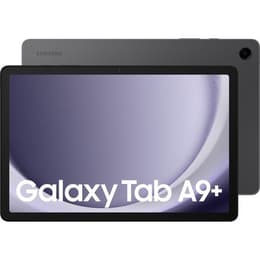

Galaxy Tab A9+ (11.0", 2023) Vs Galaxy Tab S9 (11.0", 2023)

Galaxy Tab A9+ (11.0", 2023)
Starting at

Refurbished price:£144.00

Versus £309.90 new

See options
Galaxy Tab S9 (11.0", 2023)
Starting at

Refurbished price:£370.00

Versus £1,060.32 new

See options

Ratings

The Samsung Galaxy Tab A9+ and the Samsung Galaxy Tab S9, both released in 2023, represent different tiers within Samsung's tablet lineup. While both run on the Android operating system, the Tab A9+ is designed for everyday use and media consumption, whereas the Tab S9 offers a more premium experience with enhanced performance and display technology.

Scores

Durability

When considering the longevity of these tablets, several factors come into play, including their release timelines, software support, and physical durability.

  • Release Timeline: The Galaxy Tab S9 was released in August 2023, slightly before the Galaxy Tab A9+, which launched in October 2023. This difference means the Tab S9 will likely receive software updates for a marginally longer period.
  • Software Longevity: The Galaxy Tab A9+ is expected to receive at least three years of software support, making it a viable option for several years. As a flagship device, the Galaxy Tab S9 is anticipated to receive a more extended period of major Android updates and security patches, typically around four to five years, ensuring it remains current for a longer duration.
  • Physical Durability: The Galaxy Tab A9+ features a plastic back and aluminum sides, offering a sturdy feel for its category, but it lacks an official IP rating for water and dust resistance. In contrast, the Galaxy Tab S9 boasts an Armor Aluminum build and an IP68 rating, signifying robust protection against dust and water immersion, which contributes to its overall durability and potential lifespan in varied environments.

Year of Release

2023

2023

Compatible with latest Update

Yes

Yes

OS

Android

Android

Performance

The performance capabilities of these two tablets cater to different user demands, primarily influenced by their internal components and battery designs.

  • Storage and Expandability: The Galaxy Tab A9+ comes with storage options of 64GB or 128GB, and it supports microSD card expansion up to 1TB, offering flexibility for users who need more space for media or documents. The Galaxy Tab S9 provides 128GB or 256GB of internal storage, also featuring a microSD slot for further expansion, which is beneficial for larger applications and extensive media libraries.
  • Battery Performance: The Galaxy Tab A9+ is equipped with a 7,040mAh battery, typically providing between 7 and 10 hours of usage depending on the tasks, and supports 15W wired charging. The Galaxy Tab S9 has a larger 8,400mAh battery, capable of lasting a full business day with constant use, and supports faster 45W charging, allowing for quicker power replenishment.
  • Processing Power and Multitasking: The Galaxy Tab A9+ is well-suited for daily productivity tasks, media streaming, and moderate gaming, with users reporting smooth performance for web browsing and app usage. The Galaxy Tab S9, with its more advanced processor, handles demanding applications, intensive games, and extensive multitasking with notable smoothness and responsiveness. While the Tab A9+ offers 4GB or 8GB of RAM, with the 8GB option improving multitasking, the Tab S9's 8GB or 12GB RAM configurations provide more headroom for complex workflows, though some users with 8GB on the S9 have noted occasional app refreshes in the background.

Memory (GB)

4 GB

8 GB

Processor

Qualcomm SM6375 Snapdragon 695 5G

Qualcomm SM8550-AC Snapdragon 8 Gen 2

Screen quality

The visual experience on these tablets differs significantly due to their display technologies and specifications.

  • Display Technology and Clarity: The Galaxy Tab A9+ features an 11-inch LCD panel with a resolution of 1920 x 1200 pixels, offering clear visuals for general use. The Galaxy Tab S9, on the other hand, incorporates an 11-inch Dynamic AMOLED 2X display with a higher resolution of 2560 x 1600 pixels, which delivers deeper blacks, more vibrant colors, and enhanced contrast, providing a more immersive viewing experience.
  • Brightness and Outdoor Visibility: While the Galaxy Tab A9+ display is comfortable for indoor viewing, it can appear washed out in direct sunlight, requiring users to increase brightness to maximum for better visibility outdoors. The Galaxy Tab S9's AMOLED display generally offers superior brightness levels, making it more suitable for use in various lighting conditions, including brighter outdoor environments.
  • Refresh Rate and Smoothness: The Galaxy Tab A9+ supports a 90Hz refresh rate, which contributes to smoother scrolling and more fluid animations compared to standard 60Hz displays. The Galaxy Tab S9 elevates this with a 120Hz refresh rate, ensuring an even more fluid and responsive interaction, particularly noticeable during fast-paced content or gaming.

Resolution

1200 x 1920

1600 x 2560

Screen type

TFT LCD

Dynamic AMOLED 2X

Pixel density

210ppp

280ppp

Audiovisual

The camera and audio capabilities of these tablets are tailored to their intended use cases, with distinct differences in their specifications and performance.

  • Camera System and Photography: The Galaxy Tab A9+ includes an 8MP rear camera and a 5MP front camera, which are considered basic and suitable for well-lit conditions, document scanning, and video calls, but not for high-quality photography. The Galaxy Tab S9 features a 13MP rear camera and a 12MP ultrawide front camera, which is effective for video calls, supporting 4K video recording, and capable of scanning documents reliably.
  • Video Recording Quality: The Galaxy Tab A9+ can record video at 1080p resolution at 30 frames per second, without image stabilization, which is adequate for casual recording. The Galaxy Tab S9's front camera supports 4K video recording at 30 frames per second, offering higher detail for video calls and content creation.
  • Audio Experience: Both tablets are equipped with quad speakers and support Dolby Atmos, providing an immersive sound experience. The Galaxy Tab A9+ speakers are reasonably loud. The Galaxy Tab S9's speakers are noted for being loud and producing a full soundscape, though some users observe a lack of significant bass.

Miscellaneous

Beyond core performance and display, several other features contribute to the overall user experience and practical utility of these tablets.

  • Connectivity and Ports: The Galaxy Tab A9+ supports Wi-Fi 5 and Bluetooth 5.1, with an optional 5G variant available, and includes a USB-C port along with a 3.5mm headphone jack. The Galaxy Tab S9 offers more advanced connectivity with Wi-Fi 6E and Bluetooth 5.3, also with an optional 5G model, and features a USB-C port but omits the traditional headphone jack.
  • Biometric Security: For unlocking and security, the Galaxy Tab A9+ relies on face recognition, lacking a fingerprint sensor. The Galaxy Tab S9 provides an under-display fingerprint sensor for secure and convenient authentication, in addition to face recognition.
  • Design and Handling: The Galaxy Tab A9+ weighs between 480g and 491g and has a thickness of 6.9mm, featuring a plastic back and aluminum frame. The Galaxy Tab S9 is slightly heavier at 500g but thinner at 5.9mm, constructed with a more premium Armor Aluminum frame and glass front. The Tab S9 also includes an S Pen in the box and supports DeX mode for a desktop-like experience.

Weight

1 g

129 g

Screen size (in)

11.0

11.0

Network

Wi-Fi + 4G

Wi-Fi

Carrier compatibility

Unlocked

Unlocked

Connector

USB Type-C

USB Type-C

User feedback for the Galaxy Tab A9+ frequently highlights its appeal as a budget-friendly tablet with a large screen, making it suitable for media consumption, web browsing, and light productivity tasks. Common criticisms often point to its basic camera performance, unremarkable battery life under heavy use, the absence of a fingerprint sensor, and slower charging speeds.

Conversely, the Galaxy Tab S9 receives praise for its vibrant AMOLED display, powerful performance for demanding applications, the inclusion of the S Pen, and its IP68 water and dust resistance. Some users note that its battery life, while still good, might be less than its predecessor due to the power demands of the AMOLED screen, and the base model saw the removal of the ultrawide camera from the rear.

Users prioritizing a cost-effective device for casual use, media streaming, and basic tasks, or those seeking a tablet for students or family use, may find the Galaxy Tab A9+ well-suited to their needs. Its expandable storage and headphone jack are practical additions for many. For individuals who require a high-performance tablet for creative work, demanding applications, or a premium entertainment experience, the Galaxy Tab S9 offers a more robust solution with its superior display, processing power, and included S Pen. Both models are available as quality-assured refurbished options, providing an eco-friendly alternative for consumers.


See all articles

Our recent comparisons