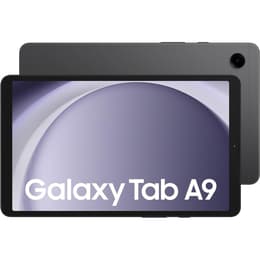
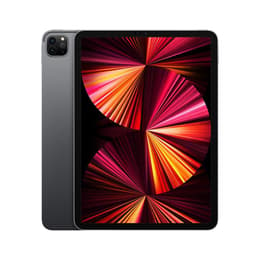

Galaxy Tab A9 (8.7", 2023) Vs iPad Pro (2021, M1 series)

Galaxy Tab A9 (8.7", 2023)
Starting at

Refurbished price:£87.00

Versus £219.00 new

See options
iPad Pro (2021, M1 series)
Starting at

Refurbished price:£359.00

Versus £749.00 new

See options

Ratings

The Samsung Galaxy Tab A9, released in October 2023, and the Apple iPad Pro M1 series, launched in May 2021, represent distinct approaches to tablet computing. While both devices offer portable digital experiences, they cater to different user expectations through their operating systems, hardware capabilities, and overall design philosophy. The Galaxy Tab A9 operates on Android, focusing on essential tablet functions in a compact form, whereas the iPad Pro M1 runs on iPadOS, delivering high-performance computing for demanding tasks.

Scores

Durability

When considering the long-term usability of a tablet, factors like release timeline, software support, and repairability play a significant role.

  • Release Timeline and Age: The Galaxy Tab A9 was introduced in October 2023, making it a more recent device compared to the iPad Pro M1 series, which debuted in May 2021. This difference in release dates impacts their respective lifespans regarding software updates and hardware relevance.
  • OS Support Duration: The Galaxy Tab A9 is expected to receive major Android OS updates for approximately three years, potentially up to Android 15. In contrast, the iPad Pro M1 series, powered by Apple's M1 chip, is anticipated to receive iPadOS updates for a considerably longer period, with user discussions suggesting a potential support window of 7 to 10 years. This extended software longevity means the iPad Pro M1 will remain compatible with newer applications and features for a longer duration.
  • Repairability: The Galaxy Tab A9 has a moderate repairability score of 4.0 out of 10, indicating that while some components like the battery are accessible, the use of adhesive and the delicate process of screen removal can make repairs challenging. Specific repairability scores for the iPad Pro M1 series are not readily available, but Apple devices generally present a more complex repair process due to integrated designs.

Year of Release

2023

2021

Compatible with latest Update

Yes

Yes

OS

Android

iPadOS

Performance

The performance capabilities of these two tablets vary significantly, influencing their suitability for different types of tasks and user demands.

  • Processor Capabilities: The Galaxy Tab A9 is equipped with a MediaTek Helio G99 processor, which handles everyday tasks like web browsing, video streaming, and light multitasking smoothly. It is designed for casual use and can manage some less demanding games. The iPad Pro M1 series features the Apple M1 chip, a processor known for its desktop-class performance. This allows the iPad Pro to handle highly demanding applications, complex video editing, graphic design, and intensive gaming with exceptional responsiveness and efficiency.
  • Storage and RAM: The Galaxy Tab A9 offers configurations with 4GB or 8GB of RAM and 64GB or 128GB of internal storage, which can be expanded using a microSD card. The iPad Pro M1 series comes with 8GB of RAM for models with up to 512GB storage and 16GB of RAM for 1TB and 2TB storage options, providing substantial memory for professional workflows and extensive multitasking. The iPad Pro's storage is not expandable.
  • Battery Behavior: The Galaxy Tab A9, with its 5100mAh battery, can provide around 12 hours of use in controlled tests and 7-8 hours in typical mixed usage scenarios. The iPad Pro M1 series generally offers around 10 hours of battery life for web browsing or video playback, with the 11-inch model sometimes exceeding this. Both devices offer sufficient battery life for a full day of moderate use, though intensive tasks will reduce this.

Memory (GB)

4 GB

8 GB

Screen quality

The visual experience offered by these tablets differs considerably due to their display technologies and specifications.

  • Display Technology and Resolution: The Galaxy Tab A9 features an 8.7-inch TFT LCD with a resolution of 1340 x 800 pixels. This display is suitable for general content consumption, offering clear visuals for text and icons. The iPad Pro M1 series offers two screen sizes: an 11-inch Liquid Retina IPS LCD and a 12.9-inch Liquid Retina XDR mini-LED display. The 12.9-inch model, in particular, utilizes mini-LED technology, providing superior contrast, deeper blacks, and more vibrant colors, especially when viewing HDR content.
  • Brightness and Refresh Rate: The Galaxy Tab A9 has a standard 60Hz refresh rate, which provides a smooth enough experience for everyday navigation. Its brightness levels are adequate for indoor use but may struggle in direct sunlight. The iPad Pro M1 models feature ProMotion technology, offering an adaptive refresh rate up to 120Hz. This results in noticeably smoother scrolling and more fluid animations. The 12.9-inch iPad Pro can reach 1000 nits of typical brightness and up to 1600 nits peak brightness for HDR content, making it highly visible even in bright outdoor conditions.
  • Viewing Experience: The smaller 8.7-inch screen of the Galaxy Tab A9 makes it highly portable and comfortable for one-handed use. The larger screens of the iPad Pro M1 series, especially the 12.9-inch model, provide an expansive canvas ideal for creative work, multitasking, and immersive media consumption.

Resolution

800 x 1340

2388 x 1668

Screen type

TFT LCD

Liquid Retina display

Pixel density

180ppp

264ppp

Audiovisual

The camera systems on these tablets are designed with different primary uses in mind, reflecting their overall positioning in the market.

  • Rear Camera Capabilities: The Galaxy Tab A9 includes an 8MP rear camera with autofocus. This camera is functional for scanning documents and casual photography in well-lit environments, but it is not intended for high-quality image capture. The iPad Pro M1 series features a more advanced dual-camera system on the rear, consisting of a 12MP wide camera, a 10MP ultra-wide camera, and a LiDAR scanner. This setup allows for more versatile photography, including wider shots and improved depth sensing for augmented reality applications.
  • Front Camera and Video Calls: The Galaxy Tab A9 has a 2MP front-facing camera, which is suitable for basic video calls in good lighting conditions. The iPad Pro M1 significantly upgrades the front camera to a 12MP TrueDepth ultra-wide lens with Center Stage. Center Stage automatically keeps the user centered in the frame during video calls, even as they move, enhancing the video conferencing experience.
  • Audio Output: The Galaxy Tab A9 features stereo speakers, providing a decent audio experience for media consumption. The iPad Pro M1 series is equipped with a four-speaker audio system with Dolby Atmos support, delivering a richer and more immersive sound experience.

Miscellaneous

Beyond core performance and display, several other features contribute to the overall user experience and practical utility of these tablets.

  • Connectivity Options: The Galaxy Tab A9 supports Wi-Fi 802.11 a/b/g/n/ac and Bluetooth 5.3, with an optional 4G LTE variant for mobile data. The iPad Pro M1 series offers Wi-Fi 6 and Bluetooth 5.0, and its cellular models support 5G connectivity, including mmWave in some regions, allowing for faster mobile data speeds and the ability to download iPadOS updates over 5G.
  • Ports and Biometrics: The Galaxy Tab A9 includes a USB-C port and a traditional 3.5mm headphone jack. It relies on 2D facial recognition for unlocking, which is less secure than other biometric methods. The iPad Pro M1 features a USB-C port with Thunderbolt support, offering high-speed data transfer and external display connectivity. It uses Face ID for secure biometric authentication.
  • Design and Handling: The Galaxy Tab A9 has a compact design, weighing 332g for the Wi-Fi model, making it lightweight and easy to handle, particularly for extended periods or one-handed use. It features a metal back with some plastic elements. The iPad Pro M1 series is available in 11-inch (466g) and 12.9-inch (685g) models, offering a more substantial feel and larger screen real estate.

Weight

332 g

466 g

Width

21,1 cm

17.85 cm

Height

12,47 cm

24.76 cm

Depth

0,8 cm

0.59 cm

Screen size (in)

8.7

11

Network

Wi-Fi + 4G

Wi-Fi

Carrier compatibility

Unlocked

Without SIM Port

User feedback for the Galaxy Tab A9 often highlights its compact size and suitability for basic media consumption and light tasks. Many appreciate its straightforward functionality and the inclusion of a headphone jack and expandable storage. Common criticisms revolve around its modest screen resolution, basic camera performance, and slower charging speeds. Users generally find it to be a reliable device for casual use, particularly for those who prioritize portability and essential tablet features.

The iPad Pro M1 series receives widespread praise for its exceptional performance, vibrant display (especially the 12.9-inch mini-LED), and advanced camera capabilities, including the Center Stage feature for video calls. Users frequently commend its ability to handle professional-grade applications and its long-term software support. Some common concerns include the limitations of iPadOS for certain desktop-class workflows and the overall weight of the larger model. The M1 iPad Pro is often seen as a powerful tool for creative professionals and users who require high performance and a premium experience.

Users prioritizing a highly portable device for everyday browsing, streaming, and light productivity, with the flexibility of expandable storage, may find the Galaxy Tab A9 well-suited to their needs. Conversely, users who require top-tier performance for demanding applications, a superior visual experience, advanced camera features, and extended software longevity will likely lean towards the iPad Pro M1 series. Both tablets offer distinct advantages, and considering a quality-assured refurbished option for either device can provide an eco-friendly alternative for making an informed choice.

See all articles

Our recent comparisons