Compare models

Galaxy S22 5G Vs iPhone Air

  • 1-year minimum warranty
  • Free delivery on all items
  • Free 30-day returns
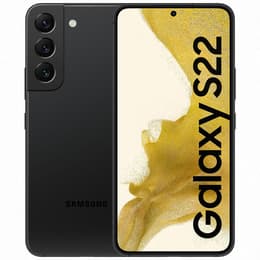
Galaxy S22 5G
Starting at

Refurbished price:£160.00

Versus £859.00 new

See options
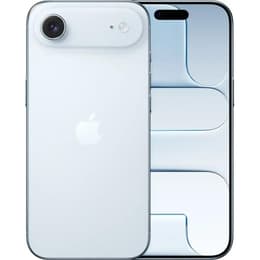
iPhone Air
Starting at

Refurbished price:£640.00

Versus £1,099.00 new

See options

Differences at a glance

The Samsung Galaxy S22 5G (2022) and the Apple iPhone Air (2025) represent two distinct approaches to smartphone engineering, balancing compact flagship heritage with ultra-slim modern innovation. While the Galaxy S22 5G offers a traditional pocket-friendly footprint with a versatile multi-lens camera layout, the iPhone Air prioritizes a remarkably thin profile and a much larger viewing canvas. Operating on Android and iOS respectively, these devices cater to users looking for contrasting hardware form factors and distinct ecosystem experiences.

Available Models

Colour

Storage (GB)

Scores

Durability

Software longevity and physical durability expectations differ significantly between these two devices due to their release timeline gap and structural choices.

  • Release timeline and update support: The Galaxy S22 5G launched earlier, meaning its remaining official software support window is closer to completion compared to the newer iPhone Air, which benefits from an extended operational runway.
  • Repairability and physical build: Both models utilize robust aluminum or titanium framing paired with reinforced glass protection, though users looking for a quality-assured refurbished option will find both devices well-supported in the secondary repair market.
  • Lifespan expectations: The iPhone Air provides extended software support horizons, whereas the Galaxy S22 5G suits users seeking a proven, stable software lifecycle.

Year of Release

2022

2025

Performance

System responsiveness and day-to-day multitasking capabilities vary, driven by the generational gap in internal architecture and memory allocation.

  • Multitasking and memory headroom: The iPhone Air features a larger RAM configuration that handles heavy background app switching smoothly, while the Galaxy S22 5G manages everyday productivity and standard multi-app usage reliably.
  • Battery behavior and endurance: The Galaxy S22 5G's smaller physical battery capacity requires more frequent recharging during heavy usage days, whereas the iPhone Air balances its ultra-slim profile with optimized energy efficiency.
  • App loading and gaming: Both devices open demanding applications quickly and handle modern mobile games without stutter, though the newer processor generation in the iPhone Air offers additional headroom for high-intensity tasks.

Screen quality

Display characteristics differ notably in physical dimensions, brightness output, and motion fluidity between the two handsets.

  • Panel technology and clarity: Both models utilize advanced OLED display technology providing deep contrast levels and sharp text rendering, but the iPhone Air offers a noticeably larger canvas for media consumption.
  • Outdoor visibility: High peak brightness capabilities on both screens ensure that text and images remain legible under direct sunlight or bright ambient lighting conditions.
  • Refresh rate and scrolling smoothness: Each device supports a high refresh rate up to 120Hz, ensuring fluid scrolling through web pages and responsive touch interactions during everyday navigation.

Audiovisual

Photographic versatility and media recording features follow completely different design philosophies on each device.

  • Lens configuration: The Galaxy S22 5G utilizes a flexible multi-lens array including dedicated zoom capabilities, whereas the iPhone Air relies on a single high-resolution lens system integrated into its slim profile.
  • Low-light and everyday photography: Both smartphones capture detailed images in balanced daylight conditions, while their respective image processing software automatically manages shadows and highlights in challenging lighting.
  • Video and audio output: Video recording remains stable and sharp on both models, though media playback differs as the Galaxy S22 5G features stereo speakers compared to the single speaker setup on the iPhone Air.

Miscellaneous

Physical handling, connectivity standards, and daily ergonomic factors highlight distinct trade-offs in form factor design.

  • Dimensions and weight: The Galaxy S22 5G offers a shorter, narrow body that is easy to operate with one hand, while the iPhone Air presents a much wider yet remarkably thin profile that distributes weight evenly.
  • Connectivity and ports: Both devices support fast 5G cellular networks and modern wireless standards, utilizing a reversible USB-C port for wired charging and data transfers.
  • Authentication and sensors: Security is handled via biometric recognition systems, with the Galaxy S22 using an in-display fingerprint scanner and the iPhone Air utilizing facial recognition technology.

Screen size (in)

6.1

6.5

Mobile network

5G

5G

SIM card

Physical SIM + eSIM

eSIM

Carrier compatibility

Unlocked

Unlocked

What the community thinks

User feedback from online communities highlights distinct preferences for each device. Owners of the Galaxy S22 5G frequently praise its genuinely compact size, ergonomic feel in smaller hands, and the flexibility of its multi-lens camera setup. However, some users note that its battery life requires careful management during intensive travel days. Conversely, users of the iPhone Air frequently commend its striking thinness, expansive display real estate, and smooth daily execution, though others point out the limitations of having a single rear camera lens and a mono speaker configuration.

Users prioritizing a truly pocket-friendly footprint, physical one-handed comfort, and a dedicated zoom lens will find the Galaxy S22 5G well-suited to their daily routines. Meanwhile, users prioritizing a larger viewing screen, ultra-slim modern aesthetics, and prolonged software longevity may lean toward the iPhone Air. For buyers evaluating sustainable hardware choices, choosing a quality-assured refurbished option provides an eco-friendly alternative that extends device life cycles without compromising on performance expectations.