Compare models
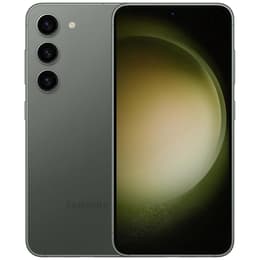
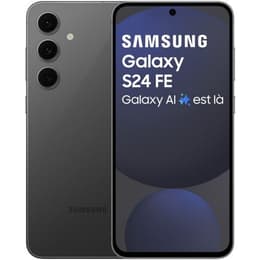
Galaxy S23 Vs Galaxy S24 FE
- 1-year minimum warranty
- Free delivery on all items
- Free 30-day returns
Differences at a glance
The Samsung Galaxy S23, released in February 2023, and the Samsung Galaxy S24 FE, launched in October 2024, represent different segments within Samsung's smartphone lineup. While the S23 was a compact flagship, the S24 FE offers a larger display and extended software support, positioning itself as a feature-rich option. Both devices operate on the Android platform with Samsung's One UI, but the S24 FE benefits from a more recent software commitment.
Available Models
Colour
Storage (GB)
Scores
Durability
When considering the long-term usability of these devices, their release timelines and software support policies are key differentiators.
- Release and Software Support: The Galaxy S23, launched in February 2023, was initially promised four generations of Android OS upgrades and five years of security updates, extending its support until approximately 2028. In contrast, the Galaxy S24 FE, released in October 2024, benefits from Samsung's updated policy, offering seven generations of OS upgrades and seven years of security updates, meaning support is expected until 2031. This provides the S24 FE with a significantly longer period of official software and security updates.
- Build Quality and Durability: Both devices feature robust construction. The Galaxy S23 incorporates Gorilla Glass Victus 2 on both its front and back, paired with an Armor Aluminum frame. The Galaxy S24 FE also uses Gorilla Glass Victus+ for its front and back panels, along with an aluminum frame, and both models carry an IP68 rating for dust and water resistance. This indicates a high level of protection against environmental elements for both phones.
- Practical Lifespan: Users prioritizing the longest possible software longevity will find the Galaxy S24 FE more appealing due to its extended update commitment. For those who typically upgrade their devices within a few years, the S23 still offers a substantial period of support.
Year of Release
2023
2024
Compatible with latest Update
Yes
Yes
OS
Android
Android
Foldable
No
No
Performance
The performance capabilities of the Galaxy S23 and S24 FE cater to demanding applications and multitasking, though with different underlying hardware.
- Processing Power: The Galaxy S23 is equipped with a powerful processor designed for high-end performance, capable of handling intensive applications and graphically demanding games smoothly. The Galaxy S24 FE features a current-generation processor that delivers strong performance for everyday tasks, multitasking, and gaming, often outperforming its predecessor in benchmark tests. This ensures a responsive user experience across both devices.
- Memory and Storage: Both models typically come with 8GB of RAM, which is sufficient for smooth multitasking and running multiple applications simultaneously. Storage options for the Galaxy S23 include 128GB, 256GB, and 512GB, while the Galaxy S24 FE is commonly available in 128GB and 256GB configurations. Neither device offers expandable storage.
- Battery Performance: The Galaxy S23 houses a 3900 mAh battery. The Galaxy S24 FE comes with a larger 4700 mAh battery, which generally translates to longer usage times between charges, especially for users with moderate to heavy usage patterns. User reports suggest the S24 FE is well-optimized for video streaming, contributing to its endurance.
Screen quality
The visual experience on both smartphones is vibrant, though there are differences in display size and brightness.
- Display Technology and Size: Both the Galaxy S23 and S24 FE feature Dynamic AMOLED 2X displays, known for their deep blacks, high contrast, and vibrant color reproduction. The Galaxy S23 has a more compact 6.1-inch display, making it suitable for one-handed use. The Galaxy S24 FE offers a larger 6.7-inch display, providing a more expansive viewing area for media consumption and productivity.
- Resolution and Clarity: Both devices offer a Full HD+ resolution (1080 x 2340 pixels), ensuring sharp text and clear images for everyday viewing.
- Brightness and Refresh Rate: The Galaxy S23 provides a peak brightness of 1750 nits, offering good visibility in various lighting conditions. The Galaxy S24 FE has a higher peak brightness of 1900 nits, which can be beneficial for outdoor use. Both phones feature a 120Hz adaptive refresh rate for smooth scrolling and fluid animations. However, the S23's adaptive refresh rate can go down to 48Hz, while the S24 FE's ranges from 60Hz to 120Hz.
Resolution
1080 x 2340
1080 x 2340
Screen type
Dynamic AMOLED 2X
Dynamic AMOLED 2X
Audiovisual
Both smartphones offer versatile camera systems capable of capturing high-quality photos and videos, with some distinctions in their configurations.
- Rear Camera System: The Galaxy S23 features a triple-camera setup with a 50 MP main sensor, a 12 MP ultrawide lens, and a 10 MP telephoto lens capable of 3x optical zoom. The Galaxy S24 FE also has a triple-camera system, including a 50 MP main sensor, a 12 MP ultrawide lens, and an 8 MP telephoto lens with 3x optical zoom. Both are capable of capturing detailed images in various scenarios.
- Photography Performance: Both devices perform well in good lighting conditions, producing images with accurate colors and good dynamic range. The S23's telephoto lens offers slightly higher resolution. The S24 FE's main camera delivers strong details, though its ultrawide can be softer in some areas. Both support 8K video recording at 30 frames per second.
- Front Camera and Audio: The Galaxy S23 is equipped with a 12 MP front-facing camera. The Galaxy S24 FE features a 10 MP front camera. Both are suitable for selfies and video calls. For audio, both phones provide a good media consumption experience through their speakers, and microphone quality is generally clear for calls and recordings.
Main camera
50 megapixels
50 megapixels
Front camera
12 megapixels
10 megapixels
Miscellaneous
Beyond core features, several practical elements differentiate the user experience between the Galaxy S23 and S24 FE.
- Connectivity and Ports: Both devices support 5G connectivity, ensuring fast mobile data speeds. The Galaxy S23 supports Wi-Fi 6E and Bluetooth 5.3. The Galaxy S24 FE also supports Wi-Fi 6E and Bluetooth 5.3, with some variants potentially offering newer Bluetooth standards. Both utilize a USB-C port for charging and data transfer.
- Biometric Security: The Galaxy S23 features an ultrasonic in-display fingerprint sensor, known for its speed and accuracy. The Galaxy S24 FE uses an optical in-display fingerprint sensor, which is also reliable but may be perceived as slightly slower by some users.
- Physical Characteristics: The Galaxy S23 is a more compact device, measuring 146.3 x 70.9 x 7.6 mm and weighing 168g. The Galaxy S24 FE is larger and heavier, with dimensions of 162.0 x 77.3 x 8.0 mm and a weight of 213g. This size difference impacts one-handed usability and pocketability.
- Additional Features: The S24 FE includes Galaxy AI features, which were introduced with the S24 series, offering advanced functionalities for tasks like photo editing and communication.
Weight
167 g
213 g
Screen size (in)
6.1
6.7
Mobile network
5G
5G
SIM card
Dual Physical SIM + eSIM
Dual Physical SIM
Carrier compatibility
Unlocked
Unlocked
Connector
USB-C
USB-C
What the community thinks
User sentiment for the Galaxy S23 often highlights its compact size, premium build, and consistent flagship performance as strong advantages. Many appreciate its comfortable handling and the reliability of its camera system. Criticisms sometimes point to its battery life, which for heavy users might require more frequent charging compared to larger devices. The S23 is generally seen as a well-rounded, high-performance compact smartphone.
The Galaxy S24 FE is frequently praised for bringing many flagship-level features, including its powerful processor and extended software support, to a broader audience. Users often commend its larger display for media consumption and its improved battery endurance. Some feedback notes that while its camera system is capable, the telephoto lens resolution is slightly lower than the S23, and the optical fingerprint sensor, while functional, is not as fast as the ultrasonic one found in the S23. The S24 FE is often viewed as a strong contender for those seeking a balance of features and longevity.
Users prioritizing a compact form factor, a slightly more advanced telephoto camera, and an ultrasonic fingerprint sensor may find the Galaxy S23 well-suited to their needs. Conversely, users who value a larger display, significantly longer software support, and extended battery life will likely lean towards the Galaxy S24 FE. Both devices offer a robust Android experience, and choosing between them often comes down to these specific preferences. For those considering a more sustainable choice, both models are available as quality-assured refurbished options, extending their lifecycle and reducing electronic waste.