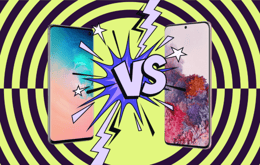
Galaxy S20 5G Vs Galaxy Z Flip5

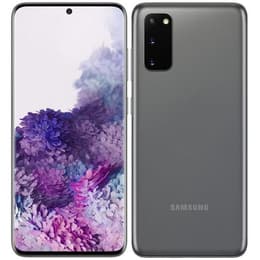
Galaxy S20 5G
Galaxy S20 5G
Starting at

Refurbished price:£133.00

Versus £899.00 new

See options
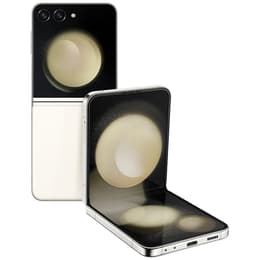
Galaxy Z Flip5
Galaxy Z Flip5
Starting at

Refurbished price:£266.76

Versus £1,145.61 new

See options

Ratings

The Samsung Galaxy S20 5G, released in early 2020, represents a traditional flagship smartphone experience, offering a powerful set of features within a conventional slab design. In contrast, the Samsung Galaxy Z Flip5, launched in mid-2023, introduces a modern foldable clamshell form factor, prioritizing portability and a unique user interaction with its larger external display. These devices cater to different preferences, with the S20 5G focusing on a classic, robust design and the Z Flip5 on innovative compactness and a distinct folding mechanism.

Scores

Durability

When considering the long-term usability of these devices, their release timelines and software support are key factors. The Galaxy S20 5G, being an older model, has reached the end of its major Android OS update cycle, typically receiving updates for about three years from its release. The Galaxy Z Flip5, a more recent device, benefits from Samsung's extended software commitment, offering four generations of Android OS upgrades and five years of security updates, extending its software longevity significantly further into the future. [1, 9, 38]

  • Software Updates: The Galaxy Z Flip5 is projected to receive major Android OS updates until Android 17 and security updates through 2028, providing a longer period of current software features and security patches compared to the Galaxy S20 5G, which has likely received its last major OS update. [1, 9, 38]
  • Physical Durability: The Galaxy S20 5G features a glass front and back with Gorilla Glass 6 protection and an aluminum frame, along with an IP68 rating for dust and water resistance. [23, 38] The Galaxy Z Flip5, while also featuring an Armor Aluminum frame and Gorilla Glass Victus 2 on its cover screen and back panel, has an IPX8 rating for water resistance but lacks official dust resistance due to its folding design. [1, 5, 12, 26]
  • Repairability: The Galaxy Z Flip5 has shown improvements in repairability compared to its predecessors, with a reported score of 7.5 out of 10 in some assessments, partly due to features like battery pull tabs. [6, 19] The Galaxy S20 5G, as a traditional smartphone, generally offers moderate repairability, though specific scores can vary.

Year of Release

2020

2023

Compatible with latest Update

No

Yes

OS

Android

Android

Foldable

No

Yes

Performance

The performance of both smartphones is designed to handle daily tasks efficiently, though they feature different generations of internal components. The Galaxy S20 5G, powered by its original processor, delivers smooth performance for most applications and multitasking. The Galaxy Z Flip5, with its newer generation processor, offers enhanced speed and efficiency, particularly noticeable in demanding applications and gaming.

  • Processing Power: The Galaxy Z Flip5's more recent processor provides a noticeable boost in overall speed and responsiveness, making it well-suited for intensive tasks and future applications. [1, 2, 5, 19] The Galaxy S20 5G's processor, while still capable, represents an earlier generation. [4, 15]
  • Multitasking and Responsiveness: Both devices are equipped with sufficient RAM to manage multiple applications simultaneously. The Galaxy S20 5G typically comes with 12 GB of RAM, while the Galaxy Z Flip5 features 8 GB. [2, 4, 15, 20, 23] Despite the difference in RAM capacity, the Z Flip5's newer processor often results in a snappier overall user experience.
  • Storage Options: The Galaxy S20 5G offers 128 GB of internal storage and includes a microSD card slot for expandable storage, providing flexibility for users with large media libraries. [15, 23, 38] The Galaxy Z Flip5 comes with 256 GB or 512 GB of internal storage but does not support microSD card expansion. [2, 5, 12, 20]
  • Battery Behavior: The Galaxy S20 5G is equipped with a 4000 mAh battery, generally providing a full day of moderate use. [23, 25] The Galaxy Z Flip5 has a 3700 mAh battery, and while its newer, more efficient processor helps, some users report that heavy usage may require more frequent charging. [8, 13, 27, 31, 33]

Memory (GB)

12 GB

8 GB

Screen quality

The display experience on these two devices offers distinct characteristics, primarily due to the Z Flip5's foldable nature and its secondary external screen. Both utilize Samsung's advanced AMOLED technology for vibrant visuals, but differ in resolution, size, and form factor.

  • Main Display Technology and Resolution: Both phones feature Dynamic AMOLED 2X main displays with a 120Hz refresh rate for smooth scrolling and responsiveness. The Galaxy S20 5G offers a higher resolution of 1440 x 3200 pixels on its 6.2-inch screen, resulting in a very high pixel density. [17, 23, 38] The Galaxy Z Flip5 has a 6.7-inch main display with a resolution of 1080 x 2640 pixels, providing clear and vibrant visuals, though with a slightly lower pixel density. [1, 3, 14, 20]
  • External Display (Z Flip5 only): A key differentiator for the Galaxy Z Flip5 is its 3.4-inch Super AMOLED cover screen, which allows for quick interactions, widget access, and even running some full applications without unfolding the device. [1, 3, 26] The Galaxy S20 5G does not have an external display.
  • Brightness and Viewing Experience: Both displays offer excellent brightness levels for outdoor visibility and support HDR10+ for enhanced contrast and color in compatible content. The Z Flip5's main screen can reach high peak brightness levels, similar to the S20 5G, ensuring a comfortable viewing experience in various lighting conditions. [14, 26]
  • Form Factor Impact: The Galaxy Z Flip5's foldable screen introduces a crease in the middle, which is often less noticeable during use but can be visible under certain lighting conditions. [26, 28] The Galaxy S20 5G, with its traditional flat display, does not have this characteristic.

Resolution

1440 x 3200

1080 x 2640

Screen type

Dynamic AMOLED 2X

Foldable Dynamic AMOLED 2X

Audiovisual

The camera systems on the Galaxy S20 5G and Galaxy Z Flip5 are designed for different photographic priorities, with the S20 5G offering a more versatile setup with a dedicated telephoto lens, while the Z Flip5 focuses on its unique form factor for creative shooting angles.

  • Rear Camera Configuration: The Galaxy S20 5G features a triple-camera system including a 12 MP wide-angle lens, a 64 MP telephoto lens with 3x hybrid optical zoom, and a 12 MP ultrawide lens. [23, 38] This setup provides flexibility for various shooting scenarios, including distant subjects. The Galaxy Z Flip5 has a dual-camera system with a 12 MP wide-angle lens and a 12 MP ultrawide lens, lacking a dedicated telephoto option. [2, 22, 29]
  • Photography Performance: Both devices deliver strong performance in well-lit conditions, producing detailed and vibrant images. The S20 5G's larger sensor and higher megapixel count on its telephoto lens can capture more detail when zooming. The Z Flip5's camera benefits from its newer processing, but some users note that its low-light performance and zoomed-in photos are not its strongest points. [29]
  • Video Recording Capabilities: The Galaxy S20 5G is capable of recording video at up to 8K resolution at 24 frames per second, along with 4K at 30 or 60 frames per second. [23, 38] The Galaxy Z Flip5 supports 4K video recording at up to 60 frames per second. [20, 22]
  • Unique Features and Selfies: The Z Flip5's foldable design allows for unique shooting angles, including using the main rear cameras for high-quality selfies with the cover screen acting as a viewfinder. [28, 29] Both phones feature a 10 MP front-facing camera for standard selfies and video calls. [2, 23]

Main camera

12 megapixels

12 megapixels

Front camera

10 megapixels

10 megapixels

Miscellaneous

Beyond the core specifications, several practical elements differentiate the user experience between the Galaxy S20 5G and the Galaxy Z Flip5, from physical design to connectivity options.

  • Design and Portability: The Galaxy S20 5G is a traditional bar-style smartphone, measuring 151.7 x 69.1 x 7.9 mm and weighing 163 grams. [23, 24] The Galaxy Z Flip5, when folded, is significantly more compact at 85.1 x 71.9 x 15.1 mm, making it highly portable and easy to fit into smaller pockets or bags. [2, 21] When unfolded, it measures 165.1 x 71.9 x 6.9 mm and weighs 187 grams. [2, 20]
  • Connectivity and Ports: Both devices support 5G connectivity and Wi-Fi 6 for fast wireless internet. The Galaxy Z Flip5 also supports Bluetooth 5.3, a newer standard than the S20 5G's Bluetooth 5.0. [20, 23, 38] Both phones utilize a USB-C port for charging and data transfer, but neither includes a 3.5mm headphone jack. [4, 22, 23]
  • Biometric Security: The Galaxy S20 5G features an ultrasonic in-display fingerprint sensor for secure unlocking. [25, 38] The Galaxy Z Flip5 incorporates a side-mounted fingerprint sensor, which is integrated into the power button. [5, 22] Both also offer face recognition.
  • Build Materials and Durability Features: The Galaxy S20 5G uses Gorilla Glass 6 on its front and back, with an aluminum frame. [23] The Galaxy Z Flip5 features Gorilla Glass Victus 2 on its external panels and an Armor Aluminum frame, designed to offer enhanced scratch and drop resistance. [1, 5, 12]

Weight

163 g

187 g

Screen size (in)

6.2

6.7 /3.4

Mobile network

5G

5G

SIM card

Dual Physical SIM

Physical SIM + eSIM

Carrier compatibility

Unlocked

Unlocked

The Samsung Galaxy S20 5G and Galaxy Z Flip5 offer distinct smartphone experiences, each with its own set of advantages. Users of the Galaxy S20 5G often praise its robust, traditional design, high-resolution display, and versatile camera system with a dedicated telephoto lens. Its consistent performance and expandable storage are also frequently highlighted as strong points. Criticisms, however, sometimes point to its aging software support timeline compared to newer devices.

The Galaxy Z Flip5 is lauded for its innovative foldable form factor, which provides exceptional portability and a unique interaction experience through its large cover screen. Users appreciate its modern performance and the ability to capture creative photos with its flexible hinge. Common concerns for the Z Flip5 often revolve around its battery life, which some heavy users find requires more frequent charging, and the absence of a telephoto camera. Some users also express long-term durability concerns related to the folding screen, though improvements have been made in recent generations. [27, 28, 29, 30, 33, 36]

Users prioritizing a classic, high-resolution display, a comprehensive camera system with optical zoom, and expandable storage may find the Galaxy S20 5G well-suited to their needs. It offers a reliable and familiar smartphone experience. Conversely, individuals who value cutting-edge design, extreme portability, and a unique interactive experience with a large external display will likely lean towards the Galaxy Z Flip5. Its modern processor and extended software support also make it a compelling choice for those seeking a device with a longer update lifespan. For those considering either device, exploring quality-assured refurbished options can provide an eco-friendly alternative to extend the life cycle of these technologies.

See all articles

Our recent comparisons