
Smartphones
Compare models
Differences at a glance
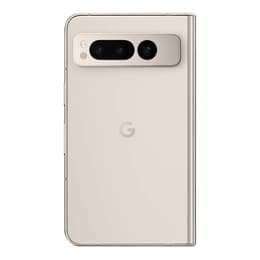
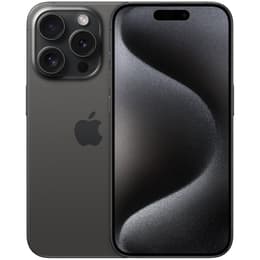
The Google Pixel Fold, released in June 2023, and the iPhone 15 Pro, launched in September 2023, represent distinct approaches to high-end smartphone design. The Pixel Fold introduces a foldable form factor, offering a larger, adaptable screen experience, while the iPhone 15 Pro maintains a traditional, compact slab design with a focus on refined performance and camera capabilities. Both devices operate on their respective flagship operating systems, Android and iOS, providing different user interfaces and ecosystem experiences.
Colour
Storage
When considering the long-term usability of these devices, their release timelines and software support policies are key factors. The Google Pixel Fold, launched in mid-2023, is guaranteed to receive five years of OS and security updates, extending its software support until at least June 2028. [17, 26, 32, 38] The iPhone 15 Pro, released a few months later in late 2023, typically benefits from Apple's longer-term software commitment, often receiving major iOS updates for five to seven years from its release. This suggests a slightly longer period of official software support for the iPhone. In terms of physical resilience, the Pixel Fold has faced some criticism regarding its durability, particularly concerning its inner display, though Google highlights its robust hinge design. [4] The iPhone 15 Pro features a Ceramic Shield front cover and a titanium frame, contributing to its overall sturdiness and IP68 dust and water resistance. [7, 9, 24] Repairability scores for the iPhone 15 Pro have seen improvements, with some assessments giving it a 7 out of 10, indicating a more repair-friendly design compared to previous models. [16, 42]
Year of Release
Compatible with latest Update
OS
Foldable
The performance of both devices is tailored to their respective operating systems and hardware architectures. The Google Pixel Fold is equipped with a processor designed for efficient multitasking and handling the demands of its dual-screen interface, ensuring smooth operation across various applications. [8, 11, 12, 14, 21, 28] It comes with 12 GB of RAM, which supports fluid transitions between apps and robust performance for demanding tasks. [4, 12, 14] Storage options for the Pixel Fold include 256 GB and 512 GB. [4, 12, 14] The iPhone 15 Pro features a highly capable processor that delivers strong performance for gaming, complex applications, and video editing, known for its efficiency and speed. [7, 9, 24, 30] It includes 8 GB of RAM, optimized to work seamlessly with its operating system for responsive multitasking. [7, 24, 30] Storage configurations for the iPhone 15 Pro range from 128 GB up to 1 TB. [7, 24, 27, 30]
The display experience is a primary differentiator between these two devices, owing to their distinct form factors. The Google Pixel Fold features two OLED displays: a 5.8-inch outer screen and a 7.6-inch inner foldable screen when unfolded. [4, 12, 14, 20] Both displays offer a 120 Hz refresh rate for smooth visuals and provide vibrant colors and deep blacks. The outer screen has a resolution of 2092 × 1080 pixels (408 ppi) with a peak brightness of 1550 nits, while the inner screen has a resolution of 2208 × 1840 pixels (380 ppi) and a peak brightness of 1450 nits. [4, 12, 20] The iPhone 15 Pro features a single 6.1-inch Super Retina XDR OLED display with a resolution of 2556 × 1179 pixels (460 ppi). [1, 2, 3, 6, 7, 9, 13, 24, 29, 40, 41] It incorporates ProMotion technology, offering an adaptive refresh rate up to 120 Hz, and boasts impressive brightness levels, reaching 1000 nits typical, 1600 nits for HDR content, and up to 2000 nits peak for outdoor visibility. [1, 2, 3, 6, 7, 13, 24, 29, 40, 41]
Resolution
Screen type
Both the Google Pixel Fold and the iPhone 15 Pro offer advanced camera systems designed for high-quality photography and videography. The Pixel Fold features a versatile triple-camera setup on the rear, including a 48 MP main sensor, a 10.8 MP ultrawide lens, and a 10.8 MP telephoto lens capable of 5x optical zoom. [4, 11, 12, 14] It also has a 9.5 MP front camera on the outer display and an 8 MP camera on the inner display. [4, 12] This system is known for its computational photography capabilities, producing detailed images with accurate color reproduction. The iPhone 15 Pro is equipped with a professional-grade triple-camera system, featuring a 48 MP main camera, a 12 MP ultra-wide camera with a 120-degree field of view, and a 12 MP telephoto camera with 3x optical zoom. [1, 2, 3, 5, 13, 24, 25, 27, 30, 34, 35, 37] The main camera can capture detailed 24 MP photos by default and offers various focal lengths. [25, 34, 35, 37] For video, the iPhone 15 Pro supports 4K recording at up to 60 frames per second, including Cinematic mode and ProRes video recording, offering advanced options for content creators. [2, 3, 5, 24, 35] Its front-facing camera is a 12 MP sensor. [2, 3, 24, 30, 35]
Main camera
Front camera
Beyond core specifications, several practical elements differentiate these devices. The Google Pixel Fold supports modern connectivity standards, including 5G and Wi-Fi, and features a USB-C 3.2 Gen 2 port for data transfer and charging. [14, 20] It incorporates a side-mounted fingerprint sensor for biometric authentication. [14] In terms of physical characteristics, the Pixel Fold is a heavier device at 283 grams, and its folded dimensions are 139.7 x 79.5 x 12.1 mm, while unfolded it measures 139.7 x 158.7 x 5.8 mm. [4, 8, 12, 14, 18, 20, 22] The iPhone 15 Pro also supports 5G and Wi-Fi 6E, and notably transitions to a USB-C 3 port, offering faster data transfer speeds compared to its predecessor. [6, 7, 13, 24] It relies on Face ID for secure facial recognition and introduces a customizable Action Button, replacing the traditional mute switch, which can be programmed for various functions. [1, 19, 24, 30] The iPhone 15 Pro is lighter at 187 grams and has dimensions of 146.6 x 70.6 x 8.25 mm. [2, 3, 6, 7, 9, 24, 30] Its build materials include a titanium frame and Ceramic Shield front. [7, 9, 24, 27, 29, 33]
Weight
Screen size (in)
Mobile network
SIM card
Carrier compatibility
User feedback for the Google Pixel Fold often praises its innovative foldable design, offering a tablet-like experience in a pocketable form factor, and its capable camera system. [4, 28] However, some users have expressed concerns regarding its durability, particularly the inner screen, and its overall weight. [4] The iPhone 15 Pro is frequently lauded for its powerful performance, advanced camera capabilities, and premium build quality with its titanium frame. [5, 27, 34] Common points of discussion include its battery life, which is generally considered reliable for a full day of use, and the versatility of its camera system for both photos and videos. [2, 3, 5, 34, 35] Users appreciate the seamless iOS experience and the introduction of the customizable Action Button. [19, 30]
Users prioritizing a large, adaptable screen for productivity, media consumption, and a unique form factor may find the Google Pixel Fold well-suited to their needs. Its dual-screen functionality offers a distinct advantage for certain multitasking scenarios. Conversely, users who value a compact, robust device with a highly refined camera system, strong performance for demanding applications, and a long-standing software ecosystem may lean toward the iPhone 15 Pro. Its consistent performance and advanced video capabilities make it a strong choice for content creation and everyday reliability. Both devices represent significant engineering achievements in their respective categories, and choosing between them often comes down to individual preferences for form factor, operating system, and specific use cases. For those seeking an eco-friendly alternative, both models are available as quality-assured refurbished options, extending their lifecycle and reducing electronic waste.