
Compare models

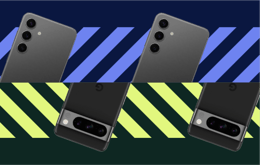
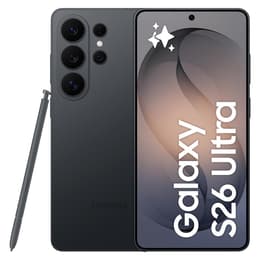
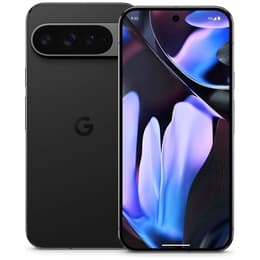
Galaxy S26 Ultra Vs Google Pixel 9 Pro XL

  • 1-year minimum warranty
  • Free delivery on all items
  • Free 30-day returns
Galaxy S26 Ultra
Starting at

Refurbished price:£855.00

Versus £1,279.00 new

See options
Google Pixel 9 Pro XL
Starting at

Refurbished price:£380.00

Versus £1,093.99 new

See options

Differences at a glance

The Samsung Galaxy S26 Ultra (2026) and the Google Pixel 9 Pro XL (2024) represent two distinct approaches to large-screen flagship smartphones. While the Galaxy S26 Ultra brings the latest hardware advancements and an integrated stylus, the Pixel 9 Pro XL focuses heavily on clean software integration and automated computational assistance. Both devices run the Android operating system, though they deliver different user interfaces and distinct update schedules that shape their long-term usability.

Available Models

Colour

Storage

Scores

Durability

Both smartphones are built to receive extended software support, though their launch timelines differ by two years, impacting their total active lifespan in the primary market.

  • Software support timelines: Both manufacturers provide multi-year operating system and security updates, ensuring long-term software relevance and security protection.
  • Repairability and build durability: Each device utilizes hardened exterior glass and reinforced metal frames, with standardized repair pathways available through quality-assured refurbished options that extend their overall lifecycle sustainably.
  • Expected practical lifespan: Component longevity is high for both models, meaning they will handle daily software demands smoothly for many years of typical use.

Year of Release

2026

2024

Compatible with latest Update

Yes

Yes

OS

Android

Android

Foldable

No

No

Performance

The Galaxy S26 Ultra and the Pixel 9 Pro XL handle everyday multitasking, demanding applications, and system navigation with high responsiveness, though they utilize different internal hardware configurations.

  • Multitasking and app switching: Generous system memory allocations allow both phones to keep numerous apps open simultaneously without noticeable slowdowns or frequent reloading.
  • Battery behavior and endurance: Both devices feature large battery capacities designed to last through a full day of mixed usage, supporting rapid charging standards when power runs low.
  • System responsiveness: App loading times, gaming execution, and general user interface fluidity remain consistently smooth across both platforms during heavy daily routines.

Screen quality

Display technology on both flagships delivers sharp visuals, vibrant color reproduction, and high peak brightness levels suitable for varied lighting environments.

  • Display panel technology: Both models use advanced OLED screens that produce deep black levels and high contrast for media consumption and text readability.
  • Outdoor visibility and brightness: High maximum brightness capabilities allow both screens to remain clearly legible under direct sunlight conditions.
  • Refresh rate smoothness: Adaptive refresh rate technology ensures that scrolling through web pages and animations appears fluid while conserving battery power during static viewing.

Resolution

1440 x 3120

1344 x 2992

Audiovisual

Photography and video recording suites on these devices offer versatile capabilities, ranging from high-resolution zoom features to computational enhancement tools.

  • Camera hardware versatility: Both systems include main wide lenses and ultra-wide options, with the Galaxy S26 Ultra adding specialized long-range zoom capabilities for distant subjects.
  • Low-light and everyday photography: Images captured in challenging lighting conditions benefit from advanced sensor technology and automated processing to preserve detail and minimize noise.
  • Audio and media output: Stereo speaker configurations on both smartphones deliver clear voice reproduction and balanced sound output for hands-free calls and video playback.

Front camera

12.0

42 megapixels

Miscellaneous

Practical daily usability elements, including connectivity standards, biometric sensors, and physical handling traits, differ slightly between the two models.

  • Biometric security features: Both devices offer responsive facial recognition and secure under-display fingerprint sensors for quick unlocking.
  • Physical dimensions and handling: The Galaxy S26 Ultra features a slightly more squared frame with an integrated stylus silo, whereas the Pixel 9 Pro XL employs rounded corners and a distinctive camera bar design.
  • Connectivity and ports: Modern 5G capabilities, fast Wi-Fi standards, and USB Type-C connectivity ports are standard across both smartphones for reliable data transfer.

Weight

214 g

221 g

Screen size (in)

6.9

6.8

Mobile network

5G

5G

SIM card

Physical SIM + eSIM

Physical SIM + eSIM

Carrier compatibility

Unlocked

Unlocked

Connector

USB-C

USB-C

What the community thinks

User feedback from online communities highlights distinct preferences for each device. Users frequently praise the Galaxy S26 Ultra for its comprehensive feature set, versatile camera zoom, and integrated productivity stylus. Conversely, users often commend the Pixel 9 Pro XL for its streamlined software experience, clean user interface, and intuitive photo editing tools. Some common criticisms point to the large physical footprint of both models, which can make one-handed operation challenging for certain users.

Users prioritizing advanced zoom photography and integrated stylus functionality may prefer the Galaxy S26 Ultra, while users seeking a streamlined software environment and straightforward daily usability may lean toward the Pixel 9 Pro XL. For those looking to make an eco-friendly choice, exploring a quality-assured refurbished option provides a sustainable pathway to owning either of these capable devices without compromising on performance.