
Google Pixel 9 Pro XL Vs iPhone 16 Pro Max

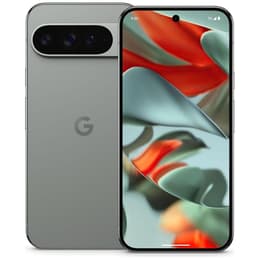
Google Pixel 9 Pro XL
Starting at

Refurbished price:£384.00

Versus £1,093.99 new

See options
iPhone 16 Pro Max
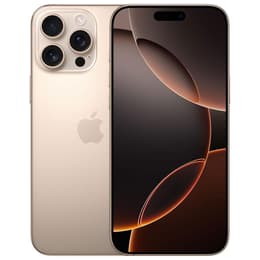
iPhone 16 Pro Max
Starting at

Refurbished price:£658.00

Versus £1,199.00 new

See options

Ratings

The Google Pixel 9 Pro XL and the iPhone 16 Pro Max represent the pinnacle of their respective manufacturers' smartphone offerings, released in August and September 2024, respectively. While both devices aim to deliver a premium user experience, they approach this goal with distinct philosophies in terms of software integration, camera capabilities, and hardware design. The Pixel 9 Pro XL operates on Google's Android platform, emphasizing artificial intelligence and a highly customizable interface, whereas the iPhone 16 Pro Max runs on Apple's iOS, known for its streamlined ecosystem and robust performance.

Scores

Durability

When considering the long-term usability of these devices, both the iPhone 16 Pro Max and the Google Pixel 9 Pro XL offer substantial software support and robust build quality, contributing to a practical lifespan of several years.

  • Software Longevity: The Google Pixel 9 Pro XL is designed for extended software support, with Google committing to seven years of operating system updates, ensuring it remains current until Android 22. The iPhone 16 Pro Max, released in September 2024, is expected to receive iOS updates until approximately 2031, offering a similar duration of software relevance.
  • Build and Durability: Both devices feature advanced materials for enhanced resilience. The iPhone 16 Pro Max incorporates a titanium design with a Ceramic Shield front, which Apple states is significantly tougher than previous generations, though drop tests indicate glass remains a vulnerability. The Pixel 9 Pro XL utilizes Gorilla Glass Victus 2 on its display and back, coupled with a ceramic-aluminum build, demonstrating strong resistance to scratches and bending in durability assessments.
  • Practical Lifespan: Users can anticipate both smartphones to perform reliably for five to seven years, with battery degradation being a common factor that might necessitate replacement to maintain optimal performance. The extensive software support from both manufacturers means these devices will continue to receive security patches and new features for a considerable period.

Year of Release

2024

2024

Compatible with latest Update

Yes

Yes

Foldable

No

No

Performance

Both the Google Pixel 9 Pro XL and the iPhone 16 Pro Max are equipped with powerful internal components designed for demanding tasks, though their approaches to performance optimization differ.

  • Processing Power: The iPhone 16 Pro Max is powered by Apple's A18 Pro chip, featuring a 6-core CPU, a 6-core GPU, and a 16-core Neural Processing Unit. This configuration allows for smooth handling of complex applications, intensive gaming, and advanced on-device artificial intelligence tasks. The Pixel 9 Pro XL integrates Google's Tensor G4 processor, which is specifically optimized for AI and machine learning workloads, contributing to responsive app loading and efficient multitasking.
  • Multitasking and Responsiveness: The Pixel 9 Pro XL comes with 16GB of RAM, providing ample capacity for running numerous applications simultaneously and managing large datasets without slowdowns. The iPhone 16 Pro Max features 8GB of RAM, which, combined with iOS's efficient memory management, ensures a fluid user experience even with multiple apps open.
  • Battery Performance: The iPhone 16 Pro Max houses a 4685 mAh battery, delivering impressive endurance with an average of over 17 hours in web browsing tests and up to 33 hours of video playback. The Pixel 9 Pro XL is equipped with a 5060 mAh battery, which also provides strong all-day usage, with some tests showing it lasting around 18 hours and 50 minutes.

Memory (GB)

16 GB

8 GB

Screen quality

The visual experience on both the iPhone 16 Pro Max and the Google Pixel 9 Pro XL is characterized by high-quality displays, each offering distinct advantages in technology and presentation.

  • Display Technology and Clarity: The iPhone 16 Pro Max features a 6.9-inch Super Retina XDR OLED display, providing deep blacks, vibrant colors, and a resolution of 2868 by 1320 pixels at 460 pixels per inch. The Pixel 9 Pro XL sports a 6.8-inch QHD+ LTPO OLED display, also delivering excellent color reproduction and sharp visuals.
  • Brightness and Smoothness: Both devices offer high brightness levels for clear visibility in various lighting conditions. The iPhone 16 Pro Max reaches 1000 nits typical brightness and up to 2000 nits peak brightness, with ProMotion technology enabling an adaptive refresh rate from 1Hz to 120Hz for smooth scrolling and responsive interactions. The Pixel 9 Pro XL boasts a peak brightness of 3000 nits and a 120Hz refresh rate, ensuring a bright and fluid visual experience.
  • Viewing Experience: The iPhone 16 Pro Max features thinner bezels, contributing to an expansive, all-screen look. The Pixel 9 Pro XL also offers a large display with reduced bezels, providing an immersive viewing area for media consumption and productivity.

Resolution

1344 x 2992

1320 x 2868

Screen type

LTPO OLED

LTPO Super Retina XDR OLED

Audiovisual

Both the iPhone 16 Pro Max and the Google Pixel 9 Pro XL are designed with advanced camera systems, each excelling in different aspects of photography and videography.

  • Rear Camera Systems: The iPhone 16 Pro Max is equipped with a versatile triple-camera setup, including a 48MP main sensor with optical image stabilization, an upgraded 48MP ultrawide lens optimized for low-light conditions, and a 12MP telephoto lens offering 5x optical zoom. The Pixel 9 Pro XL also features a triple-camera array, comprising a 50MP main camera with OIS, a 48MP ultrawide with macro autofocus, and a 48MP telephoto lens capable of 5x optical zoom.
  • Photography Performance: The iPhone 16 Pro Max delivers excellent baseline photography with notable sharpness and color fidelity, performing well in low-light scenarios. The Pixel 9 Pro XL is praised for consistently good photos across various shooting conditions, with its computational photography enhancing image quality. The Pixel's ultrawide camera also includes a macro focus feature for detailed close-ups.
  • Video and Audio Capabilities: The iPhone 16 Pro Max supports 4K Dolby Vision video recording at up to 120 frames per second, offering high-quality video capture. The Pixel 9 Pro XL records 4K video at up to 60 frames per second, with an option for 8K video via cloud-based upscaling using its Video Boost feature. Both devices provide quality microphone performance for calls and recordings, and their speaker outputs are suitable for media consumption.

Main camera

50 megapixels

48 megapixels

Front camera

42 megapixels

12 megapixels

Miscellaneous

Beyond their core functionalities, the iPhone 16 Pro Max and Google Pixel 9 Pro XL offer a range of features that enhance user interaction and connectivity.

  • Connectivity and Ports: The iPhone 16 Pro Max supports Wi-Fi 7 and 5G NR for high-speed wireless communication, and includes satellite connectivity for emergency messaging. It features a Lightning port for charging and data transfer. The Pixel 9 Pro XL also offers 5G connectivity and supports Ultra-Wideband (UWB) for enhanced spatial awareness with compatible accessories. It utilizes a USB-C port for charging and data.
  • Biometrics and Interaction: The iPhone 16 Pro Max relies on Face ID for secure facial recognition and authentication, integrated within its Dynamic Island. It also introduces a new Camera Control button for quick access to camera functions. The Pixel 9 Pro XL features an under-display ultrasonic fingerprint scanner for biometric security.
  • Design and Handling: The iPhone 16 Pro Max has dimensions of 163.0 x 77.6 x 8.25 mm and weighs 227 grams, featuring a titanium frame and a matte glass back. The Pixel 9 Pro XL measures 162.8 x 76.6 x 8.5mm and incorporates a ceramic-aluminum build with a redesigned, horizontal camera bump. Both devices offer an IP68 rating for water and dust resistance.

Weight

221 g

227 g

Screen size (in)

6.8

6.9

Mobile network

5G

5G

SIM card

Physical SIM + eSIM

Physical SIM + eSIM

Carrier compatibility

Unlocked

Unlocked

Connector

USB-C

USB-C (USB 3)

The iPhone 16 Pro Max and the Google Pixel 9 Pro XL each present compelling options for users seeking a high-end smartphone experience, albeit with different strengths and focuses. Users often praise the iPhone 16 Pro Max for its exceptional battery life, robust ecosystem, and consistent camera performance, particularly its video capabilities. Some common criticisms, however, include the continued vulnerability of its glass construction to drops despite Ceramic Shield enhancements, and the incremental nature of some camera upgrades compared to its predecessor. The Pixel 9 Pro XL, on the other hand, receives acclaim for its advanced AI features, impressive display brightness, and the versatility of its camera system, especially the upgraded ultrawide and telephoto lenses. User feedback sometimes points to its durability, with its Gorilla Glass Victus 2 and ceramic-aluminum build proving resilient in tests.

Users prioritizing a highly integrated software experience, class-leading video recording, and a long-lasting battery will find the iPhone 16 Pro Max well-suited to their needs. Its consistent performance and established ecosystem make it a reliable choice for those deeply invested in Apple's services. Conversely, individuals who value cutting-edge artificial intelligence, a highly customizable Android experience, and a powerful, versatile photography suite may lean towards the Google Pixel 9 Pro XL. Its focus on computational photography and extended software support makes it an attractive option for users seeking a smart, adaptable device.

For those considering either of these advanced smartphones, exploring quality-assured refurbished options can provide an eco-friendly alternative, offering access to premium technology while supporting sustainable consumption.


See all articles

Our recent comparisons