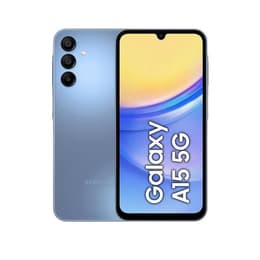


Galaxy A15 5G Vs Xiaomi Redmi Note 11 Pro 5G

Galaxy A15 5G
Galaxy A15 5G
Starting at

Refurbished price:£99.00

Versus £212.30 new

See options
Xiaomi Redmi Note 11 Pro 5G
Starting at

Refurbished price:£102.00

Versus £599.00 new

See options

Ratings

The Samsung Galaxy A15 5G, released in late 2023 and early 2024, and the Xiaomi Redmi Note 11 Pro 5G, launched in early 2022, are both smartphones designed to offer a balanced experience for everyday users. While both devices feature 5G connectivity and AMOLED displays, they differ significantly in their software longevity, display refresh rates, and camera capabilities. This comparison aims to highlight these distinctions to help users determine which device best suits their needs.

Scores

Durability

When considering the long-term usability of a smartphone, software support and physical resilience are key factors. The Galaxy A15 5G benefits from a more recent release and a longer commitment to software updates, while the Redmi Note 11 Pro 5G offers a more robust physical build with some water resistance.

  • Software Longevity: The Samsung Galaxy A15 5G launched with Android 14 and is promised four generations of OS upgrades and five years of security updates, extending its practical lifespan significantly. The Xiaomi Redmi Note 11 Pro 5G, released earlier with Android 11, typically receives fewer major OS updates and security patches, potentially limiting its software relevance sooner.
  • Physical Durability: The Redmi Note 11 Pro 5G features a glass front with Corning Gorilla Glass 5 protection and a glass back, encased in a plastic frame, offering a more premium feel and enhanced scratch resistance. It also boasts an IP53 rating for dust and splash resistance. The Galaxy A15 5G has a plastic frame and back, with an unspecified glass front, making a case advisable for added protection.
  • Expected Lifespan: Users prioritizing extended software support and the latest Android features will find the Galaxy A15 5G more appealing due to Samsung's update policy. The Redmi Note 11 Pro 5G, while physically durable, may see its software become outdated sooner.

Year of Release

2023

2022

Compatible with latest Update

Yes

No

OS

Android

Android

Foldable

No

No

Performance

The performance of a smartphone is crucial for daily tasks, from navigating apps to managing multiple activities. Both devices are equipped to handle typical usage, but they approach processing power and battery management with different priorities.

  • Processing Capabilities: The Galaxy A15 5G is powered by a processor that handles everyday applications and web browsing adequately. However, some users may notice a slight delay in app loading and general system responsiveness, particularly with more demanding tasks or extensive multitasking. The Redmi Note 11 Pro 5G features a processor designed for smoother and more efficient operation, providing a more fluid experience for demanding apps and gaming.
  • Multitasking and Responsiveness: While the Galaxy A15 5G can multitask effectively without frequently reloading apps, its overall speed might require a bit more patience from users accustomed to faster devices. The Redmi Note 11 Pro 5G generally offers a more responsive user experience, making transitions between applications and heavy usage feel quicker.
  • Battery and Charging: Both smartphones are equipped with a 5000 mAh battery, providing ample power for a full day of use. The Galaxy A15 5G offers excellent battery life, often lasting up to 1.5 days on average with moderate use, and supports 25W wired charging. The Redmi Note 11 Pro 5G also delivers good battery endurance and stands out with its significantly faster 67W wired charging, capable of reaching 50% charge in approximately 15 minutes and a full charge in about 42 minutes.

Memory (GB)

4 GB

6 GB

Screen quality

The display is a primary interface for any smartphone, and both the Galaxy A15 5G and the Redmi Note 11 Pro 5G offer vibrant viewing experiences, though with distinct characteristics in smoothness and brightness.

  • Display Technology and Clarity: Both devices feature Super AMOLED displays, known for their deep blacks and vibrant colors, providing an engaging visual experience. The Galaxy A15 5G has a 6.5-inch screen with a resolution of 1080 x 2340 pixels, ensuring clear and sharp visuals for media consumption and daily tasks. The Redmi Note 11 Pro 5G offers a slightly larger 6.67-inch display with a resolution of 1080 x 2400 pixels, maintaining similar clarity.
  • Refresh Rate and Brightness: The Galaxy A15 5G features a 90Hz refresh rate, which provides smoother scrolling and animations compared to standard 60Hz displays, and can reach up to 800 nits of brightness in high brightness mode, making it legible outdoors. The Redmi Note 11 Pro 5G elevates the experience with a 120Hz refresh rate, offering even more fluid motion, particularly beneficial for gaming and fast-paced content. Its display can achieve a peak brightness of up to 1200 nits, with a typical high brightness mode of 700 nits, ensuring excellent visibility in various lighting conditions.
  • Viewing Experience: While both screens are bright and colorful, the Redmi Note 11 Pro 5G's higher refresh rate provides a noticeably smoother interaction, which can be a significant advantage for users who prioritize visual fluidity. The Galaxy A15 5G has more noticeable bezels around its display.

Resolution

1080 x 2340

1080 x 2400

Screen type

Super AMOLED

Super AMOLED

Audiovisual

For many users, a smartphone's camera system is a key decision-making factor. Both the Galaxy A15 5G and the Redmi Note 11 Pro 5G come equipped with versatile camera setups, each with its strengths in capturing photos and videos.

  • Rear Camera System: The Samsung Galaxy A15 5G features a triple camera setup with a 50MP main sensor, a 5MP ultrawide lens, and a 2MP macro lens. It is capable of producing decent photos in well-lit conditions with good color balance. The Xiaomi Redmi Note 11 Pro 5G boasts a more pixel-dense 108MP main camera, an 8MP ultrawide, and a 2MP macro sensor. Its main camera delivers crisp images with vivid colors in daylight, and its night mode can significantly improve low-light shots.
  • Front Camera and Video: For selfies, the Galaxy A15 5G includes a 13MP front camera, while the Redmi Note 11 Pro 5G has a 16MP front camera. Both devices record video at a maximum of 1080p at 30 frames per second. The Redmi Note 11 Pro 5G's video recording, however, has been noted to lack effective stabilization.
  • Audio Experience: The Galaxy A15 5G features a single, mono speaker. In contrast, the Redmi Note 11 Pro 5G offers stereo speakers, providing a more immersive audio experience for media consumption.

Main camera

50 megapixels

108 megapixels

Front camera

13 megapixels

16 megapixels

Miscellaneous

Beyond the core features, several practical elements contribute to the overall user experience, including connectivity, physical design, and additional functionalities.

  • Connectivity and Ports: Both smartphones support 5G connectivity, Wi-Fi 5 (802.11ac), and feature a USB-C port for charging and data transfer, along with a 3.5mm headphone jack. The Galaxy A15 5G comes with Bluetooth 5.3, offering slightly newer wireless connectivity compared to the Redmi Note 11 Pro 5G's Bluetooth 5.1.
  • Biometrics and Additional Features: Both devices incorporate a side-mounted fingerprint sensor for secure and convenient unlocking. The Redmi Note 11 Pro 5G also includes an IR blaster, a useful feature for controlling household electronics.
  • Design and Handling: The Galaxy A15 5G measures 160.1 x 76.8 x 8.4 mm and weighs 200g. The Redmi Note 11 Pro 5G is slightly larger and heavier at 164.2 x 76.1 x 8.1 mm and 202g, but its flat-edge design and balanced weight contribute to a comfortable grip. The Redmi Note 11 Pro 5G's glass back gives it a more premium feel compared to the plastic back of the Galaxy A15 5G.

Weight

200 g

202 g

Screen size (in)

6.5

6.67

Mobile network

5G

5G

SIM card

Dual Physical SIM

Dual Physical SIM

Carrier compatibility

Unlocked

Unlocked

The Samsung Galaxy A15 5G and the Xiaomi Redmi Note 11 Pro 5G each present a compelling package, catering to different user priorities. User feedback often praises the Galaxy A15 5G for its exceptional battery life and Samsung's commitment to long-term software updates, making it a reliable choice for those who value longevity and consistent performance over several years. However, some users note its performance can feel less snappy for demanding tasks and its display bezels are more prominent.

On the other hand, the Redmi Note 11 Pro 5G is frequently lauded for its vibrant 120Hz AMOLED display, which offers a smoother visual experience, and its remarkably fast charging capabilities. Its main camera performs well in good lighting, and the inclusion of stereo speakers enhances media consumption. Criticisms often point to its older Android version at launch and a shorter software update cycle compared to Samsung, as well as less impressive ultrawide and macro cameras, and a lack of video stabilization.

Users prioritizing extended software support, consistent long-term performance, and outstanding battery life may find the Galaxy A15 5G to be a more suitable option. Conversely, those who value a smoother, higher refresh rate display, faster charging, and a more premium build with stereo speakers might lean towards the Redmi Note 11 Pro 5G. Both devices offer a solid foundation, and considering a quality-assured refurbished option for either model can provide an eco-friendly alternative for consumers.


See all articles

Our recent comparisons