
Galaxy A16 Vs Galaxy A55

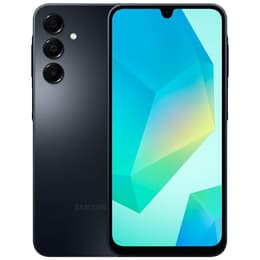
Galaxy A16
Galaxy A16
Starting at

Refurbished price:£100.62

Versus £206.96 new

See options
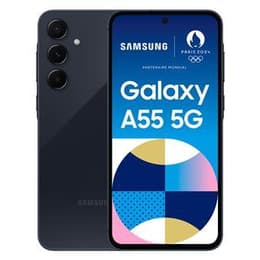
Galaxy A55
Galaxy A55
Starting at

Refurbished price:£193.21

Versus £479.00 new

See options

Ratings

The Samsung Galaxy A16 and Galaxy A55 are both Android smartphones from Samsung's A-series, designed to offer a balance of features and accessibility. The Galaxy A55 was released in March 2024, while the Galaxy A16 followed with a release in Europe in October 2024 and the US in January 2025. While both devices run on the Android operating system with Samsung's One UI, the Galaxy A55 generally offers more advanced features in areas like build quality, display technology, and camera capabilities, whereas the Galaxy A16 emphasizes extended software support.

Scores

Durability

When considering the longevity of these devices, both the Galaxy A16 and Galaxy A55 offer substantial software support, a key factor in a smartphone's practical lifespan. However, there are differences in their physical resilience and update commitments.

  • Software Updates: The Galaxy A16 is notable for its extended software commitment, receiving six years of Android operating system updates and security patches, with support expected to last until October 2030. The Galaxy A55, released earlier, is promised five years of software support, including OS upgrades and security updates.
  • Physical Durability: The Galaxy A55 features a more robust construction with a metal frame and Corning Gorilla Glass Victus+ on its front display, offering enhanced protection against drops and scratches. It also boasts an IP67 rating for dust and water resistance, meaning it can withstand immersion in up to 1 meter of fresh water for 30 minutes. In contrast, the Galaxy A16 utilizes a plastic frame and a 'Glastic' finish (plastic designed to mimic glass) and comes with an IP54 rating, providing protection against splashes and limited dust ingress.
  • Repairability: The Galaxy A55 has received a high repairability score of 8.5 out of 10, indicating that it is designed to be relatively easier to repair, with readily available parts and simpler disassembly procedures. Information regarding the repairability score for the Galaxy A16 is not as widely detailed, but its predecessor, the A15, was generally considered less repair-friendly than the A55's lineage.

Year of Release

2024

2024

Compatible with latest Update

Yes

Yes

OS

Android

Android

Foldable

No

No

Performance

The performance of a smartphone directly impacts how smoothly applications run and how efficiently daily tasks are handled. Both the Galaxy A16 and Galaxy A55 are equipped to manage typical smartphone usage, but they differ in their processing power and multitasking capabilities.

  • Processing Power: The Galaxy A55 is powered by a more advanced processor, which allows for smoother handling of demanding applications, more fluid multitasking, and a better experience with graphically intensive games. Users will notice quicker app loading times and more responsive interactions. The Galaxy A16, while capable for everyday tasks like browsing, email, and media consumption, may exhibit occasional lag when switching between multiple applications or during more intensive use.
  • Memory and Storage: The Galaxy A55 typically comes with higher RAM configurations, often starting at 8GB and going up to 12GB, which contributes to its superior multitasking performance. It offers internal storage options of 128GB or 256GB, expandable via microSD card up to 1TB. The Galaxy A16 is available with 4GB, 6GB, or 8GB of RAM and 128GB or 256GB of internal storage, with microSD expansion supporting up to 1.5TB.
  • Battery Endurance: Both devices are equipped with a 5000mAh battery, providing ample power for a full day of use for most users. The Galaxy A16 is often praised for its long battery life, potentially lasting up to two days with light to moderate usage. The Galaxy A55 also offers strong battery performance, though some heavy users have noted that its more powerful processor and higher refresh rate display can lead to more frequent charging compared to its predecessor. Both support 25W fast charging.

Memory (GB)

4 GB

8 GB

Screen quality

The display is a primary interface for smartphone interaction, and both the Galaxy A16 and Galaxy A55 offer vibrant viewing experiences, though with distinct differences in their capabilities.

  • Display Technology and Size: Both smartphones feature Super AMOLED displays, known for their deep blacks and vibrant colors. The Galaxy A16 has a 6.7-inch screen, while the Galaxy A55 features a 6.6-inch display. Both offer a Full HD+ resolution (2340 x 1080 pixels), ensuring clear and sharp visuals for everyday content.
  • Refresh Rate and Brightness: The Galaxy A55 provides a smoother visual experience with an adaptive refresh rate of up to 120Hz, which makes scrolling and animations appear more fluid. It also boasts a higher peak brightness of 1000 nits in High Brightness Mode (HBM), enhancing visibility in bright outdoor conditions. The Galaxy A16 features a 90Hz refresh rate, which is still smooth for most users, and a maximum brightness of 800 nits.
  • Outdoor Visibility: The Galaxy A55 includes a feature called Vision Booster, which optimizes color and contrast to improve screen visibility under direct sunlight. While the Galaxy A16's display is bright indoors, its adaptive brightness may struggle more in direct sunlight due to its lower peak brightness and lack of a similar enhancement feature.

Resolution

1080 x 2340

1080 x 2340

Screen type

Super AMOLED

Super AMOLED

Audiovisual

For many users, the camera system is a crucial aspect of a smartphone. Both the Galaxy A16 and Galaxy A55 are equipped with multiple cameras, but the Galaxy A55 offers a more advanced and versatile photography and videography experience.

  • Rear Camera System: The Galaxy A55 features a triple rear camera setup, including a 50MP main sensor with Optical Image Stabilization (OIS), a 12MP ultrawide lens, and a 5MP macro lens. The OIS on the main camera significantly improves photo clarity in various conditions and helps stabilize videos. The Galaxy A16 also has a triple rear camera system with a 50MP main sensor, a 5MP ultrawide lens, and a 2MP macro lens, but it lacks OIS.
  • Photography Performance: The Galaxy A55 generally delivers sharper, more detailed photos, especially in low-light conditions, thanks to its OIS and larger ultrawide sensor. Its image processing tends to produce natural colors. The Galaxy A16 performs well in good lighting, but its low-light performance can result in muddier colors and blurrier details. The ultrawide and macro cameras on the A16 are considered less capable than those on the A55.
  • Video Recording and Front Camera: The Galaxy A55 supports 4K video recording at 30 frames per second (fps) with good stabilization, and it has a 32MP front-facing camera capable of 4K video. The Galaxy A16 records video at up to 1080p at 30fps and features a 13MP front camera, also recording at 1080p. The A55's video capabilities and higher-resolution front camera make it more suitable for users who frequently record videos or take high-quality selfies.

Main camera

50 megapixels

50 megapixels

Front camera

13 megapixels

32 megapixels

Miscellaneous

Beyond the core specifications, several practical elements contribute to the overall user experience of a smartphone. The Galaxy A16 and Galaxy A55 offer different features in terms of connectivity, physical design, and additional functionalities.

  • Connectivity and Ports: Both devices support 5G connectivity, ensuring access to faster mobile networks. The Galaxy A55 supports Wi-Fi 6, offering improved wireless performance and efficiency, while the Galaxy A16 supports Wi-Fi 5. Both include Bluetooth 5.3 and a USB-C 2.0 port for charging and data transfer. Neither device features a traditional 3.5mm headphone jack.
  • Biometrics and Sensors: The Galaxy A55 incorporates an in-display fingerprint scanner for secure unlocking. It also features face recognition. The Galaxy A16 typically uses a side-mounted fingerprint sensor, often integrated into the power button, and also supports face recognition. Both phones include standard sensors like accelerometers, gyroscopes, and ambient light sensors.
  • Design and Handling: The Galaxy A55 features a more premium design with a metal frame and glass back, weighing 213 grams. The Galaxy A16 has a plastic build, weighing 200 grams, making it slightly lighter. The dimensions are similar, with the A16 being slightly taller and wider but thinner (164.4 x 77.9 x 7.9mm) compared to the A55 (161.1 x 77.4 x 8.2mm). The choice between them may come down to preference for a more premium feel versus a slightly lighter device.

Weight

200 g

213 g

Screen size (in)

6.7

6.6

Mobile network

4G

5G

SIM card

Dual Physical SIM

Dual Physical SIM

Carrier compatibility

Unlocked

Unlocked

Connector

USB-C

USB-C

User feedback for the Samsung Galaxy A16 often highlights its exceptional software support, with a commitment to six years of updates, which is a significant advantage for users seeking long-term device usability. Many appreciate its vibrant Super AMOLED display and reliable battery life that can extend beyond a single day for moderate use. However, common criticisms point to its performance, which some users find to be sluggish during multitasking or demanding applications, and its camera system, particularly the ultrawide and macro lenses, which are considered less impressive.

The Samsung Galaxy A55 generally receives praise for its more premium build quality, featuring a metal frame and Gorilla Glass Victus+ for enhanced durability. Users also commend its smoother 120Hz display and its more capable camera system, especially the main sensor with OIS and 4K video recording. Some users, however, have noted that while its battery capacity is large, its real-world endurance for heavy users might not always meet expectations, and its performance, while good for its segment, might not satisfy those accustomed to flagship-tier speed.

Users prioritizing extended software longevity and a highly accessible device for essential daily tasks may find the Galaxy A16 well-suited to their needs. Its long update cycle makes it a practical choice for those who prefer to keep their phones for many years. Conversely, individuals who value a more premium design, superior camera performance with optical image stabilization, a smoother display, and better overall processing power for more demanding applications will likely lean towards the Galaxy A55. Both devices offer a sustainable choice when considering quality-assured refurbished options, providing an eco-friendly alternative for consumers.

See all articles

Our recent comparisons