
Compare models
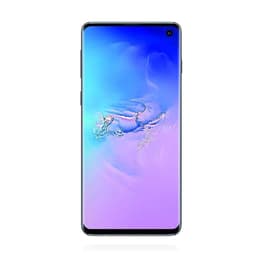
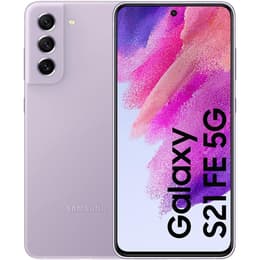
Galaxy S10 Vs Galaxy S21 FE 5G
- 1-year minimum warranty
- Free delivery on all items
- Free 30-day returns
Differences at a glance
The Samsung Galaxy S10, released in March 2019, and the Samsung Galaxy S21 FE 5G, launched in January 2022, represent different generations within Samsung's smartphone lineup. While both devices offer a premium Android experience, the S21 FE 5G introduces more modern hardware and extended software support, while the S10 provides a more compact design and traditional features. This comparison will highlight the key differences in their capabilities and features to help users determine which device best suits their needs.
Available Models
Colour
Storage (GB)
Scores
Durability
The practical lifespan of these devices is significantly influenced by their release dates and subsequent software support.
- Software Updates: The Galaxy S10, released in 2019, received its last major Android OS update in 2022 (Android 12) and has largely ceased receiving regular security updates by early 2024. The Galaxy S21 FE 5G, from 2022, is expected to receive major OS updates until early 2027 (up to Android 16) and security updates for a longer period.
- Longevity: Users prioritizing the latest software features and security patches will find the S21 FE 5G offers a considerably longer period of official support. The S10, while still functional, operates on older software, which can pose security risks and limit compatibility with newer applications.
- Repairability: The Galaxy S10 received a low repairability score of 3 out of 10 from iFixit, citing difficulties with battery replacement and excessive adhesive. In contrast, the Galaxy S21 FE 5G has a more moderate repairability score of 7.5 out of 10, indicating that many components are relatively easier to replace.
Year of Release
2019
2022
Compatible with latest Update
No
Yes
OS
Android
Android
Foldable
No
No
Performance
Performance differences between these two models are noticeable, particularly in demanding applications and multitasking, due to their generational gap in processing power.
- Everyday Responsiveness: The Galaxy S21 FE 5G, equipped with a newer generation processor, handles demanding apps, complex games, and heavy multitasking with greater fluidity and speed compared to the Galaxy S10.
- App Loading & Gaming: Users will experience faster app loading times and smoother frame rates in graphically intensive games on the S21 FE 5G. While the S10 was a capable device in its time, its older processor may show signs of slowdown with modern, resource-intensive applications.
- Storage and RAM: Both devices offer various storage options, typically starting at 128GB, with the S10 also supporting expandable storage via a microSD card, a feature absent in the S21 FE 5G. Both models are available with 6GB or 8GB of RAM, which contributes to smooth multitasking.
Screen quality
Both devices feature high-quality AMOLED displays, but the S21 FE 5G introduces advancements in refresh rate and overall viewing experience.
- Display Technology: Both utilize Dynamic AMOLED technology, providing deep blacks and vibrant colors. The S10 has a higher resolution (1440p) compared to the S21 FE 5G's 1080p display, though the difference in sharpness is often subtle in daily use.
- Refresh Rate: A key differentiator is the S21 FE 5G's 120Hz refresh rate, which delivers a noticeably smoother scrolling experience and more fluid animations compared to the S10's standard 60Hz display.
- Brightness and Size: The S21 FE 5G offers a slightly larger 6.4-inch display compared to the S10's 6.1-inch screen, providing a more expansive viewing area. The S10 features curved display edges, while the S21 FE 5G has a flat display.
Resolution
1440 x 3040
1080 x 2340
Screen type
Dynamic AMOLED
Dynamic AMOLED 2X
Audiovisual
The camera systems on both phones are capable, but the S21 FE 5G benefits from newer sensor technology and improved processing.
- Rear Camera System: Both feature versatile triple-camera setups. The S21 FE 5G generally produces more consistent and detailed images, especially in challenging lighting conditions, due to its updated sensors and image processing. The S10 has a 12MP wide, 12MP telephoto, and 16MP ultrawide lens. The S21 FE 5G features a 12MP wide, 12MP ultrawide, and an 8MP telephoto lens with 3x optical zoom.
- Video Recording: Both can record high-resolution video, but the S21 FE 5G offers more advanced stabilization and features, resulting in smoother and more professional-looking footage.
- Front Camera: The S21 FE 5G features a higher-resolution 32MP front camera, providing more detailed selfies and clearer video calls compared to the S10's 10MP front camera.
Main camera
12 megapixels
12 megapixels
Front camera
10 megapixels
32 megapixels
Miscellaneous
Beyond core specifications, several practical elements differentiate these two Samsung smartphones.
- Connectivity: The Galaxy S21 FE 5G supports 5G networks, offering significantly faster mobile data speeds where available, a feature absent on the 4G-only Galaxy S10. Both support Wi-Fi 6 and Bluetooth 5.0.
- Port Types: Both devices use a USB-C port for charging and data transfer. The Galaxy S10 retains a 3.5mm headphone jack, which is not present on the S21 FE 5G, requiring USB-C or wireless headphones. The S10 also offers a microSD card slot for expandable storage, which the S21 FE 5G lacks.
- Build and Handling: The S10 features a glass back, offering a premium feel, while the S21 FE 5G uses a plastic back, which can be more durable against drops. The S21 FE 5G is slightly larger and heavier due to its bigger screen and battery. Both devices carry an IP68 rating for dust and water resistance.
Weight
157 g
177 g
Screen size (in)
6.1
6.4
Mobile network
4G
5G
SIM card
Dual Physical SIM
Physical SIM
Carrier compatibility
Unlocked
Unlocked
What the community thinks
User feedback for the Galaxy S10 often praises its compact design, the inclusion of a headphone jack, and its once-premium build quality. However, common criticisms include its limited software update longevity and some users reported issues with battery drain and Wi-Fi connectivity over time. The S21 FE 5G, on the other hand, is frequently lauded for its extended software support, smooth 120Hz display, and improved camera performance. While its plastic back is sometimes noted, it is also seen as a practical choice for durability.
Users prioritizing a more compact device, the convenience of a 3.5mm headphone jack, and expandable storage may find the Galaxy S10 appealing, especially for basic daily tasks where cutting-edge performance is not the primary concern. However, it is important to consider its limited software support in the current landscape. Conversely, users who value long-term software updates, 5G connectivity, a smoother display for scrolling and gaming, and enhanced camera capabilities will find the Galaxy S21 FE 5G better suited to their needs. Opting for a quality-assured refurbished option for either device can be a sustainable choice, extending the life of these electronics and providing a practical alternative.