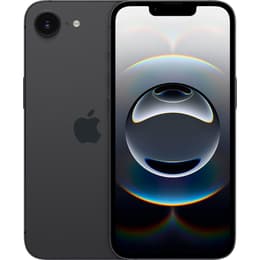

Galaxy A25 Vs iPhone 16e

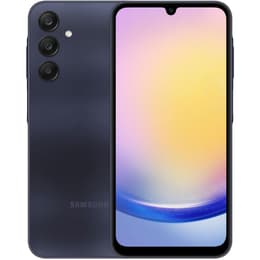
Galaxy A25
Galaxy A25
Starting at

Refurbished price:£121.00

Versus £272.58 new

See options
iPhone 16e
iPhone 16e
Starting at

Refurbished price:£359.00

Versus £599.00 new

See options

Ratings

The Samsung Galaxy A25 (released December 2023) and the hypothetical iPhone 16E (anticipated late 2025) represent distinct approaches to smartphone design and functionality. While the Galaxy A25 operates on Android, offering a customizable experience, the iPhone 16E would run on Apple's iOS, known for its integrated ecosystem. Key differentiators are expected to include display technology, camera capabilities, and overall software philosophy.

Scores

Durability

When considering the long-term usability of a smartphone, software support and physical resilience are important factors.

  • Software Longevity: The Samsung Galaxy A25 is slated to receive four major Android OS upgrades and five years of security updates from its December 2023 release, providing support until late 2028 for OS and late 2029 for security. The iPhone 16E, as an Apple device, would typically benefit from a longer software support window, often extending to five to seven years of major iOS updates, potentially offering a longer period of feature updates and security patches.
  • Physical Durability: The Galaxy A25 features a plastic back and sides, with its 6.5-inch Super AMOLED display protected by Gorilla Glass 5. While the iPhone 16E's exact materials are speculative, Apple's entry-level models typically combine a glass front and back with an aluminum frame, often incorporating advanced ceramic shield technology for enhanced drop protection on the display.
  • Repairability: Both devices are designed with modern smartphone construction, which can present challenges for user-level repairs. Professional repair services are generally recommended for both models to ensure proper functionality and maintain water resistance.

Year of Release

2023

2025

OS

Android

iOS

Foldable

No

No

Performance

Performance in daily use is influenced by the processor, RAM, and software optimization, impacting how smoothly applications run and how efficiently tasks are handled.

  • Processing Power: The Galaxy A25 is equipped with an octa-core processor, which handles everyday tasks like web browsing, social media, and moderate gaming with responsiveness. Users can expect smooth navigation and efficient multitasking. The iPhone 16E would likely feature a current-generation Apple-designed processor, providing robust performance for demanding applications, advanced gaming, and complex computational tasks, ensuring a highly fluid user experience.
  • Multitasking and Storage: The Galaxy A25 offers 6GB or 8GB of RAM, coupled with 128GB or 256GB of internal storage, expandable via a microSD card up to 1TB. This expandability provides flexibility for users with large media libraries. The iPhone 16E would typically come with ample RAM for seamless multitasking within iOS and storage options starting from 128GB, though without expandable storage.
  • Battery Behavior: The Galaxy A25 includes a 5000 mAh battery, designed to provide extended usage throughout the day for most users. The iPhone 16E would be optimized for efficient power consumption, aiming for a full day of typical use, though its battery capacity might be numerically smaller due to different hardware and software optimizations.

Memory (GB)

6 GB

8 GB

Screen quality

The visual experience is largely defined by the display technology, resolution, and refresh rate, affecting clarity, color, and smoothness.

  • Display Technology and Clarity: The Galaxy A25 features a 6.5-inch Super AMOLED display with a Full HD+ resolution (1080 x 2340 pixels). This technology delivers deep blacks and vibrant colors, enhancing media consumption. The iPhone 16E would likely offer a high-quality display, potentially a Liquid Retina IPS LCD or a basic OLED, known for accurate color reproduction and sharp text, though its screen size might be slightly more compact.
  • Brightness and Outdoor Visibility: The Galaxy A25's display can reach up to 1000 nits in High Brightness Mode, aided by Vision Booster for improved outdoor visibility. The iPhone 16E would also feature a bright display, optimized for various lighting conditions, ensuring content remains visible even in direct sunlight.
  • Refresh Rate: The Galaxy A25 boasts a 120Hz refresh rate, contributing to smoother scrolling and a more fluid visual experience, particularly noticeable in fast-paced content and general navigation. The iPhone 16E, as an entry-level model, would likely maintain a standard 60Hz refresh rate, which is sufficient for most daily tasks but less fluid than higher refresh rate displays.

Resolution

1080 x 2340

2532x1170

Audiovisual

Camera systems are a primary consideration for many users, with differences in sensor capabilities, lens configurations, and software processing.

  • Rear Camera System: The Galaxy A25 features a versatile triple-camera setup, including a 50MP main sensor with Optical Image Stabilization (OIS), an 8MP ultrawide lens, and a 2MP macro camera. This configuration allows for a range of photographic styles, from detailed main shots to expansive landscapes. The iPhone 16E would likely come with a dual-camera system, typically a high-resolution main sensor (e.g., 48MP with pixel binning) and an ultrawide lens, focusing on computational photography for consistent image quality across various conditions.
  • Photography Performance: The Galaxy A25's 50MP main camera captures detailed images, with OIS assisting in reducing blur in photos and videos. The ultrawide camera is suitable for capturing broader scenes. The iPhone 16E would excel in color accuracy, dynamic range, and low-light performance, leveraging its advanced image processing for reliable results in diverse environments.
  • Video Recording and Front Camera: Both devices support video recording, with the Galaxy A25 capable of 4K at 30 frames per second. It also has a 13MP front camera for selfies. The iPhone 16E would likely offer 4K video recording at higher frame rates (e.g., 60fps) and a 12MP front camera with advanced features like autofocus and improved low-light capabilities for video calls and selfies.

Front camera

13 megapixels

TrueDepth 12MP

Miscellaneous

Beyond core features, several practical elements contribute to the overall user experience, from connectivity to physical design.

  • Connectivity and Ports: The Galaxy A25 supports 5G connectivity, Wi-Fi 5 (802.11ac), Bluetooth 5.3, and includes a 3.5mm headphone jack and a USB Type-C 2.0 port. The iPhone 16E would also feature 5G, likely with newer Wi-Fi 6E standards and Bluetooth 5.3 or 5.4. It would adopt a USB-C port, aligning with current industry trends, but would not include a 3.5mm headphone jack.
  • Biometric Security: The Galaxy A25 incorporates a side-mounted fingerprint sensor for secure unlocking and authentication. The iPhone 16E would rely on Face ID, Apple's facial recognition system, for biometric security.
  • Design and Handling: The Galaxy A25 measures 161.0 x 76.5 x 8.3 mm and weighs 197g, featuring a design with rounded corners and a plastic build. The iPhone 16E would likely offer a more compact form factor, potentially lighter, with a design emphasizing a balance of aesthetics and ergonomics, often with flatter edges.

Weight

197 g

167 g

Screen size (in)

6.5

6.1

Mobile network

5G

5G

SIM card

Dual Physical SIM

eSIM

Carrier compatibility

Unlocked

Unlocked

Connector

USB-C

USB-C

The Samsung Galaxy A25 and the hypothetical iPhone 16E cater to users with differing priorities and preferences within the smartphone market. User feedback for the Galaxy A25 often praises its vibrant Super AMOLED display with a high refresh rate, its long-lasting 5000 mAh battery, and Samsung's commitment to software updates for an affordable device. Some common observations include its plastic build and the presence of a notch for the front camera, which some users find less modern than punch-hole designs. The processor, while capable for daily use, is sometimes noted as not being the fastest in its class.

For the iPhone 16E, based on Apple's track record for entry-level iPhones, users would likely appreciate its robust and efficient performance, the seamless integration within the iOS ecosystem, and its consistent camera quality driven by advanced computational photography. Potential criticisms might revolve around a likely 60Hz display refresh rate and the absence of a 3.5mm headphone jack or expandable storage, which are common features in some Android counterparts.

Users prioritizing a large, high-refresh-rate AMOLED display, expandable storage, and a 3.5mm headphone jack may find the Samsung Galaxy A25 well-suited to their needs. Conversely, users who value a highly optimized software experience, strong long-term software support, and a powerful processor for demanding applications might lean towards the iPhone 16E. Both devices offer a quality-assured refurbished option, providing an eco-friendly alternative for consumers looking to make a sustainable choice.

See all articles

Our recent comparisons