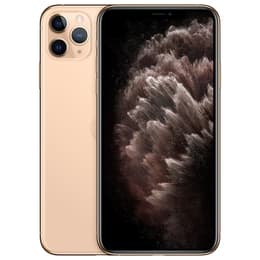
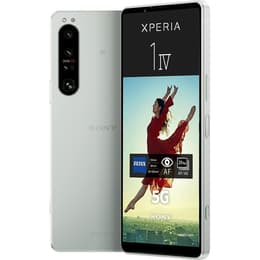

iPhone 11 Pro Max Vs Sony Xperia 1 IV

iPhone 11 Pro Max
iPhone 11 Pro Max
Starting at

Refurbished price:£181.00

Versus £749.00 new

See options
Sony Xperia 1 IV
Sony Xperia 1 IV
Starting at

Refurbished price:£346.00

Versus £1,500.00 new

See options

Ratings

The iPhone 11 Pro Max, released in September 2019, and the Sony Xperia 1 IV, launched in May 2022, represent distinct approaches to high-end smartphones from their respective manufacturers. While both offer premium experiences, the iPhone operates within Apple's iOS ecosystem, known for its long-term software support and integrated services, whereas the Xperia 1 IV runs on Android, distinguishing itself with a unique 4K 120Hz display and advanced camera features, including a true optical zoom lens.

Scores

Durability

Evaluating the longevity of these devices involves considering their release timelines, software support, and physical resilience.

  • Release and Software Support: The iPhone 11 Pro Max, launched in September 2019, typically receives major iOS updates for approximately 5-6 years from its release, meaning it is nearing the end of its major software update cycle. It shipped with iOS 13 and is upgradeable to iOS 17.2. The Sony Xperia 1 IV, released in May 2022, benefits from a newer launch date, generally receiving 2-3 major Android OS updates and around 3 years of security updates. This suggests the Xperia 1 IV will have a longer period of official software support moving forward.
  • Repairability: The iPhone 11 Pro Max received a repairability score of 6 out of 10 from iFixit, noting that critical display and battery repairs are prioritized in its design. The Sony Xperia 1 IV has a repairability score of 5.5 out of 10 from a teardown review, indicating a moderate level of repair difficulty.
  • Expected Lifespan: Both devices feature IP68 ratings for water and dust resistance, contributing to their physical durability. The iPhone 11 Pro Max features a textured matte glass back and a polished stainless steel band, while the Xperia 1 IV uses Gorilla Glass Victus on the front and back with an aluminum frame.

Year of Release

2019

2022

Compatible with latest Update

Yes

No

OS

iOS

Android

Foldable

No

No

Performance

Performance differences between these two devices are notable, primarily due to their release dates and underlying hardware architectures.

  • Processing Power: The iPhone 11 Pro Max is powered by a chip that, while capable for its time, offers smooth performance for everyday tasks and general app usage. For demanding applications and intensive gaming in 2026, users might notice it is less responsive compared to newer devices. The Sony Xperia 1 IV, featuring a more recent processor, handles demanding apps, multitasking, and graphics-intensive games with greater fluidity and speed.
  • Multitasking and Storage: The iPhone 11 Pro Max comes with 4GB of RAM, which is sufficient for typical iOS multitasking but can be a limiting factor with numerous applications open simultaneously. Storage options include 64GB, 256GB, and 512GB. The Sony Xperia 1 IV offers a more generous 12GB of RAM, providing ample headroom for extensive multitasking and resource-heavy applications. It is available with 256GB or 512GB of internal storage and uniquely offers expandable storage via a microSD card slot.
  • Battery Behavior: The iPhone 11 Pro Max is equipped with a 3969 mAh battery, which was considered excellent for its generation, often providing 10-15 hours of use for many users. The Sony Xperia 1 IV houses a larger 5000 mAh battery. While its larger capacity suggests extended usage, the high-resolution, high-refresh-rate display can consume more power, leading to varied real-world battery performance depending on usage patterns.

Memory (GB)

4 GB

12 GB

Screen quality

The display technologies and features of these two smartphones offer distinct visual experiences.

  • Display Technology and Resolution: The iPhone 11 Pro Max features a 6.5-inch Super Retina XDR OLED display with a resolution of 2688 by 1242 pixels, resulting in a pixel density of 458 pixels per inch (ppi). This provides sharp images and vibrant colors. The Sony Xperia 1 IV also has a 6.5-inch OLED display, but it boasts a 4K resolution (3840 x 1644 pixels) with a higher pixel density of 643 ppi, offering exceptional clarity. The Xperia's display also features a unique 21:9 aspect ratio, which is well-suited for cinematic content.
  • Brightness and Refresh Rate: The iPhone 11 Pro Max offers a typical maximum brightness of 800 nits, peaking at 1200 nits for HDR content, ensuring good visibility in various lighting conditions. Its display operates at a standard 60Hz refresh rate. The Sony Xperia 1 IV can reach a peak brightness of up to 1100 nits, providing strong outdoor visibility. A key differentiator for the Xperia 1 IV is its 120Hz refresh rate, which delivers smoother scrolling and more fluid animations compared to the iPhone 11 Pro Max's 60Hz display.

Resolution

1242 x 2688

1644 x 3840

Screen type

Super Retina XDR OLED

OLED

Audiovisual

Both devices offer capable camera systems, though with different strengths and features.

  • Rear Camera Systems: The iPhone 11 Pro Max features a triple 12-megapixel camera system, comprising wide, ultrawide, and telephoto lenses with 2x optical zoom. It introduced Night mode, significantly improving low-light photography for its time. The Sony Xperia 1 IV also has a triple 12-megapixel camera setup, but it stands out with a true optical zoom lens that can continuously adjust between 3.5x and 5.2x magnification, offering greater flexibility for distant subjects. It also includes a 3D iToF sensor for improved autofocus.
  • Video Recording and Front Camera: The iPhone 11 Pro Max is capable of recording 4K video at up to 60 frames per second (fps) with cinematic video stabilization. Its front-facing camera is a 12-megapixel sensor. The Sony Xperia 1 IV excels in video capabilities, offering 4K video recording at up to 120fps across all its rear lenses, providing more options for slow-motion capture. The Xperia 1 IV also features a 12-megapixel front camera capable of 4K video recording.
  • Audio Experience: The Xperia 1 IV includes a 3.5mm headphone jack, a feature absent on the iPhone 11 Pro Max, catering to users who prefer wired audio connections. The Xperia also features front-facing stereo speakers, which can enhance the media consumption experience.

Main camera

12 megapixels

12 megapixels

Front camera

12 megapixels

12 megapixels

Miscellaneous

Beyond core performance and display, several practical features differentiate these two devices.

  • Connectivity: The iPhone 11 Pro Max supports 4G LTE, Wi-Fi 6, and Bluetooth 5.0, along with NFC for Apple Pay and a U1 Ultra Wideband chip for spatial awareness. It does not support 5G connectivity. The Sony Xperia 1 IV offers more modern connectivity, including 5G, Wi-Fi 6E, and Bluetooth 5.2, providing faster wireless speeds and improved network performance.
  • Ports and Biometrics: The iPhone 11 Pro Max utilizes Apple's proprietary Lightning port for charging and data transfer and relies on Face ID for secure authentication. The Sony Xperia 1 IV features a universal USB-C port and a side-mounted fingerprint sensor for biometric security.
  • Physical Design and Handling: The iPhone 11 Pro Max measures 158 x 77.8 x 8.1 mm and weighs 226 grams. The Sony Xperia 1 IV is slightly taller and narrower at 165 x 71 x 8.2 mm and lighter at 185 grams, making it potentially easier to handle for some users despite its height, due to its 21:9 aspect ratio.

Weight

226 g

185 g

Screen size (in)

6.5

6,5

Mobile network

4G

5G

SIM card

Physical SIM + eSIM

Physical SIM + eSIM

Carrier compatibility

Unlocked

Unlocked

Connector

Lightning

USB-C + Jack 3.5mm

The iPhone 11 Pro Max and Sony Xperia 1 IV cater to different user priorities, reflecting their respective release years and design philosophies. Users often praise the iPhone 11 Pro Max for its robust and intuitive iOS ecosystem, consistent performance for everyday tasks, and a camera system that, while older, still delivers reliable results for general photography. Its battery life was a significant highlight at its launch. Common criticisms in 2026 often revolve around its aging design, the 60Hz display, the absence of 5G connectivity, and the proprietary Lightning port.

The Sony Xperia 1 IV, on the other hand, is frequently lauded for its distinctive features, including a stunning 4K 120Hz OLED display that offers unparalleled sharpness and smoothness, especially for media consumption. Its advanced camera system with true optical zoom and 4K 120fps video recording appeals to photography and videography enthusiasts. The inclusion of a 3.5mm headphone jack and expandable storage are also significant advantages for many users. However, some users have noted that the device can run warm under heavy loads, and the 4K display, while impressive, can impact battery life. The software update longevity, while good for Android, may not match Apple's extended support.

For users prioritizing a familiar and stable software experience with a reliable camera for general use, the iPhone 11 Pro Max remains a capable device, particularly as a quality-assured refurbished option. Those who value cutting-edge display technology, advanced and versatile camera capabilities, expandable storage, and the flexibility of the Android ecosystem, especially for creative pursuits, may find the Sony Xperia 1 IV to be a more suitable choice. Both devices, when considered as refurbished options, offer an eco-friendly alternative to purchasing new, allowing users to make informed and sustainable choices based on their specific needs.
See all articles

Our recent comparisons