
Galaxy A15 5G Vs Galaxy S20 5G

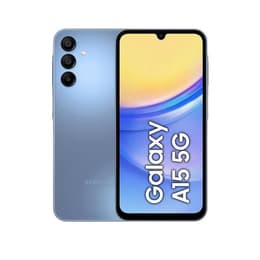
Galaxy A15 5G
Galaxy A15 5G
Starting at

Refurbished price:£99.00

Versus £212.30 new

See options
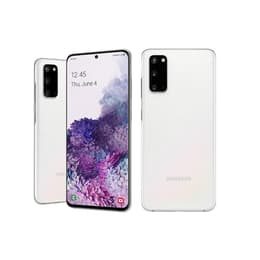
Galaxy S20 5G
Galaxy S20 5G
Starting at

Refurbished price:£133.00

Versus £899.00 new

See options

Ratings

The Samsung Galaxy A15 5G, released in December 2023, and the Samsung Galaxy S20 5G, launched in March 2020, represent different segments of Samsung's smartphone offerings. While both devices provide 5G connectivity and run on the Android operating system with Samsung's One UI, they cater to distinct user expectations. The A15 5G focuses on delivering essential features with extended software support, whereas the S20 5G, as a former flagship, emphasizes premium performance and advanced camera capabilities.

Scores

Durability

The practical lifespan of a smartphone is significantly influenced by its release timeline and the duration of software support it receives.

  • Software Longevity: The Galaxy A15 5G, being a newer device, launched with Android 14 and is promised four major OS upgrades and five years of security patches, extending its support until approximately 2029. In contrast, the Galaxy S20 5G, originally released with Android 10, has received updates up to Android 13, meaning its official software support period has concluded or is nearing its end.
  • Physical Durability: The Galaxy S20 5G features a more robust construction with Gorilla Glass 6 on both its front and back, complemented by an aluminum frame, and boasts an IP68 rating for dust and water resistance. The Galaxy A15 5G utilizes a plastic frame and back, and while it offers a solid build, it does not carry the same level of advanced ingress protection.
  • Repairability: Both devices, like many modern smartphones, present challenges for user repair due to their sealed designs. However, the S20 5G's internal components, while complex, were designed with a flagship standard, whereas the A15 5G's construction is typical of its segment.

Year of Release

2023

2020

Compatible with latest Update

Yes

No

OS

Android

Android

Foldable

No

No

Performance

The performance of these two devices reflects their respective positions in the market, with the S20 5G offering a more powerful experience due to its former flagship status.

  • Processing Power: The Galaxy S20 5G, equipped with a high-end processor from its release era, delivers smooth performance for demanding applications, intensive multitasking, and graphic-heavy gaming. The Galaxy A15 5G, featuring a more modest processor, handles everyday tasks and light applications competently, though users may notice slower app loading times and some lag during heavy multitasking or graphically intense games.
  • Multitasking and Storage: The Galaxy S20 5G typically comes with 8GB or 12GB of RAM, facilitating seamless switching between numerous applications. It also offers 128GB of UFS 3.0 internal storage, which is faster than the UFS 2.2 storage found in the A15 5G. The A15 5G is available with 4GB, 6GB, or 8GB of RAM and 64GB, 128GB, or 256GB of storage, which is sufficient for general use but may require more frequent app reloads with extensive multitasking. Both models support expandable storage via microSD cards.
  • Battery Behavior: The Galaxy A15 5G features a larger 5000 mAh battery, which generally provides excellent endurance, often lasting a full day or more for many users. The Galaxy S20 5G has a 4000 mAh battery, which offered all-day usage for its time, but its longevity may vary more significantly with intensive use and age. Both support 25W fast wired charging.

Memory (GB)

4 GB

12 GB

Screen quality

The display experience differs notably between these two Samsung smartphones, reflecting advancements and segment-specific optimizations.

  • Display Technology and Resolution: Both devices feature Super AMOLED or Dynamic AMOLED 2X displays, known for deep blacks and vibrant colors. However, the Galaxy S20 5G offers a higher resolution Quad HD+ (3200x1440 pixels) display, providing sharper images and finer detail compared to the Galaxy A15 5G's Full HD+ (2340x1080 pixels) screen.
  • Refresh Rate and Brightness: The Galaxy S20 5G boasts a 120Hz refresh rate, offering a smoother scrolling and viewing experience, particularly noticeable in fast-paced content, though this is typically at a lower resolution. The Galaxy A15 5G provides a 90Hz refresh rate, which is smoother than standard 60Hz displays. In terms of brightness, the S20 5G can reach up to 1200 nits peak brightness, while the A15 5G achieves up to 800 nits in high brightness mode, making the S20 5G potentially more visible in direct sunlight.
  • Screen Size and Design: The Galaxy A15 5G has a 6.5-inch display with a notch for the front camera and noticeable bezels. The Galaxy S20 5G features a slightly smaller 6.2-inch display with a punch-hole cutout for the camera and minimal bezels, offering a more immersive viewing area for its size.

Resolution

1080 x 2340

1440 x 3200

Screen type

Super AMOLED

Dynamic AMOLED 2X

Audiovisual

The camera systems on the Galaxy A15 5G and Galaxy S20 5G cater to different levels of photographic expectation and capability.

  • Rear Camera Capabilities: The Galaxy S20 5G features a versatile triple-camera setup with a 12 MP wide lens (with OIS and Dual Pixel PDAF), a 64 MP telephoto lens (with OIS and 3x hybrid optical zoom), and a 12 MP ultrawide lens. This configuration allows for detailed photos, effective optical zoom, and stable shots. The Galaxy A15 5G also has a triple-camera system, including a 50 MP main lens (with autofocus), a 5 MP ultrawide, and a 2 MP macro lens. Its main camera performs well in good lighting, but the ultrawide and macro lenses offer more limited utility.
  • Video Recording and Stability: The Galaxy S20 5G supports high-resolution video recording up to 8K at 24fps and 4K at 60fps, along with advanced stabilization features. The Galaxy A15 5G records video at up to 1080p at 30fps, which is suitable for casual use but lacks the higher resolution and advanced stabilization of the S20 5G.
  • Front Camera and Audio: For selfies, the S20 5G has a 10 MP front camera with Dual Pixel PDAF, providing sharp and detailed self-portraits. The A15 5G comes with a 13 MP front camera. The S20 5G also benefits from stereo speakers for a more immersive audio experience, while the A15 5G features a mono speaker.

Main camera

50 megapixels

12 megapixels

Front camera

13 megapixels

10 megapixels

Miscellaneous

Beyond core features, several practical elements differentiate the user experience between these two devices.

  • Connectivity and Ports: Both phones support 5G connectivity. The Galaxy S20 5G includes Wi-Fi 6 (802.11ax) and Bluetooth 5.0, along with a USB Type-C 3.2 port. The Galaxy A15 5G features Wi-Fi 5 (802.11ac) and Bluetooth 5.3, with a USB Type-C 2.0 port. A notable difference is the presence of a 3.5mm headphone jack on the Galaxy A15 5G, which is absent on the Galaxy S20 5G.
  • Biometric Security: The Galaxy S20 5G incorporates an ultrasonic in-display fingerprint scanner for convenient unlocking. The Galaxy A15 5G uses a side-mounted fingerprint scanner integrated into the power button. Both offer reliable biometric authentication.
  • Build Materials and Handling: The Galaxy S20 5G features a premium construction with Gorilla Glass 6 on the front and back, and an aluminum frame, contributing to a more robust and refined feel. It weighs 163g. The Galaxy A15 5G has a plastic build, which makes it lighter at 200g, but it may not feel as premium. The S20 5G also has an IP68 rating for water and dust resistance, a feature not present on the A15 5G.

Weight

200 g

163 g

Screen size (in)

6.5

6.2

Mobile network

5G

5G

SIM card

Dual Physical SIM

Dual Physical SIM

Carrier compatibility

Unlocked

Unlocked

The Samsung Galaxy A15 5G and Galaxy S20 5G cater to different user priorities, largely influenced by their release dates and original market positioning. Users often praise the Galaxy A15 5G for its exceptional battery life, vibrant AMOLED display, and Samsung's commitment to extended software updates, making it a reliable choice for long-term use. However, some common criticisms include its slower performance for demanding tasks and the limited quality of its ultrawide camera.

Conversely, the Galaxy S20 5G, as a former flagship, is frequently lauded for its powerful performance, high-resolution display with a smooth refresh rate, and a more capable and versatile camera system, including 8K video recording. User feedback sometimes points to its fingerprint scanner being less consistent and its software support having concluded, which means it will no longer receive the latest Android versions or security patches.

Users prioritizing a device with the longest possible software support and excellent battery life for everyday communication and media consumption may find the Galaxy A15 5G well-suited to their needs. For those who value a more premium build, higher display resolution, superior camera performance, and a more powerful processing experience for gaming or intensive applications, the Galaxy S20 5G could be a compelling option, especially as a quality-assured refurbished option. Both devices offer 5G connectivity, but their overall user experience is tailored to different expectations.

See all articles

Our recent comparisons