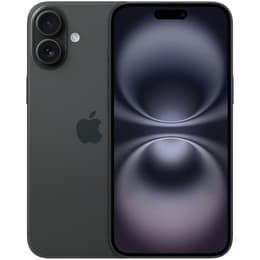
Google Pixel 7 Vs iPhone 16 Plus

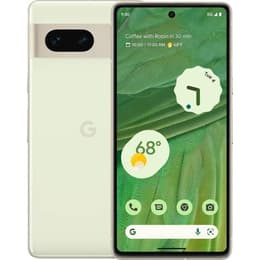
Google Pixel 7
Google Pixel 7
Starting at

Refurbished price:£134.00

Versus £729.00 new

See options
iPhone 16 Plus
iPhone 16 Plus
Starting at

Refurbished price:£503.46

Versus £799.00 new

See options

Ratings

The Google Pixel 7, released in October 2022, and the iPhone 16 Plus, launched in September 2024, represent distinct approaches to the smartphone experience from two major manufacturers. While both devices offer robust performance and advanced camera systems, they differ significantly in their operating system philosophies, hardware generations, and user interface designs. The Pixel 7 runs on Google's Android platform, emphasizing AI-driven features and a clean software experience, whereas the iPhone 16 Plus operates on Apple's iOS, known for its integrated ecosystem and user-friendly interface.

Scores

Durability

When considering the long-term usability of a smartphone, factors such as release timeline, software support, and repairability play a crucial role.

  • Release Timeline: The Google Pixel 7 was introduced in October 2022, making it an older model compared to the iPhone 16 Plus, which debuted in September 2024. This two-year difference in release dates impacts the expected lifespan of software support and hardware relevance.
  • Software Longevity: The Pixel 7 is guaranteed to receive software updates, including OS upgrades and security patches, until October 2027, providing a total of five years of support from its launch. In contrast, Apple typically offers extensive software support for its devices, with the iPhone 16 Plus expected to receive security updates for a minimum of five years from its release, and users often experience 6-7 years of updates.
  • Repairability: Both devices are designed with modern smartphone construction, which can present challenges for user-level repairs. Official repair options and parts availability are generally accessible for both brands, contributing to their practical lifespan.

Year of Release

2022

2024

Compatible with latest Update

Yes

Yes

Foldable

No

No

Performance

Performance in daily use is a key differentiator, influenced by the internal components and software optimization of each device.

  • Processing Power: The iPhone 16 Plus, featuring a newer generation processor, handles demanding applications and multitasking with notable speed and efficiency. The Pixel 7, while still capable for everyday tasks, offers smooth performance for general use and casual gaming.
  • System Responsiveness: Users of the iPhone 16 Plus will experience fluid navigation and quick app loading, benefiting from its more recent hardware and optimized operating system. The Pixel 7 provides a responsive experience for typical smartphone activities, with apps opening quickly and smooth transitions between them.
  • Storage and Multitasking: Both devices offer various storage configurations to suit different user needs. The iPhone 16 Plus comes with 8GB of RAM, supporting efficient multitasking, while the Pixel 7 also features 8GB of RAM, allowing for competent handling of multiple applications simultaneously.

Memory (GB)

8 GB

8 GB

Screen quality

The display is a primary interface for smartphone interaction, and both models offer distinct visual experiences.

  • Display Technology and Clarity: The iPhone 16 Plus features a 6.7-inch Super Retina XDR OLED display, providing sharp visuals with a resolution of 2796x1290 pixels at 460 pixels per inch. The Google Pixel 7 has a 6.3-inch FHD+ OLED display with a resolution of 2400x1080 pixels at 416 pixels per inch. Both offer vibrant colors and deep blacks characteristic of OLED technology.
  • Brightness and Outdoor Visibility: The iPhone 16 Plus offers high peak brightness levels, reaching up to 2000 nits for outdoor viewing, ensuring good visibility even in direct sunlight. The Pixel 7 also provides sufficient brightness for outdoor use, though it may not reach the same peak levels as the iPhone.
  • Refresh Rate and Smoothness: A notable difference lies in the refresh rate; the Pixel 7 features a 90Hz refresh rate, contributing to a smoother scrolling experience. The iPhone 16 Plus maintains a standard 60Hz refresh rate, which is generally smooth for most content but may appear less fluid during fast-paced scrolling compared to higher refresh rate displays.

Resolution

1080 x 2400

1290 x 2796

Screen type

AMOLED

Super Retina XDR OLED

Audiovisual

Both the Google Pixel 7 and the iPhone 16 Plus are recognized for their photographic capabilities, albeit with different strengths and features.

  • Rear Camera System: The Pixel 7 is equipped with a dual-camera setup, including a 50MP wide lens and a 12MP ultrawide lens, known for its computational photography that produces natural colors and sharp details, particularly excelling in low-light conditions. The iPhone 16 Plus features an advanced dual-camera system with a 48MP Fusion Main camera that also enables a 2x telephoto option, alongside a 12MP Ultra Wide lens, praised for its reliability and high-quality image and video capture.
  • Video Recording and Features: Both devices support 4K video recording at various frame rates. The iPhone 16 Plus introduces features like Spatial video recording and a dedicated Camera Control button, enhancing its video capabilities and user interaction. The Pixel 7 also offers strong video performance with good stabilization.
  • Front Camera and Audio: For selfies and video calls, the Pixel 7 has a 10.8MP ultrawide front camera, while the iPhone 16 Plus features a 12MP front camera. Both provide clear audio output through stereo speakers, suitable for media consumption and calls.

Main camera

50 megapixels

48 megapixels

Front camera

10.8 megapixels

12 megapixels

Miscellaneous

Beyond core features, several practical elements contribute to the overall user experience and device utility.

  • Connectivity and Ports: The iPhone 16 Plus supports Wi-Fi 7 and Bluetooth 5.3, offering advanced wireless connectivity, alongside 5G capabilities and a USB-C port. The Pixel 7 supports Wi-Fi 6 (802.11ax) and Bluetooth 5.2, also featuring 5G and a USB-C port for charging and data transfer.
  • Biometrics and Security: The Pixel 7 incorporates an under-display optical fingerprint sensor for secure unlocking and authentication, which has seen improvements through software updates. The iPhone 16 Plus relies on Face ID for facial recognition, offering a secure and convenient biometric option.
  • Design and Handling: The Pixel 7 measures 155.6 x 73.2 x 8.7 mm and weighs 197g, featuring a design with Gorilla Glass Victus and an aluminum frame. The iPhone 16 Plus is slightly larger at 160.9 x 77.8 x 7.8 mm and weighs 199g, constructed with an aluminum design, Ceramic Shield front, and color-infused glass back, and includes an Action button for customizable shortcuts.

Weight

197 g

199 g

Screen size (in)

6.3

6.7

Mobile network

5G

5G

SIM card

Physical SIM + eSIM

Physical SIM + eSIM

Carrier compatibility

Unlocked

Unlocked

Connector

USB-C + Jack 3.5mm

USB-C (USB 2)

User feedback for the Google Pixel 7 often praises its exceptional camera performance, particularly its computational photography capabilities that deliver impressive results in various lighting conditions. Many users also appreciate its clean Android experience and the integration of Google's AI features. Common criticisms have sometimes pointed to mixed battery life experiences, especially during the initial usage period, and the performance of the in-display fingerprint sensor, though this improved with software updates.

The iPhone 16 Plus receives high marks for its significantly improved battery life, with many users reporting extended usage times of up to two or even three days with casual use. Its powerful processor ensures smooth performance across all tasks, and the camera system is lauded for its reliability and new features like Spatial Video. A frequent point of discussion, however, is its 60Hz display, which some users find less fluid compared to devices with higher refresh rates.

Users prioritizing an advanced camera system with strong AI integration and a pure Android experience may find the Google Pixel 7 well-suited to their needs. Those who value extended battery life, a highly integrated ecosystem, and robust performance for demanding applications will likely lean towards the iPhone 16 Plus. Both devices offer compelling features, and for consumers looking for a more sustainable choice, quality-assured refurbished options are available, providing an eco-friendly alternative to purchasing new.


See all articles

Our recent comparisons