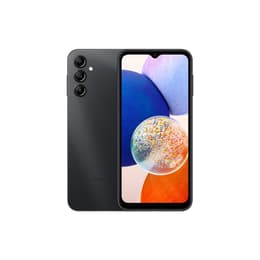


Galaxy A14 Vs Xiaomi Redmi Note 11 Pro 5G

Galaxy A14
Galaxy A14
Starting at

Refurbished price:£82.00

Versus £269.00 new

See options
Xiaomi Redmi Note 11 Pro 5G
Starting at

Refurbished price:£98.00

Versus £599.00 new

See options

Ratings

The Samsung Galaxy A14 and the Xiaomi Redmi Note 11 Pro 5G are both smartphones designed to offer a balanced experience for everyday use. Released in January 2023 and January 2022 respectively, these devices cater to users seeking reliable performance and modern features. While the Galaxy A14 runs on a more recent Android version out of the box, the Redmi Note 11 Pro 5G distinguishes itself with a superior display and faster charging capabilities.

Scores

Durability

When considering the long-term usability of these devices, several factors come into play, including their release timeline, software support, and physical durability.

  • Release Timeline: The Xiaomi Redmi Note 11 Pro 5G was released in January 2022, making it approximately a year older than the Samsung Galaxy A14, which launched in January 2023. This difference in release date can impact the overall practical lifespan, particularly concerning software updates.
  • OS Support: The Galaxy A14 launched with Android 13 and is slated to receive two major OS updates and four years of security updates, extending its software support until around 2027. The Redmi Note 11 Pro 5G, initially running Android 11 with MIUI 13, typically receives two major Android updates and three years of security updates, which means its official software support period may conclude sooner than the Galaxy A14's.
  • Physical Durability: The Redmi Note 11 Pro 5G features Gorilla Glass 5 protection on its display, offering a degree of scratch and drop resistance. The Galaxy A14 does not explicitly mention a specific display protection, suggesting a more standard glass. Both devices feature plastic backs, contributing to a solid, yet not premium, in-hand feel.

Year of Release

2023

2022

Compatible with latest Update

No

No

OS

Android

Android

Foldable

No

No

Performance

The performance of a smartphone is crucial for daily tasks, from app navigation to more demanding applications. Both devices offer capable performance for their segment.

  • Processor Capabilities: The Galaxy A14 is equipped with an octa-core processor that handles everyday tasks smoothly, providing a responsive experience for general usage and light multitasking. The Redmi Note 11 Pro 5G features a different octa-core processor that offers a slightly more robust performance, particularly noticeable in app loading times and smoother transitions, though it is not designed for intensive gaming.
  • Multitasking and Responsiveness: Both phones come with various RAM configurations, typically ranging from 4GB to 8GB. The Redmi Note 11 Pro 5G's configurations often start at 6GB RAM, which can contribute to a more fluid multitasking experience compared to the base models of the Galaxy A14. Users of the Galaxy A14 have reported occasional stutters in animations and app transitions, especially with heavier use.
  • Storage Options: Both devices offer internal storage options of 64GB or 128GB, and both support expandable storage via a microSD card up to 1TB, providing ample space for apps, photos, and media. The Galaxy A14 5G uses UFS 2.2 storage, which is generally faster than the eMMC storage found in some 4G variants of the A14. The Redmi Note 11 Pro 5G also utilizes UFS 2.2 storage.
  • Battery Behavior: Both phones house a substantial 5000mAh battery, capable of lasting a full day for most users. The Redmi Note 11 Pro 5G stands out with its 67W turbo charging, allowing it to reach 50% charge in about 15 minutes and a full charge in under an hour. The Galaxy A14 supports 15W wired charging, which takes significantly longer to fully charge the device.

Memory (GB)

4 GB

6 GB

Screen quality

The display is a primary interaction point, and both phones offer different visual experiences.

  • Display Technology and Clarity: The Xiaomi Redmi Note 11 Pro 5G features a 6.67-inch Super AMOLED display, known for its deep blacks, vibrant colors, and excellent contrast. The Samsung Galaxy A14, on the other hand, uses a 6.6-inch PLS LCD panel. While the PLS LCD offers good viewing angles and color reproduction, it generally does not match the contrast and vibrancy of an AMOLED screen. Both displays offer Full HD+ resolution (1080 x 2400 for Redmi, 1080 x 2408 for A14), ensuring sharp visuals.
  • Brightness and Outdoor Visibility: The Redmi Note 11 Pro 5G boasts a peak brightness of 1200 nits and a typical high brightness mode (HBM) of 700 nits, making it highly visible even in bright sunlight. The Galaxy A14's LCD screen, while adequate indoors, may struggle with visibility under direct sunlight due to lower brightness levels.
  • Refresh Rate: The Redmi Note 11 Pro 5G offers a 120Hz refresh rate, providing a noticeably smoother scrolling and animation experience. The Galaxy A14 features a 90Hz refresh rate, which is an improvement over standard 60Hz displays but less fluid than the Redmi's 120Hz.

Resolution

1080 x 2408

1080 x 2400

Screen type

PLS LCD

Super AMOLED

Audiovisual

For many users, camera performance is a key differentiator. Both phones offer multi-camera setups with varying strengths.

  • Rear Camera System: The Xiaomi Redmi Note 11 Pro 5G features a triple camera setup with a 108MP main sensor, an 8MP ultrawide lens, and a 2MP macro lens. The 108MP main sensor is capable of capturing detailed images, especially in good lighting. The Samsung Galaxy A14 5G also has a triple camera system, consisting of a 50MP main sensor, a 2MP macro, and a 2MP depth sensor. Notably, the 5G variant of the A14 lacks an ultrawide lens, which is present on the Redmi Note 11 Pro 5G and the 4G variant of the A14.
  • Photography Performance: In well-lit conditions, both main cameras can produce good photos with decent detail and color. The Redmi Note 11 Pro 5G's 108MP sensor, utilizing pixel-binning technology, can deliver sharp results. However, its secondary cameras (ultrawide and macro) are often described as less impressive. The Galaxy A14's main 50MP camera performs well in daylight, but both phones show limitations in low-light conditions, with the A14 lacking a dedicated night mode in some instances.
  • Video Recording: Both devices are limited to 1080p video recording at 30 frames per second for both front and rear cameras. Neither supports 4K video capture, which is a limitation for users prioritizing high-resolution video content.
  • Front Camera: The Redmi Note 11 Pro 5G has a 16MP front-facing camera, while the Galaxy A14 features a 13MP front camera. Both are suitable for selfies and video calls in good lighting.

Main camera

50 megapixels

108 megapixels

Front camera

13 megapixels

16 megapixels

Miscellaneous

Beyond core performance and display, several other features contribute to the overall user experience.

  • Connectivity: Both smartphones support 5G connectivity, along with dual-band Wi-Fi (802.11 a/b/g/n/ac) and NFC for contactless payments. The Galaxy A14 features Bluetooth v5.2, while the Redmi Note 11 Pro 5G uses Bluetooth 5.1.
  • Ports and Sensors: Both devices retain a 3.5mm headphone jack, a feature appreciated by many users. They both use a USB-C port for charging and data transfer. For security, both include a side-mounted fingerprint sensor. The Redmi Note 11 Pro 5G also includes an IR blaster, allowing it to function as a universal remote control.
  • Design and Handling: The Redmi Note 11 Pro 5G has dimensions of 164.19 x 76.1 x 8.12 mm and weighs 202g. The Galaxy A14 is slightly larger and heavier at 167.7 x 78.0 x 9.1 mm and 205g. The Redmi Note 11 Pro 5G features a glass back with a matte finish, giving it a more refined feel, while the Galaxy A14 has a plastic back.

Weight

201 g

202 g

Screen size (in)

6.6

6.67

Mobile network

4G

5G

SIM card

Dual Physical SIM

Dual Physical SIM

Carrier compatibility

Unlocked

Unlocked

The Samsung Galaxy A14 and the Xiaomi Redmi Note 11 Pro 5G each present a compelling package, though they cater to slightly different priorities. User feedback for the Galaxy A14 often praises its extended software support and reliable main camera performance in good lighting. However, some users note that its overall performance can feel less fluid, and the absence of an ultrawide camera on the 5G model is a frequent criticism. The Redmi Note 11 Pro 5G is widely lauded for its vibrant AMOLED display and exceptionally fast charging, with its 108MP main camera also receiving positive remarks. Common criticisms include its secondary cameras being less capable and the device launching with an older Android version.

Users prioritizing long-term software updates and a consistent, if not groundbreaking, user experience may find the Samsung Galaxy A14 well-suited to their needs. Its robust battery life and sharp display make it a practical choice for daily communication and media consumption. Conversely, individuals who value a more immersive visual experience with a high refresh rate AMOLED screen and rapid battery replenishment will likely lean towards the Xiaomi Redmi Note 11 Pro 5G. Its faster charging and more premium build materials also contribute to a distinct user profile fit.

Ultimately, the decision between these two devices depends on which features align best with individual usage patterns. Both offer solid foundations for everyday smartphone use, and considering a quality-assured refurbished option for either model can be a sustainable choice for consumers.


See all articles

Our recent comparisons