
Galaxy A25 Vs Galaxy A56

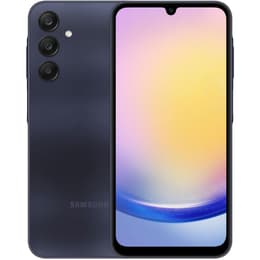
Galaxy A25
Galaxy A25
Starting at

Refurbished price:£121.00

Versus £272.58 new

See options
Galaxy A56
Galaxy A56
Starting at

Refurbished price:£274.00

Versus £422.50 new

See options

Ratings

The Samsung Galaxy A25 5G, released in late 2023, and the Samsung Galaxy A56 5G, launched in early 2025, are both Android smartphones from Samsung's popular A-series. While sharing the same operating system and core functionality, the Galaxy A56 introduces notable advancements in design, processing power, and long-term software support, positioning it as a more refined option in the mid-range segment.

Scores

Durability

When considering the practical lifespan of these devices, their release timelines and software support policies are key factors.

  • Release Timeline: The Galaxy A25 5G was released in December 2023, while the Galaxy A56 5G followed in March 2025, making the A56 a significantly newer device.
  • Software Longevity: The Galaxy A25 5G is expected to receive four years of Android operating system updates and five years of security updates, extending its support until approximately 2028. In contrast, the Galaxy A56 5G offers an extended commitment with six Android OS upgrades and six years of security updates, ensuring support until 2031. This longer support period means the A56 will remain current with the latest features and security patches for a more extended duration.
  • Build Durability: The Galaxy A56 5G features a more robust construction with a glass front and back protected by Gorilla Glass Victus+, complemented by an aluminum frame, and boasts an IP67 rating for dust and water resistance. The Galaxy A25 5G, while featuring a glass front, utilizes a plastic back and frame and does not carry an official IP rating for water and dust protection.

Year of Release

2023

2025

Compatible with latest Update

Yes

Yes

OS

Android

Android

Foldable

No

No

Performance

Both smartphones are designed to handle everyday tasks efficiently, but they differ in their underlying processing capabilities and memory configurations.

  • Processor Capabilities: The Galaxy A25 5G is powered by an Exynos 1280 processor, which provides decent performance for daily use, including web browsing, social media, and light gaming. However, some users have noted occasional sluggishness with more demanding applications or extensive multitasking. The Galaxy A56 5G features the newer Exynos 1580 processor, which offers a more powerful and efficient experience, resulting in smoother app loading, more fluid multitasking, and enhanced performance for graphically intensive games.
  • Multitasking and Storage: The Galaxy A25 5G is available with 6GB or 8GB of RAM, paired with 128GB or 256GB of internal storage. The Galaxy A56 5G steps up with options for 8GB or 12GB of RAM and 128GB or 256GB of storage. Both models support expandable storage via a microSD card, allowing users to increase their storage capacity as needed. The higher RAM options in the A56 contribute to a more seamless experience when switching between multiple applications.
  • Battery Behavior: Both devices are equipped with a 5000mAh battery. The Galaxy A25 5G generally provides excellent battery life, often lasting a full day for most users. The Galaxy A56 5G also offers substantial battery endurance, and it supports faster 45W wired charging compared to the A25's 25W charging, allowing for quicker power replenishment.

Memory (GB)

6 GB

8 GB

Screen quality

The visual experience on both devices is a highlight, featuring vibrant displays, though with some distinctions.

  • Display Technology and Clarity: Both the Galaxy A25 5G and Galaxy A56 5G feature Super AMOLED displays, known for their deep blacks and vibrant colors, providing a rich viewing experience for media consumption and general use. Both screens offer a Full HD+ resolution (2340x1080 pixels), ensuring sharp and clear visuals.
  • Brightness and Smoothness: Both phones boast a 120Hz refresh rate, contributing to smooth scrolling and fluid animations. The Galaxy A56 5G offers a higher peak brightness of 1900 nits, making it more easily viewable in bright outdoor conditions compared to the Galaxy A25 5G's 1000 nits peak brightness.
  • Screen Size and Protection: The Galaxy A25 5G has a 6.5-inch display, while the Galaxy A56 5G features a slightly larger 6.7-inch display, offering a more expansive viewing area. The A56 also benefits from Corning Gorilla Glass Victus+ protection, providing enhanced scratch and drop resistance.

Resolution

1080 x 2340

1080 x 2340

Screen type

Super AMOLED

Super AMOLED

Audiovisual

Both smartphones are equipped with versatile camera systems designed to capture various moments, with the A56 offering some enhancements.

  • Rear Camera System: The Galaxy A25 5G features a triple-camera setup with a 50MP main sensor with optical image stabilization (OIS), an 8MP ultrawide lens, and a 2MP macro lens. The Galaxy A56 5G also has a triple-camera array, including a 50MP main sensor with OIS, a 12MP ultrawide lens, and a 5MP macro lens. The A56's higher resolution ultrawide and macro sensors can capture more detail and offer greater versatility.
  • Photography Performance: The main camera on both devices performs competently in well-lit conditions, producing vibrant and detailed images. However, the Galaxy A56 5G generally offers improved camera capabilities, particularly in capturing sharp and vibrant images across different scenarios. Both may show limitations in very low-light environments, a common characteristic in this segment.
  • Video and Audio: Both phones are capable of recording 4K video at 30 frames per second from their main rear cameras. For audio, the Galaxy A25 5G includes a 3.5mm headphone jack and stereo speakers, providing a good media consumption experience. The Galaxy A56 5G also features stereo speakers but omits the 3.5mm headphone jack.

Main camera

50 megapixels

4K@30fps

Front camera

13 megapixels

13 megapixels

Miscellaneous

Beyond the core specifications, several practical elements differentiate the user experience of these two devices.

  • Connectivity and Ports: Both smartphones support 5G connectivity for fast mobile data. The Galaxy A56 5G features Wi-Fi 6 and Bluetooth 5.3, offering newer and potentially faster wireless connections compared to the Galaxy A25 5G's Wi-Fi 5 (802.11ac) and Bluetooth 5.1. The A25 retains a 3.5mm headphone jack, which is absent on the A56. Both utilize a USB-C port for charging and data transfer.
  • Biometric Security: The Galaxy A25 5G integrates a fingerprint sensor into its power button for secure unlocking. The Galaxy A56 5G features an under-display fingerprint sensor, offering a more integrated design. Both devices also support face recognition.
  • Design and Handling: The Galaxy A56 5G presents a more premium feel with its glass and aluminum construction, measuring 162.2 x 77.5 x 7.4 mm and weighing 198 grams. The Galaxy A25 5G, with its plastic build, measures 161 x 76.5 x 8.3 mm and weighs 197 grams, making it slightly thicker but marginally lighter. The A56's IP67 rating provides an added layer of protection against dust and water ingress.

Weight

197 g

197 g

Screen size (in)

6.5

6.5

Mobile network

5G

5G

SIM card

Dual Physical SIM

Dual Physical SIM + eSIM

Carrier compatibility

Unlocked

Unlocked

Connector

USB-C

USB-C

The Samsung Galaxy A25 5G and Galaxy A56 5G cater to slightly different user priorities within the mid-range smartphone market. User feedback for the Galaxy A25 often highlights its vibrant AMOLED display, reliable battery life, and competent cameras in good lighting conditions as strong points. However, some users have expressed concerns regarding its performance with demanding tasks and its plastic build. The Galaxy A56, being a newer model, receives praise for its more premium design, enhanced durability with an IP67 rating, a more powerful processor, and significantly longer software support.

Users prioritizing a device with extended software longevity, a more robust build, and smoother performance for a wider range of applications may find the Galaxy A56 5G better suited to their needs. Its faster charging and slightly larger, brighter display also contribute to a more refined overall experience. Conversely, users who value the presence of a 3.5mm headphone jack and are content with solid everyday performance for essential tasks might lean towards the Galaxy A25 5G. Both models offer a quality-assured refurbished option, providing an eco-friendly alternative for those looking to make a sustainable choice.

See all articles

Our recent comparisons