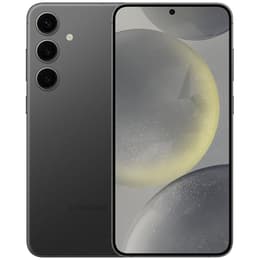


Galaxy S24+ Vs Google Pixel 9 Pro

Galaxy S24+
Galaxy S24+
Starting at

Refurbished price:£337.00

Versus £997.95 new

See options
Google Pixel 9 Pro
Google Pixel 9 Pro
Starting at

Refurbished price:£395.25

Versus £917.17 new

See options

Ratings

The Samsung Galaxy S24 Plus, released in January 2024, and the Google Pixel 9 Pro, launched in October 2024, represent two distinct approaches to the premium smartphone experience. While both devices operate on the Android platform, they differentiate themselves through their core hardware philosophies, camera systems, and integrated software features. The Galaxy S24 Plus emphasizes a balanced blend of powerful specifications and a refined user interface, whereas the Pixel 9 Pro focuses heavily on advanced computational photography and artificial intelligence capabilities.

Scores

Durability

When considering the long-term usability of these devices, both the Galaxy S24 Plus and the Pixel 9 Pro offer substantial software support and robust build quality.

  • Release Timeline and OS Support: The Galaxy S24 Plus was released in January 2024, while the Pixel 9 Pro followed in October 2024. Both manufacturers commit to an extensive seven years of operating system and security updates, ensuring a prolonged period of software relevance and security for users. This commitment means the Pixel 9 Pro will receive updates for approximately nine months longer due to its later release.
  • Build Materials and Durability: The Galaxy S24 Plus features an Armor Aluminum frame and is protected by Corning Gorilla Glass Victus 2 on both the front and back. It also carries an IP68 rating for dust and water resistance. The Pixel 9 Pro also utilizes Corning Gorilla Glass Victus 2 for its display and has a silky matte back with a polished metal frame, along with an IP68 rating for dust and water resistance. Google highlights the use of recycled materials, including a 100% recycled aluminum frame, in the Pixel 9 Pro's construction.
  • Expected Practical Lifespan: With comparable IP ratings and strong glass protection, both phones are designed to withstand daily use. The extended software support for both models suggests a practical lifespan that exceeds many other devices on the market, making them suitable for users seeking a device to keep for several years.

Year of Release

2024

2024

Compatible with latest Update

Yes

Yes

OS

Android

Android

Foldable

No

No

Performance

The performance of the Galaxy S24 Plus and the Pixel 9 Pro is tailored to their respective ecosystems, offering smooth operation for various tasks.

  • Processor Capabilities: The Galaxy S24 Plus is powered by either the Snapdragon 8 Gen 3 for Galaxy or the Exynos 2400, depending on the region. This hardware configuration allows for efficient handling of demanding applications, intensive multitasking, and graphic-heavy gaming experiences. The Pixel 9 Pro features Google's Tensor G4 processor, which is optimized for on-device artificial intelligence tasks and provides a responsive user experience across its operating system.
  • Multitasking and Storage: The Galaxy S24 Plus comes with 12GB of RAM, providing ample capacity for running multiple applications simultaneously without slowdowns. Storage options include 256GB and 512GB. The Pixel 9 Pro is available with 16GB of RAM, which further enhances its ability to manage numerous open applications and complex AI processes. It offers storage configurations ranging from 128GB up to 1TB.
  • Overall System Responsiveness: Both devices deliver a fluid and responsive user experience. The Galaxy S24 Plus excels in raw processing power for general tasks and gaming, while the Pixel 9 Pro leverages its specialized processor for seamless integration of AI features and efficient handling of its unique software functionalities.

Memory (GB)

12 GB

16 GB

Screen quality

Both smartphones offer high-quality displays designed for vibrant visuals and smooth interactions, though with some key differences in specifications.

  • Display Technology and Resolution: The Galaxy S24 Plus features a 6.7-inch Dynamic AMOLED 2X display with a QHD+ resolution of 3120 x 1440 pixels, resulting in a pixel density of 513 PPI. This provides a sharp and detailed viewing experience. The Pixel 9 Pro has a slightly smaller 6.3-inch OLED display with a resolution of 2856 x 1280 pixels, offering a pixel density of 495 PPI.
  • Brightness and Refresh Rate: The Galaxy S24 Plus boasts a peak brightness of 2600 nits, ensuring excellent visibility even in bright outdoor conditions. Its adaptive refresh rate ranges from 1Hz to 120Hz, optimizing smoothness while conserving battery life. The Pixel 9 Pro offers a peak brightness of 3000 nits (2000 nits typical HDR), making it exceptionally bright. It also features an adaptive refresh rate from 1Hz to 120Hz for fluid scrolling and efficient power usage.
  • Viewing Experience: Both displays provide vibrant colors and deep blacks characteristic of AMOLED and OLED panels. The Galaxy S24 Plus offers a slightly larger screen, which can be beneficial for media consumption, while the Pixel 9 Pro's higher peak brightness can be advantageous in direct sunlight.

Resolution

1440 x 3120

1280 x 2856

Screen type

Dynamic LTPO AMOLED 2X

LTPO OLED

Audiovisual

The camera systems on the Galaxy S24 Plus and Pixel 9 Pro are both capable, but they excel in different areas, reflecting their manufacturers' distinct photographic philosophies.

  • Rear Camera System: The Galaxy S24 Plus is equipped with a triple-lens setup: a 50MP main sensor with optical image stabilization (OIS), a 12MP ultrawide lens, and a 10MP telephoto lens offering 3x optical zoom with OIS. It supports 8K video recording. The Pixel 9 Pro also features a versatile triple camera system, including a 50MP main sensor (f/1.6, OIS), a 48MP ultrawide lens with macro focus (f/1.7, OIS), and a 48MP telephoto lens with 5x optical zoom (f/2.8, OIS) and up to 30x Super Res Zoom. The main camera can record 8K video.
  • Photography Performance: The Galaxy S24 Plus delivers consistently bright, detailed, and natural-looking photos across various lighting conditions, with strong performance from its main camera. The Pixel 9 Pro is renowned for its computational photography, producing exceptional photos with natural colors and crisp details, particularly excelling in low-light conditions with features like Night Sight and offering advanced AI-driven editing tools.
  • Front Camera and Video: Both phones feature capable front-facing cameras. The Galaxy S24 Plus has a 12MP front camera. The Pixel 9 Pro steps up with a 42MP front camera with autofocus, which is noted for flattering and clean selfies and reliable video performance, especially for vlogging in good lighting.

Main camera

50 megapixels

50 megapixels

Front camera

12 megapixels

42 megapixels

Miscellaneous

Beyond core specifications, several practical elements contribute to the overall user experience of these smartphones.

  • Connectivity and Ports: The Galaxy S24 Plus supports 5G, Wi-Fi 6E (with some regional variants supporting Wi-Fi 7), and Bluetooth 5.3. It includes a USB-C 3.2 port. The Pixel 9 Pro offers 5G, the newer Wi-Fi 7 standard, and Bluetooth 5.3. It also features a USB-C 3.2 connection.
  • Biometric Security and AI Features: Both devices incorporate an in-display ultrasonic fingerprint sensor for secure unlocking. The Pixel 9 Pro also includes facial recognition. The Galaxy S24 Plus integrates AI features such as Circle to Search and Live Translate. The Pixel 9 Pro leverages its Tensor G4 chip for extensive AI capabilities, including Gemini Nano integration, advanced call screening, and unique photo editing tools like 'Add Me' and 'Best Take'. It also offers satellite SOS support in certain regions.
  • Physical Characteristics: The Galaxy S24 Plus measures 158.5 x 75.9 x 7.7 mm and weighs 195g. The Pixel 9 Pro is slightly more compact, measuring 152.8 x 71.8 x 8.5 mm and weighing 199g. The Pixel 9 Pro's design features a sculpted body with rounded corners and a soft-touch matte back glass.

Weight

197 g

199 g

Screen size (in)

6.7

6.3

Mobile network

5G

5G

SIM card

Dual Physical SIM + eSIM

Physical SIM + eSIM

Carrier compatibility

Unlocked

Unlocked

Connector

USB-C

USB-C

The Samsung Galaxy S24 Plus and Google Pixel 9 Pro each present compelling options for users seeking a high-end Android smartphone, with distinct strengths catering to different priorities. User feedback for the Galaxy S24 Plus often highlights its excellent battery life, vibrant and bright display, and the overall polish of its software experience. Some users appreciate the inclusion of new AI features, though some regional variations in processor performance have been noted. The camera system is generally praised for its consistent and natural-looking results, though some desire more significant hardware upgrades in this area.

The Google Pixel 9 Pro receives considerable acclaim for its exceptional camera capabilities, particularly its computational photography and advanced AI-driven features that enhance image quality and offer unique editing possibilities. Users also frequently commend its improved battery life and the seamless integration of Google's AI assistant. The more compact size of the Pixel 9 Pro, while still offering a 'Pro' experience, is also a common point of praise.

Users prioritizing a large, exceptionally bright display and a powerful, all-around performance for gaming and demanding apps may find the Samsung Galaxy S24 Plus well-suited to their needs. Its refined user interface and extensive software support make it a reliable choice for a broad audience. Conversely, individuals who place a premium on cutting-edge camera technology, advanced on-device AI features, and a slightly more compact form factor will likely lean towards the Google Pixel 9 Pro. Its strengths lie in delivering a smart, intuitive, and photography-focused experience.

For those considering either device, exploring quality-assured refurbished options can provide an eco-friendly alternative, allowing access to these advanced technologies while making a sustainable choice.


See all articles

Our recent comparisons