Compare models

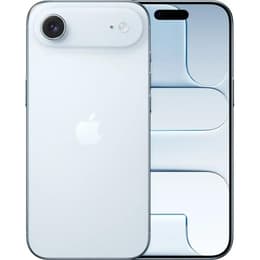
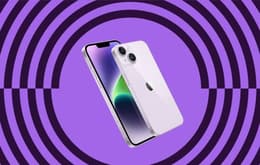
iPhone 14 Plus Vs iPhone Air

  • 1-year minimum warranty
  • Free delivery on all items
  • Free 30-day returns
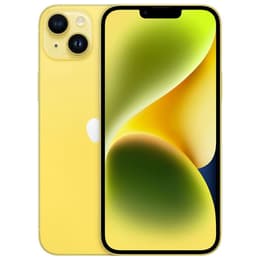
iPhone 14 Plus
Starting at

Refurbished price:£289.00

Versus £699.00 new

See options
iPhone Air
Starting at

Refurbished price:£560.00

Versus £1,099.00 new

See options

Differences at a glance

The iPhone 14 Plus (2022) and the iPhone Air (2025) represent two distinct philosophies within Apple's large-screen smartphone lineup, balancing screen workspace with physical handling. While the iPhone 14 Plus focuses on a traditional large-format build with dependable everyday capability, the iPhone Air introduces a radically slim profile and updated internal hardware. Both devices run modern versions of iOS, though the newer model benefits from an extended software support window.

Available Models

Colour

Storage

Scores

Durability

When evaluating the long-term viability of these two devices, differences in their release timelines and hardware generations shape their respective software support horizons and expected physical durability.

  • Software longevity: The iPhone Air benefits from a newer release year and extended operating system update support, whereas the iPhone 14 Plus is further along its lifecycle. Both models maintain high repairability standards with modular component designs.
  • Build resilience: The iPhone 14 Plus uses a traditional aluminum and glass construction, while the iPhone Air incorporates a titanium frame paired with reinforced glass to maintain structural integrity across its ultra-thin profile.
  • Expected lifespan: Users seeking maximum future readiness through prolonged system updates will find the newer internal architecture of the iPhone Air well-aligned with long-term utility.

Year of Release

2022

2025

Compatible with latest Update

Yes

Yes

OS

iOS

iOS

Foldable

No

No

Performance

Underneath the exterior, these devices handle demanding system tasks, multitasking routines, and storage management differently based on their internal hardware generations.

  • System responsiveness: The iPhone Air handles resource-heavy applications and complex multitasking smoothly due to its newer processing architecture, while the iPhone 14 Plus manages everyday apps and standard productivity tasks efficiently.
  • Memory and storage: The iPhone Air starts with higher baseline storage tiers and increased random access memory capacity, facilitating seamless background app management compared to the standard configurations of the iPhone 14 Plus.
  • Battery behavior: The larger physical footprint of the iPhone 14 Plus accommodates a higher capacity battery for extended daily endurance, whereas the slimmer profile of the iPhone Air requires more optimized power management during heavy use.

Screen quality

Both smartphones offer expansive viewing spaces utilizing advanced display panels, though they differ slightly in physical dimensions, refresh rates, and outdoor visibility.

  • Display technology: Both models feature bright OLED screens with deep contrast levels and vivid color reproduction, though the iPhone Air introduces an adaptive refresh rate for smoother scrolling animations.
  • Outdoor brightness: The iPhone Air reaches higher peak luminance levels for improved legibility under direct sunlight, while the iPhone 14 Plus provides adequate brightness for standard outdoor viewing environments.
  • Viewing experience: The iPhone 14 Plus provides a traditional large display format ideal for media consumption, whereas the iPhone Air balances a slightly more compact screen diagonal with minimal bezels.

Resolution

1284 x 2778

2736x1260

Screen type

Super Retina XDR OLED

Super Retina XDR

Audiovisual

Photography and media recording capabilities vary significantly, reflecting different design priorities between a multi-lens array and a streamlined single-lens system.

  • Camera configuration: The iPhone 14 Plus features a dual-lens setup including a main and an ultra-wide sensor, whereas the iPhone Air utilizes a single high-resolution main sensor housed within a raised camera plateau.
  • Low-light performance: Both devices incorporate computational photography engines to preserve image clarity and manage noise in challenging lighting conditions, though the higher-resolution sensor on the iPhone Air captures finer details.
  • Media and audio output: Video recording remains stable and detailed on both smartphones with advanced stabilization features, while media playback differs with the iPhone 14 Plus offering stereo speakers and the iPhone Air utilizing a streamlined audio setup.

Main camera

12 megapixels

48 megapixels

Front camera

12 megapixels

18 megapixels

Miscellaneous

Practical daily usability elements such as physical handling, connectivity standards, and biometric security shape the overall user experience of each device.

  • Physical dimensions: The iPhone 14 Plus has a substantial weight and thickness associated with traditional large-format phones, whereas the iPhone Air prioritizes exceptional thinness and reduced weight for effortless pocketability.
  • Connectivity options: The iPhone Air supports newer wireless communication standards and faster cellular modem technology compared to the Wi-Fi 6 and standard 5G capabilities found on the iPhone 14 Plus.
  • Security and ports: Both models rely on secure facial recognition for device authentication and navigation, utilizing modern connection ports for wired charging and data transfer.

Weight

150 g

165 g

Screen size (in)

6.7

6.5

Mobile network

5G

5G

SIM card

Physical SIM + eSIM

eSIM

Carrier compatibility

Unlocked

Unlocked

Connector

Lightning

USB-C

What the community thinks

Choosing between these two models depends entirely on individual user priorities regarding physical form factor and daily performance demands. Users prioritizing a lightweight profile, modern connectivity, and an ultra-slim build will find the iPhone Air well-suited to their preferences. Conversely, users who favor traditional handling, extended battery longevity from a larger chassis, and a dual-lens camera system often lean toward the iPhone 14 Plus. Both devices offer distinct advantages depending on whether thinness or endurance is the primary goal.

For consumers looking toward sustainable consumption, opting for a quality-assured refurbished option from Back Market provides an eco-friendly alternative that extends the lifecycle of these electronics without compromising on functional reliability. Ultimately, evaluating how each device fits into your daily routine will guide you toward the most appropriate choice.