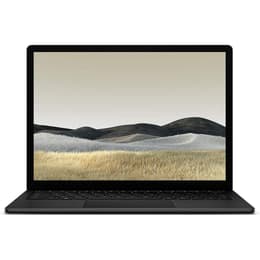
HP EliteBook 840 G7 14" Vs Microsoft Surface Laptop 3 13"

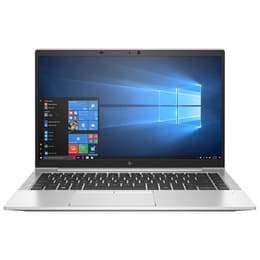
HP EliteBook 840 G7 14"
Starting at

Refurbished price:£218.84

Versus £1,833.00 new

See options
Microsoft Surface Laptop 3 13"
Starting at

Refurbished price:£215.00

Versus £598.29 new

See options

Ratings

The HP EliteBook 840 G7 14, released in May 2020, and the Microsoft Surface Laptop 3 13, launched in October 2019, are both Windows-based laptops designed for productivity and everyday use. While both offer a premium experience, the EliteBook emphasizes business-grade security and connectivity, whereas the Surface Laptop 3 focuses on a refined design and a high-resolution touch display. Both devices run on the Windows operating system, providing a familiar software environment for users.

Scores

Durability

When considering the longevity of these devices, their release timelines and design philosophies offer different expectations for practical lifespan and software support.

  • Release and Support: The HP EliteBook 840 G7, being slightly newer, may receive official Windows updates for a marginally longer period than the Surface Laptop 3. Both devices, however, are capable of running current Windows versions, ensuring continued access to software and security updates for several years.
  • Build Quality: The EliteBook 840 G7 is built to MIL-STD-810 standards, indicating a design focused on durability and resilience against various environmental factors, featuring an aluminum chassis and surfaces designed to withstand frequent cleaning. The Surface Laptop 3 also boasts a durable all-metal construction, with some configurations offering an Alcantara keyboard deck, contributing to a premium feel and robust build.
  • Repairability: The Surface Laptop 3's SSD is designed to be replaceable by a skilled technician, offering some modularity for storage upgrades or repairs. The EliteBook also features accessible internal components for maintenance and upgrades, which can contribute to a longer practical lifespan by allowing for component replacement.

Year of Release

2019

2019

OS

Windows 11

Windows 11

Performance

Both laptops are equipped with 10th-generation Intel Core processors, providing solid performance for daily computing tasks, though their configurations and thermal designs lead to subtle differences in handling more demanding workloads.

  • Everyday Responsiveness: Both the EliteBook 840 G7 and the Surface Laptop 3 offer smooth performance for common applications like web browsing, document editing, and video conferencing. Users can expect quick application loading and efficient multitasking.
  • Multitasking and Storage: The EliteBook 840 G7 can be configured with up to 64GB of RAM, offering substantial headroom for extensive multitasking and running numerous applications simultaneously. The Surface Laptop 3 typically comes with 8GB or 16GB of RAM, which is ample for most users but less expandable. Both utilize fast SSD storage, ensuring rapid boot times and quick file access.
  • Demanding Tasks: For tasks such as light photo editing or casual gaming, both devices perform adequately. However, for more intensive creative work or graphically demanding applications, neither is designed as a powerhouse. The EliteBook's thermal management is generally effective, though some users have noted fan noise under load. The Surface Laptop 3's integrated graphics are capable of handling some older game titles at reduced settings.

Memory (GB)

8 GB

8 GB

Processor

Core i5 - Gen 10 (U)

Core i5 - Gen 10 (G7)

Graphic card

Integrated Graphics

Integrated Graphics

Screen quality

The display experience on these two laptops presents a clear distinction, primarily in aspect ratio, resolution, and surface finish, catering to different user preferences.

  • Display Technology and Resolution: The HP EliteBook 840 G7 features a 14-inch Full HD (1920x1080) IPS display, often with an anti-glare finish, which is well-suited for extended work sessions by reducing reflections. The Microsoft Surface Laptop 3 13, on the other hand, offers a 13.5-inch PixelSense display with a higher resolution of 2256x1504 and a 3:2 aspect ratio. This aspect ratio provides more vertical screen real estate, which can be beneficial for document work and web browsing.
  • Brightness and Clarity: The EliteBook 840 G7 offers various brightness options, with some configurations reaching up to 1000 nits, though 400 nits is a common and bright option, making it suitable for diverse lighting conditions. The Surface Laptop 3's display typically reaches around 348 nits, providing good brightness for indoor and some outdoor use. Both displays offer clear and sharp visuals for their respective resolutions.
  • Touch and Glare: The Surface Laptop 3 features a touch-enabled, glossy display, which enhances interactivity but can be prone to reflections in bright environments. The EliteBook often comes with an anti-glare finish, prioritizing reduced reflections over touch functionality, though touch-enabled options are available.

Audiovisual

Both laptops provide essential audio and visual components for communication and media consumption, with some differences in their camera features and speaker output.

  • Webcam Quality: Both the HP EliteBook 840 G7 and the Microsoft Surface Laptop 3 13 are equipped with a 720p HD front-facing webcam, suitable for video calls and online meetings. The EliteBook's webcam often includes a privacy shutter and a wider field of view, enhancing user control and group video calls.
  • Microphone and Speakers: The EliteBook 840 G7 features Bang & Olufsen stereo speakers and a sophisticated microphone array with noise cancellation, designed to optimize audio clarity in professional settings. The Surface Laptop 3 includes Omnisonic speakers with Dolby Audio and dual far-field Studio Mics, aiming for clear voice capture and an immersive audio experience for media.
  • Security Features: The EliteBook integrates an IR camera for facial recognition and a privacy shutter for its webcam. The Surface Laptop 3 also offers Windows Hello facial recognition for secure and convenient login.

Miscellaneous

Beyond core performance and display, several practical elements differentiate these two laptops, impacting their connectivity, portability, and overall user experience.

  • Connectivity and Ports: The HP EliteBook 840 G7 offers a comprehensive selection of ports, including two USB-C ports with Thunderbolt support, two USB-A 3.1 Gen 1 ports, and a full-size HDMI output, providing extensive options for peripherals and external displays. It also supports Wi-Fi 6 and Bluetooth 5. The Microsoft Surface Laptop 3 13 includes one USB-C port (without Thunderbolt 3 support), one USB-A port, a 3.5mm headphone jack, and a proprietary Surface Connect port for charging and docking. It supports Wi-Fi 5 and Bluetooth 5.
  • Portability and Design: The EliteBook 840 G7 weighs approximately 1.33 kg (2.95 lbs) and features a business-oriented aluminum chassis. The Surface Laptop 3 13 is slightly lighter at around 1.25 kg (2.76 lbs) and showcases a sleek, minimalist all-metal design, with some models offering an Alcantara keyboard deck. Both are designed for portability, though the Surface Laptop 3 has a slightly smaller footprint.
  • Security and Input: The EliteBook includes a fingerprint reader and an IR camera for facial recognition, alongside a comfortable, backlit keyboard and a responsive touchpad. The Surface Laptop 3 relies on Windows Hello facial recognition and is praised for its comfortable keyboard and a large, precise trackpad.

Weight

1500 g

3000 g

Screen size

14

13

The HP EliteBook 840 G7 14 and the Microsoft Surface Laptop 3 13 each offer distinct advantages, making them suitable for different user needs. Users often praise the EliteBook 840 G7 for its robust build quality, extensive port selection, and strong security features, making it a reliable choice for business professionals and those requiring versatile connectivity. Some common criticisms include potential fan noise under heavy load and the display options not always being as vibrant as some competitors.

Conversely, the Surface Laptop 3 13 is frequently lauded for its elegant design, high-resolution touch display with a productivity-friendly 3:2 aspect ratio, and comfortable typing experience. Users appreciate its premium feel and portability. However, some common concerns include its more limited port selection, the glossy screen's reflectivity, and the presence of thicker display bezels compared to more modern designs.

Users prioritizing a highly durable laptop with a wide array of ports, advanced security features, and a focus on business productivity may find the HP EliteBook 840 G7 14 to be a strong fit. Those who value a sleek, lightweight design, a high-resolution touch display for content consumption and creation, and a premium user experience might lean towards the Microsoft Surface Laptop 3 13. Both models are available as quality-assured refurbished options, providing an eco-friendly alternative for consumers seeking reliable technology.
See all articles

Our recent comparisons