Google Pixel 6 Vs Motorola Moto G14

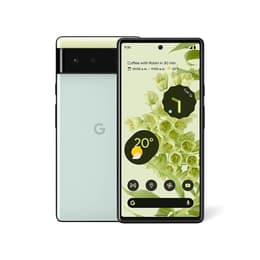
Google Pixel 6
Google Pixel 6
Starting at

Refurbished price:£101.00

Versus £649.99 new

See options
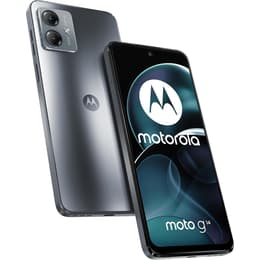
Motorola Moto G14
Motorola Moto G14
Starting at

Refurbished price:£91.24

Versus £139.99 new

See options

Ratings

The Google Pixel 6, released in October 2021, and the Motorola Moto G14, launched in August 2023, are both Android smartphones offering distinct user experiences. While the Pixel 6 focuses on advanced computational photography and a premium software experience, the Moto G14 aims to provide essential smartphone functionalities with a focus on multimedia consumption and battery longevity. Both devices run on the Android operating system, but they differ significantly in their hardware capabilities and software support timelines.

Scores

Durability

The longevity of a smartphone is influenced by its release timeline, software support, and physical durability.

  • Release Timeline and Software Support: The Google Pixel 6, launched in October 2021, initially received a commitment for three years of OS updates and five years of security updates. However, Google later extended this, guaranteeing five years of OS and security updates from its launch date, meaning support until October 2026, including updates to Android 16 and Android 17. The Motorola Moto G14, released in August 2023, launched with Android 13 and is planned to receive an upgrade to Android 14. Motorola's budget phones typically receive one major OS upgrade and two years of security patches.
  • Repairability and Durability: The Pixel 6 features a glass front with Gorilla Glass Victus and a glass back with Gorilla Glass 6, along with an aluminum frame, contributing to its robust feel and IP68 dust and water resistance. Repairability for the Pixel 6 is considered moderate; while some components like the screen are relatively straightforward to replace, the battery can be challenging, and the fingerprint sensor requires calibration after replacement. The Moto G14 has a plastic body with a Panda Glass front and an IP52 rating for dust and splash resistance. Its repairability score is lower, rated at 5.0 out of 10, primarily due to the extensive use of adhesive for the back cover and battery, making disassembly more complex.
  • Expected Practical Lifespan: Users prioritizing extended software support and higher-grade material durability may find the Pixel 6 offers a longer practical lifespan. The Moto G14, while newer, has a shorter expected software update window and less robust physical construction, suggesting a shorter optimal usage period for those who value the latest software features and high durability.

Year of Release

2021

2023

Compatible with latest Update

Yes

Yes

OS

Android

Android

Foldable

No

No

Performance

Performance is a key differentiator, impacting how smoothly devices handle daily tasks and demanding applications.

  • Processor Capabilities and Responsiveness: The Google Pixel 6 is equipped with a processor designed for efficient handling of complex tasks, including advanced computational photography and on-device AI features. This results in a highly responsive user experience, smooth app loading, and capable multitasking, even with demanding applications and games. The Motorola Moto G14 features a processor that provides adequate performance for everyday tasks such as web browsing, social media, and light gaming. However, some users have reported it can feel slow or unresponsive and may experience freezing or lag with more intensive use or multiple apps running simultaneously.
  • Storage and RAM: The Pixel 6 comes with 8GB of RAM and storage options of 128GB or 256GB, utilizing faster UFS 3.1 storage technology. This ample RAM supports fluid multitasking, allowing users to switch between numerous applications without significant slowdowns. The Moto G14 typically offers 4GB of RAM and 128GB of storage, using UFS 2.2 technology, with the option for expandable storage via a microSD card. While sufficient for basic use, the lower RAM and slower storage can lead to more noticeable performance dips when managing many open applications or larger files.
  • Battery Behavior: The Pixel 6 houses a 4614 mAh battery, supporting fast wired and wireless charging. User experiences with battery life have been mixed, with some finding it sufficient for a full day of moderate use, while others noted it required more frequent charging, though improvements were observed with later Android updates. The Moto G14 is equipped with a larger 5000 mAh battery and supports 15W wired charging. Many users praise its battery backup, finding it capable of lasting through extended periods of use, making it suitable for users prioritizing long battery life.

Memory (GB)

8 GB

4 GB

Screen quality

The display is the primary interface for interaction, and differences in technology and specifications can significantly affect the viewing experience.

  • Display Technology and Clarity: The Google Pixel 6 features a 6.4-inch OLED display, offering deep blacks, high contrast, and vibrant colors. Its FHD+ resolution (2400x1080 pixels) and 411 pixels per inch (ppi) ensure sharp and clear visuals for text and images. The Motorola Moto G14 comes with a 6.5-inch IPS LCD display, also with an FHD+ resolution (2400x1080 pixels) and 405 ppi. While LCD technology provides good color reproduction, it typically does not achieve the same level of contrast or true black levels as OLED.
  • Brightness and Refresh Rate: The Pixel 6's OLED panel offers good brightness levels, making content visible even in brighter outdoor conditions. It also boasts a 90Hz refresh rate, which contributes to smoother scrolling and a more fluid user interface experience. The Moto G14's IPS LCD display provides adequate brightness for indoor use, but may be less effective in direct sunlight. It features a standard 60Hz refresh rate, which is suitable for general use but offers less fluidity compared to higher refresh rate displays.
  • Screen Size and Viewing Experience: Both devices offer large screen sizes, with the Pixel 6 at 6.4 inches and the Moto G14 at 6.5 inches, providing ample screen real estate for media consumption and productivity. The Pixel 6's OLED technology and higher refresh rate deliver a more immersive and visually appealing experience, particularly for dynamic content like videos and games. The Moto G14's FHD+ resolution on its LCD panel still offers crisp visuals, making it a good option for multimedia consumption, especially when paired with its audio capabilities.

Resolution

1080 x 2400

1080 x 2400

Screen type

AMOLED

IPS LCD

Audiovisual

Camera systems and audio capabilities are crucial for capturing memories and enjoying multimedia.

  • Camera System Capabilities: The Google Pixel 6 features a dual-camera system on the rear, comprising a 50MP wide main sensor and a 12MP ultrawide sensor. Its front camera is 8MP. The Pixel 6 is known for its advanced computational photography, delivering detailed images with excellent dynamic range and color accuracy, particularly in various lighting conditions. The Motorola Moto G14 includes a dual-camera setup with a 50MP main sensor and a 2MP macro sensor. It has an 8MP front-facing camera. The main camera performs well in good lighting, offering decent image quality for its segment.
  • Low-Light and Video Performance: The Pixel 6 excels in low-light photography, producing bright and clear images with minimal noise, a hallmark of Pixel devices. Its video recording capabilities are also strong, offering stable and detailed footage. The Moto G14's low-light performance is more modest, and while it can record video, its overall quality and feature set for video are less advanced than the Pixel 6.
  • Audio Quality: The Pixel 6 is equipped with stereo speakers, providing a balanced audio output for media consumption and calls. The Moto G14 also features stereo speakers with Dolby Atmos support, which enhances the audio experience for watching videos and listening to music, a notable inclusion for its category. For calls, both devices offer clear microphone quality, but the Pixel 6's advanced processing can further refine voice clarity.

Main camera

50 megapixels

50 megapixels

Front camera

8 megapixels

8 megapixels

Miscellaneous

Beyond core features, several practical elements contribute to the overall user experience and device utility.

  • Connectivity Options: The Google Pixel 6 supports 5G connectivity, along with Wi-Fi 6E (802.11ax) and Bluetooth 5.2, offering fast and reliable wireless connections. It also includes NFC for contactless payments. The Motorola Moto G14 supports 4G LTE networks, Wi-Fi 5 (802.11ac), and Bluetooth 5.0. While it provides essential connectivity, it lacks 5G and the latest Wi-Fi standards.
  • Port Types and Sensors: The Pixel 6 features a USB-C port for charging and data transfer, and an in-display optical fingerprint sensor for secure unlocking. It also includes a range of sensors such as an accelerometer, ambient light sensor, barometer, compass, gyroscope, and proximity sensor. The Moto G14 also uses a USB-C port and retains a 3.5mm headphone jack, which is convenient for wired audio accessories. It incorporates a side-mounted fingerprint sensor for security, along with an accelerometer and compass.
  • Weight, Dimensions, and Build Materials: The Pixel 6 weighs 207g and measures 158.6 x 74.8 x 8.9 mm. Its construction involves Gorilla Glass Victus on the front and Gorilla Glass 6 on the back, framed by aluminum, giving it a premium and substantial feel. The Moto G14 is lighter at 177g and has dimensions of 161.46 x 73.82 x 7.99 mm. It features an all-plastic body with a Panda Glass front, contributing to its lighter weight and different tactile experience.

Weight

207 g

177 g

Screen size (in)

6.4

6.5

Mobile network

5G

4G

SIM card

Physical SIM + eSIM

Dual Physical SIM

Carrier compatibility

Unlocked

Unlocked

The Google Pixel 6 and Motorola Moto G14 cater to different user priorities, offering distinct strengths and trade-offs.

For the Google Pixel 6, common praise points from users often highlight its exceptional camera performance, particularly its computational photography capabilities that deliver high-quality images in various conditions. Users also appreciate its smooth software experience, responsive performance for demanding applications, and the integration of helpful AI features. However, frequent criticisms have included the in-display fingerprint sensor, which some found inconsistent, especially in bright outdoor conditions, and mixed opinions on battery life, though this reportedly improved with software updates. Some users also noted initial overheating issues and occasional software bugs.

The Motorola Moto G14 is often lauded for its clean Android software experience and its impressive battery backup, which many users find lasts through extended use. Its FHD+ display and stereo speakers with Dolby Atmos are also frequently mentioned as positives for multimedia consumption. On the other hand, common concerns include its performance, with some users reporting the device can be slow, unresponsive, or prone to freezing and lagging, particularly when multitasking or running more intensive applications. Some users have also experienced Bluetooth connectivity issues and occasional software glitches.

Users prioritizing advanced camera capabilities, a premium software experience with longer update support, and robust performance for demanding tasks may prefer the Google Pixel 6. Its OLED display and higher refresh rate also offer a more refined visual experience. Conversely, users who prioritize extended battery life, a clean Android interface, and a device well-suited for multimedia consumption without needing top-tier performance for heavy applications may find the Motorola Moto G14 to be a suitable choice. It also retains a 3.5mm headphone jack, which can be a deciding factor for some.

For those considering either device, exploring quality-assured refurbished options can provide an eco-friendly alternative to extend the lifecycle of these smartphones.

See all articles

Our recent comparisons