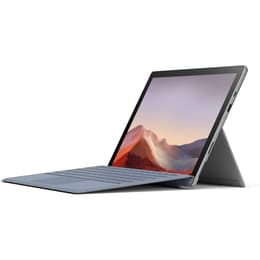

HP EliteBook 840 G7 14" Vs Microsoft Surface Pro 7 12"

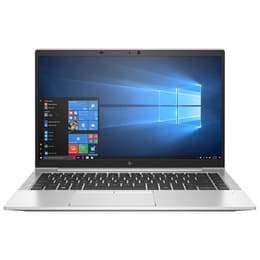
HP EliteBook 840 G7 14"
Starting at

Refurbished price:£218.84

Versus £1,833.00 new

See options
Microsoft Surface Pro 7 12"
Starting at

Refurbished price:£184.00

Versus £1,509.25 new

See options

Ratings

The HP EliteBook 840 G7, released in 2020, is a traditional business laptop designed for productivity and security. In contrast, the Microsoft Surface Pro 7, launched in late 2019, offers a versatile 2-in-1 tablet and laptop hybrid experience. Both devices operate on the Windows platform, but they cater to different user preferences through their distinct form factors and core functionalities.

Scores

Durability

When considering the long-term usability of these devices, their release timelines and design philosophies play a significant role.

  • Release Timeline: The HP EliteBook 840 G7 was released in 2020, while the Microsoft Surface Pro 7 debuted in late 2019. This means the EliteBook generally benefits from a slightly newer hardware generation and potentially a longer period of official software support from its manufacturer.
  • Software Longevity: Both devices run on Windows, ensuring a consistent update schedule for the operating system. However, the EliteBook's slightly newer release may offer an additional year of major OS updates compared to the Surface Pro 7. Business-oriented laptops like the EliteBook often receive extended driver and firmware support, which can contribute to a longer practical lifespan in professional environments.
  • Build and Repairability: The EliteBook 840 G7 features a robust aluminum chassis, designed for durability in a business setting, with some models even having sanitizable surfaces. The Surface Pro 7 utilizes a magnesium alloy body, known for its lightweight yet sturdy construction. While both are well-built, the traditional laptop design of the EliteBook may offer more straightforward access for internal component upgrades or repairs compared to the more integrated design of a 2-in-1 tablet.

Year of Release

2019

2019

Last Os Compatibility

Yes

Yes

OS

Windows 11

Windows 11

Performance

Both the HP EliteBook 840 G7 and the Microsoft Surface Pro 7 are equipped to handle everyday computing tasks, though their performance characteristics are tailored to their respective designs.

  • Processing Power: The EliteBook 840 G7 typically features 10th Generation Intel Core i5 or i7 processors, providing solid performance for multitasking, office applications, and light content creation. The Surface Pro 7 also comes with 10th Generation Intel Core i3, i5, or i7 processors, offering responsive performance for general use and some demanding applications.
  • Multitasking and Responsiveness: The EliteBook can be configured with up to 64GB of DDR4 RAM, allowing for extensive multitasking and smooth operation with numerous applications open simultaneously. The Surface Pro 7 offers up to 16GB of LPDDR4x RAM, which is sufficient for most users and ensures a fluid experience when switching between apps.
  • Storage and Graphics: Both devices utilize fast NVMe SSD storage, contributing to quick boot times and rapid application loading. For graphics, the EliteBook relies on integrated Intel UHD Graphics, suitable for business tasks and casual media consumption. The Surface Pro 7, particularly in its i5 and i7 configurations, often includes Intel Iris Plus Graphics, which provides a slight advantage in handling more visually intensive tasks and light photo editing.

Memory (GB)

8 GB

8 GB

Processor

Core i5 - Gen 10 (U)

Core i5 - Gen 10 (G4)

Graphic card

Integrated Graphics

Integrated Graphics

Screen quality

The display is a key differentiator between these two devices, impacting both visual experience and interaction methods.

  • Display Technology and Resolution: The HP EliteBook 840 G7 features a 14-inch Full HD (1920x1080) IPS anti-glare display, providing clear visuals and good viewing angles for productivity tasks. The Microsoft Surface Pro 7 boasts a 12.3-inch PixelSense display with a higher resolution of 2736 x 1824 pixels, resulting in a sharper and more detailed image, particularly noticeable for text and fine graphics.
  • Brightness and Clarity: The EliteBook offers various brightness options, ranging from 250 nits to a very bright 1000 nits on models equipped with HP Sure View privacy technology, which is beneficial for working in diverse lighting conditions and ensuring screen privacy. The Surface Pro 7's display typically reaches around 395 nits, offering good brightness for indoor and moderate outdoor use.
  • Aspect Ratio and Interaction: The EliteBook uses a traditional 16:9 aspect ratio, common for laptops and suitable for media consumption. The Surface Pro 7 features a 3:2 aspect ratio, which provides more vertical screen real estate, making it well-suited for document work, web browsing, and creative tasks. The Surface Pro 7 also includes touchscreen capabilities and supports pen input, offering a more interactive and versatile experience.

Resolution

1920 x 1080

2736 x 1824

Screen type

LCD

IPS

Audiovisual

Both devices include camera and audio systems designed to facilitate communication and media consumption, with some notable differences.

  • Webcam Quality: The HP EliteBook 840 G7 comes with a 720p HD webcam, which is standard for video conferencing and online meetings. It also includes a physical privacy shutter for enhanced security. The Surface Pro 7 features a 5MP front-facing camera that records in 1080p HD, offering a clearer image for video calls.
  • Additional Camera Features: The EliteBook offers an optional IR camera for facial recognition login via Windows Hello. The Surface Pro 7 includes Windows Hello facial recognition as a standard feature, providing convenient and secure access. Additionally, the Surface Pro 7 has an 8MP rear-facing camera capable of 1080p HD video recording, which can be useful for scanning documents or capturing images in tablet mode.
  • Audio Experience: The EliteBook 840 G7 features Bang & Olufsen tuned stereo speakers and a three multi-array microphone system, designed for clear audio during calls and a decent media experience. The Surface Pro 7 also includes stereo speakers with Dolby Audio and dual far-field microphones, optimized for clear voice pickup during calls and an immersive sound experience for media.

Miscellaneous

Beyond core performance and display, several practical elements distinguish the user experience of these two devices.

  • Connectivity Options: Both the EliteBook 840 G7 and the Surface Pro 7 support Wi-Fi 6 and Bluetooth 5, ensuring fast and reliable wireless connections. The EliteBook offers two USB-C ports with Thunderbolt 3 support, two USB-A 3.1 Gen 1 ports, an HDMI 1.4b port, and an optional Nano SIM slot for LTE connectivity. The Surface Pro 7 includes one USB-C port (without Thunderbolt 3 support), one USB-A port, a Surface Connect port for charging and docking, and a microSD card reader.
  • Portability and Form Factor: The EliteBook 840 G7 is a traditional laptop, weighing around 1.33 kg for non-touch models, making it a portable option for business users. Its dimensions are 32.36 x 21.47 x 1.79 cm. The Surface Pro 7, as a tablet, is significantly lighter at approximately 0.77 kg, with dimensions of 29.2 x 20.1 x 0.85 cm, offering greater portability. However, its keyboard (Type Cover) and pen are typically sold separately, adding to the overall weight and footprint when used as a laptop.
  • Security and Input: The EliteBook features an optional fingerprint reader and an optional IR camera for Windows Hello. It also boasts a comfortable, quiet keyboard with a pointing stick option. The Surface Pro 7 relies on Windows Hello facial recognition for secure login and offers a detachable Type Cover keyboard with a comfortable typing experience, though it is an additional purchase.

Weight

1500 g

775 g

Screen size

14

12

The HP EliteBook 840 G7 and the Microsoft Surface Pro 7 offer distinct computing experiences, each with its own strengths tailored to different user needs. Users often praise the EliteBook 840 G7 for its robust build quality, comfortable keyboard, and comprehensive port selection, making it a reliable workhorse for business professionals. Its strong security features, including optional privacy screens and physical webcam shutters, are frequently highlighted as beneficial for corporate environments. Some users, however, have noted that the base display options might not be as vibrant as some competitors, and fan noise can occasionally be noticeable under heavy load.

Conversely, the Microsoft Surface Pro 7 is lauded for its exceptional portability, high-resolution PixelSense touchscreen, and the versatility of its 2-in-1 design. Its ability to seamlessly transition between a tablet and a laptop, coupled with pen support, makes it a favorite among creative professionals and those who value a flexible workflow. Common criticisms include the fact that the keyboard and pen are separate purchases, and some users desire Thunderbolt 3 support for its USB-C port.

Users prioritizing a traditional, secure, and highly functional laptop for demanding office tasks, extensive multitasking, and robust connectivity will find the HP EliteBook 840 G7 well-suited to their needs. Its larger screen and comprehensive port selection cater to a desk-centric workflow. On the other hand, users who value extreme portability, a high-resolution touchscreen for creative work or note-taking, and the flexibility of a tablet form factor will likely lean towards the Microsoft Surface Pro 7. Its compact design and interactive display are ideal for mobile professionals, students, or travelers. Both devices represent quality-assured refurbished options, providing an eco-friendly alternative for consumers seeking reliable technology.


See all articles

Our recent comparisons