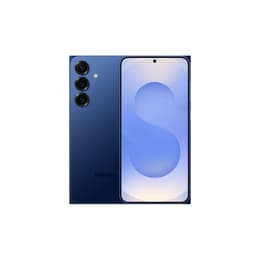
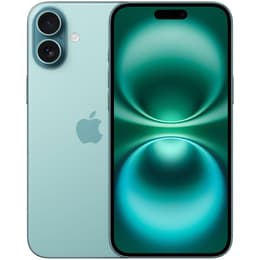

Galaxy S25+ Vs iPhone 16 Plus

Galaxy S25+
Galaxy S25+
Starting at

Refurbished price:£550.00

Versus £958.39 new

See options
iPhone 16 Plus
iPhone 16 Plus
Starting at

Refurbished price:£503.46

Versus £799.00 new

See options

Ratings

The Samsung Galaxy S25 Plus, an Android smartphone released in early 2025, and the Apple iPhone 16 Plus, an iOS device launched in late 2024, represent two prominent options in the premium smartphone market. While both offer large displays and robust performance, they diverge significantly in their operating systems and approach to features like camera technology and software integration. This comparison aims to highlight their practical differences to help users make an informed decision.

Scores

Durability

When considering the long-term usability of a smartphone, software support and physical resilience are key factors. Both the Galaxy S25 Plus and the iPhone 16 Plus are designed for extended use, though their ecosystems approach longevity differently.

  • Software Updates: The Samsung Galaxy S25 Plus is expected to receive seven years of major OS and security updates, extending its usability until approximately 2032. The iPhone 16 Plus typically receives 5-6 years of iOS updates, with some sources suggesting up to seven years of support for newer models, ensuring it remains current for a considerable period.
  • Physical Durability: Both devices feature an IP68 rating for dust and water resistance, indicating protection against submersion. The Galaxy S25 Plus incorporates Gorilla Glass Victus 2 on its front and back, alongside a robust aluminum frame. The iPhone 16 Plus utilizes Apple's Ceramic Shield on the front, which has demonstrated strong scratch resistance in tests, and an aluminum frame.
  • Repairability: While specific repairability scores can vary, the iPhone 16 Plus has been noted for potentially easier repairability compared to its Pro counterparts due to design choices. Users of the Galaxy S25 Plus have also reported impressive resilience to drops, particularly when protected by a case.

Year of Release

2025

2024

Foldable

No

No

Performance

Both the Galaxy S25 Plus and the iPhone 16 Plus deliver powerful performance suitable for demanding applications and multitasking, though they achieve this through different hardware and software optimizations.

  • Processing Power: The Galaxy S25 Plus is equipped with a current-generation processor that provides a significant leap in performance, ensuring smooth animations and efficient handling of intensive tasks like gaming and complex applications. The iPhone 16 Plus features Apple's A18 chip, which offers substantial improvements over previous generations, allowing for seamless app launches and fluid operation even with graphically demanding games.
  • Multitasking and Responsiveness: With 12GB of RAM, the Galaxy S25 Plus is well-suited for extensive multitasking, allowing users to switch between numerous applications without noticeable slowdowns. The iPhone 16 Plus, with 8GB of RAM, is also highly responsive, benefiting from iOS's efficient memory management to maintain smooth performance across various tasks.
  • Battery Behavior: The Galaxy S25 Plus houses a 4900 mAh battery, capable of providing approximately 1.5 days of use with moderate activity and offering strong performance in video streaming and browsing tests. The iPhone 16 Plus, with its 4674 mAh battery, is recognized for its exceptional battery longevity, often lasting up to 1.5 days or more for many users, and performing well in video playback tests.

Memory (GB)

12 GB

8 GB

Screen quality

The visual experience on both devices is immersive, thanks to their large, high-quality displays, each offering distinct advantages in technology and clarity.

  • Display Technology and Resolution: The Samsung Galaxy S25 Plus features a 6.7-inch Dynamic AMOLED 2X display with a QHD+ resolution (3120 x 1440 pixels), resulting in a sharp 513 pixels per inch. This provides exceptional clarity and detail. The iPhone 16 Plus sports a 6.7-inch Super Retina XDR OLED display with a resolution of 2796 x 1290 pixels, yielding approximately 460 pixels per inch.
  • Brightness and Color: Both phones offer vibrant color reproduction and excellent contrast. The Galaxy S25 Plus can reach a peak brightness of 2600 nits, ensuring good visibility even in bright outdoor conditions. The iPhone 16 Plus offers a typical brightness of 1000 nits, peaking at 1600 nits for HDR content and 2000 nits for outdoor use, providing a clear viewing experience in varied lighting.
  • Refresh Rate and Smoothness: The Galaxy S25 Plus boasts an adaptive 120Hz refresh rate, which contributes to very smooth scrolling and fluid animations. In contrast, the iPhone 16 Plus maintains a standard 60Hz refresh rate, which is generally smooth for everyday use but may not offer the same level of fluidity as a higher refresh rate display.

Resolution

1440x3120

1290 x 2796

Audiovisual

Both smartphones offer advanced camera systems designed to capture high-quality photos and videos, though their hardware configurations and computational photography features differ.

  • Rear Camera System: The Samsung Galaxy S25 Plus features a versatile triple-camera setup, including a 50MP main sensor with optical image stabilization, a 12MP ultrawide lens, and a 10MP telephoto lens capable of 3x optical zoom. This provides flexibility for various shooting scenarios, from wide landscapes to zoomed-in subjects. The iPhone 16 Plus is equipped with an advanced dual-camera system, featuring a 48MP Fusion Main camera with optical image stabilization and a 12MP ultrawide lens. It utilizes its main sensor to achieve a 2x optical zoom effect.
  • Photography Performance: The Galaxy S25 Plus benefits from an improved ProVisual Engine, enhancing natural skin tones and textures, and performs well in low-light conditions with its main camera. The iPhone 16 Plus is known for producing sharp, noise-free, and detailed photos with consistent results, and includes features like macro photography and spatial photo capture.
  • Video Capabilities: The Galaxy S25 Plus supports Log video capture, offering greater control for color grading in post-production, and includes an Audio Eraser feature for intelligent sound adjustment in videos. The iPhone 16 Plus records 4K Dolby Vision video at various frame rates and offers Cinematic Mode and Action Mode for enhanced video creation.

Miscellaneous

Beyond core features, several practical elements contribute to the overall user experience and differentiate these two devices.

  • Connectivity and Ports: The Samsung Galaxy S25 Plus supports the latest Wi-Fi 7 standard and features a USB Type-C 3.2 port, offering faster data transfer speeds. It also includes Ultra-Wideband (UWB) technology. The iPhone 16 Plus also supports Wi-Fi 7 and features a USB-C port, though its data transfer speeds are based on USB 2.0. It includes Apple's second-generation UWB chip.
  • Biometrics and Special Features: Both devices offer secure biometric authentication. The Galaxy S25 Plus integrates advanced Galaxy AI features across its system, including AI camera tools and a ProScaler for upscaling content. The iPhone 16 Plus introduces Apple Intelligence (in beta), a personal intelligence system, and features a customizable Action Button.
  • Design and Handling: The Galaxy S25 Plus weighs approximately 190 grams and has a thickness of 7.3mm, featuring flat metal edges. The iPhone 16 Plus weighs around 199 grams and is 7.8mm thick, with an aluminum frame and color-infused glass back. Both offer a premium feel, with the choice often coming down to personal preference for their respective design aesthetics.

Weight

190 g

199 g

Screen size (in)

6.7

6.7

Mobile network

5G

5G

SIM card

Dual Physical SIM

Physical SIM + eSIM

Carrier compatibility

Unlocked

Unlocked

Choosing between the Samsung Galaxy S25 Plus and the iPhone 16 Plus depends largely on individual priorities and ecosystem preference. Both devices are powerful, durable, and offer excellent battery life, making them suitable for a wide range of users.

Users who prioritize a highly customizable Android experience with extensive AI features, a QHD+ display with a 120Hz refresh rate, and a dedicated telephoto camera might find the Galaxy S25 Plus more appealing. Its faster wired charging and USB 3.2 data transfer speeds could also be a deciding factor for those who frequently transfer large files or need quick top-ups. Reviewers often praise its robust performance and long-lasting battery.

Conversely, individuals deeply integrated into the Apple ecosystem or those who prefer the intuitive iOS experience, exceptional battery longevity, and a camera system known for its consistent, high-quality output will likely lean towards the iPhone 16 Plus. Its Ceramic Shield front offers strong scratch resistance, and the introduction of Apple Intelligence aims to enhance user interaction.

Ultimately, both phones are designed to offer a premium smartphone experience. For those considering a more sustainable choice, exploring quality-assured refurbished options for either model can provide an excellent way to enjoy these advanced features while contributing to a more eco-friendly approach to technology consumption.

See all articles

Our recent comparisons