
Compare models
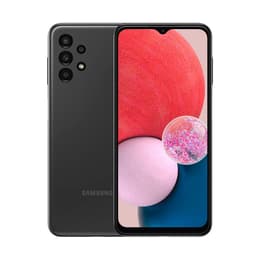
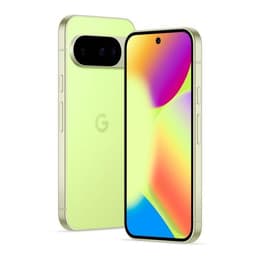
Galaxy A13 Vs Google Pixel 10
- 1-year minimum warranty
- Free delivery on all items
- Free 30-day returns
Differences at a glance
The Samsung Galaxy A13 (2022) and the Google Pixel 10 (2025) are Android smartphones that cater to different eras and device categories. While the Galaxy A13 focuses on fundamental connectivity and everyday tasks, the Google Pixel 10 introduces current-generation processing power, advanced display technology, and deep artificial intelligence features. Both devices operate on the Android platform, though they offer distinct hardware foundations and user interface experiences.
Available Models
Colour
Storage (GB)
Scores
Durability
Device longevity and software support timelines differ substantially between these two models, reflecting their respective release years.
- Release Timeline and Software Support: The Galaxy A13 launched in 2022 and operates on an older software cycle, while the Google Pixel 10 debuted in 2025 with support for extensive multi-year operating system upgrades.
- Expected Practical Lifespan: Users can anticipate a much longer active service window from the Google Pixel 10 due to its contemporary hardware and extended update commitments, whereas the Galaxy A13 approaches the later stages of its software support lifecycle.
- Repairability and Build Maintenance: Both manufacturers provide structured repair frameworks, though finding parts for newer flagship-tier devices like the Pixel 10 differs from maintaining older entry-level hardware like the A13.
Year of Release
2022
2025
Compatible with latest Update
No
Yes
OS
Android
Android
Foldable
No
No
Performance
Processing capabilities and day-to-day responsiveness vary significantly, affecting how each phone handles multiple applications and demanding software.
- System Responsiveness and Multitasking: The Google Pixel 10 handles intensive multitasking, demanding applications, and high-end gaming smoothly thanks to its current-generation processor and generous memory capacity. In contrast, the Galaxy A13 manages basic tasks like web browsing and messaging reliably, but intensive apps may experience loading delays.
- Storage Configurations: The Galaxy A13 offers expandable storage via a card slot, whereas the Google Pixel 10 relies on fixed internal storage capacities of 128GB or 256GB without expansion support.
- Battery Behavior: Both devices manage daily energy consumption differently, with the Pixel 10 utilizing efficient power management for moderate to heavy workloads, while the A13's simpler hardware draws minimal power for light daily use.
Screen quality
Visual output and display technologies differ greatly, directly influencing media consumption and outdoor usability.
- Display Technology: The Google Pixel 10 features an OLED display with deep black levels and vibrant colors, whereas the Galaxy A13 uses standard LCD technology with more basic contrast characteristics.
- Refresh Rate and Smoothness: Scrolling and motion appear significantly smoother on the Pixel 10 due to its high refresh rate panel, compared to the standard refresh rate found on the Galaxy A13.
- Outdoor Brightness: The Pixel 10 reaches much higher peak brightness levels, ensuring clearer visibility under direct sunlight than the display on the Galaxy A13.
Resolution
1080 x 2408
1080x2424
Screen type
PLS LCD
OLED
Audiovisual
Imaging hardware and media output capabilities reflect the technological advancements separating these devices.
- Camera System Versatility: The Google Pixel 10 incorporates a multi-lens rear setup including dedicated telephoto capabilities, producing detailed shots across various focal lengths, while the Galaxy A13 relies on a simpler multi-lens arrangement suited for basic daylight snapshots.
- Low-Light and Video Performance: Advanced computational processing allows the Pixel 10 to capture clear details in dim environments and record stable, high-resolution video, whereas the A13 requires well-lit conditions for optimal results.
- Media and Audio Output: Speaker quality and microphone clarity on the Pixel 10 offer a more immersive media consumption and call experience compared to the single loudspeaker setup on the Galaxy A13.
Front camera
8 megapixels
42 megapixels
Miscellaneous
Practical physical attributes and connectivity standards shape how each device fits into everyday routines.
- Connectivity Standards: The Google Pixel 10 supports modern 5G networks, fast Wi-Fi standards, and magnetic accessory ecosystems, while the Galaxy A13 offers basic 4G LTE or standard 5G variants depending on the specific sub-model.
- Physical Dimensions and Handling: The Galaxy A13 features a lightweight plastic build, whereas the Pixel 10 utilizes glass and metal materials that result in a slightly heavier, sturdier hand-feel.
- Security and Ports: Both models include secure biometric authentication via fingerprint sensors and utilize reversible USB Type-C ports for charging and data transfer.
Weight
195 g
204 g
Screen size (in)
6.6
6.3
Mobile network
4G
4G
SIM card
Dual Physical SIM
Physical SIM + eSIM
Carrier compatibility
Unlocked
Unlocked
What the community thinks
User feedback highlights distinct preferences for each device based on individual needs and usage habits. Owners of the Galaxy A13 frequently praise its straightforward reliability for calls, messaging, and basic utility, though some note performance slowdowns during heavier tasks. Conversely, users of the Google Pixel 10 highlight the fluid display smoothness, responsive application handling, and advanced photographic results, while occasionally mentioning the higher weight of the device.
Users prioritizing long-term software support, high-end display quality, and robust processing power will find the Google Pixel 10 well-suited to their needs. Meanwhile, users seeking a simple device for core communication tasks may lean toward the Galaxy A13. For those exploring sustainable choices, opting for a quality-assured refurbished option provides a practical way to acquire capable hardware while reducing environmental impact.