
Galaxy Z Fold4 Vs Google Pixel 6

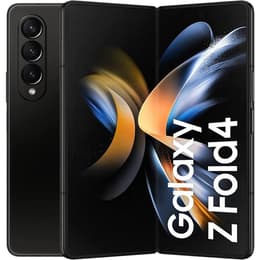
Galaxy Z Fold4
Galaxy Z Fold4
Starting at

Refurbished price:£352.00

Versus £1,889.00 new

See options
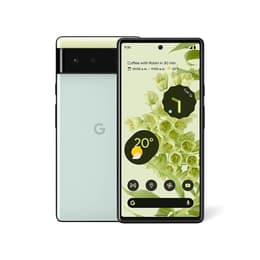
Google Pixel 6
Google Pixel 6
Starting at

Refurbished price:£101.00

Versus £649.99 new

See options

Ratings

The Samsung Galaxy Z Fold4, released in August 2022, and the Google Pixel 6, launched in October 2021, represent distinct approaches to smartphone design and functionality. The Z Fold4 offers a unique foldable form factor that transforms a traditional smartphone into a larger tablet-like display, while the Pixel 6 provides a conventional, high-performance smartphone experience. Both devices operate on the Android platform, but cater to different user preferences through their core design and feature sets.

Scores

Durability

The expected lifespan and software support differ between these two Android devices, influencing their long-term usability.

  • Software Updates: The Galaxy Z Fold4 is eligible for up to four major Android OS updates and five years of security updates, extending its support until around 2027. The Google Pixel 6, initially promised three years of OS updates, has had its support extended to five years of both OS and security updates, meaning it will receive its last Android updates around 2026.
  • Physical Durability: The Galaxy Z Fold4 features an IPX8 water resistance rating, meaning it can withstand submersion in freshwater, but it lacks official dust resistance. Its construction includes Gorilla Glass Victus+ on the cover screen and back, and an Armor Aluminum frame. The Pixel 6 has an IP68 rating, offering both dust and water resistance, and uses Gorilla Glass Victus on its front and back.
  • Repairability: Foldable phones, like the Z Fold4, generally present more complex repair challenges due to their intricate hinge mechanisms and flexible displays, though Samsung has made efforts to make repairs more accessible. The Pixel 6 is considered relatively easier to repair compared to some other flagship phones, particularly for screen replacements.

Year of Release

2022

2021

Compatible with latest Update

Yes

Yes

OS

Android

Android

Foldable

Yes

No

Performance

The performance of both devices is tailored to their respective designs, impacting how they handle demanding tasks and daily usage.

  • Processing Power: The Galaxy Z Fold4 is equipped with a current-generation processor and 12GB of RAM, enabling smooth multitasking across its multiple screens and efficient handling of graphically intensive applications and games. The Pixel 6, with its custom-designed processor and 8GB of RAM, delivers a responsive experience for everyday tasks, app navigation, and Google's AI-driven features.
  • Storage Options: The Z Fold4 offers a range of internal storage capacities, including 256GB, 512GB, and a 1TB option, providing ample space for extensive media libraries and applications. The Pixel 6 comes with 128GB or 256GB of internal storage. Neither device supports expandable storage via microSD cards.
  • Battery Performance: The Galaxy Z Fold4 houses a 4400 mAh dual-cell battery, designed to power its dual-screen setup, with users often reporting it can last through a full day of moderate use. The Pixel 6 features a 4614 mAh battery, which generally provides a full day of power for most users.

Memory (GB)

12 GB

8 GB

Screen quality

The display experience is a primary differentiator, with the Z Fold4 offering a unique foldable screen and the Pixel 6 providing a traditional, high-quality panel.

  • Display Technology and Size: The Galaxy Z Fold4 features a 7.6-inch foldable Dynamic AMOLED 2X main display and a 6.2-inch Dynamic AMOLED 2X cover screen, both offering vibrant colors and deep blacks. The Pixel 6 has a 6.4-inch AMOLED display, providing a rich and clear viewing experience in a standard form factor.
  • Resolution and Refresh Rate: The Z Fold4's main display has a resolution of 2176 x 1812 pixels, while its cover screen is 2316 x 904 pixels, both supporting an adaptive 120Hz refresh rate for smooth scrolling and responsiveness. The Pixel 6 offers a 1080 x 2400 pixel resolution with a 90Hz refresh rate, providing a fluid visual experience for most content.
  • Brightness and Clarity: Both devices offer good brightness levels suitable for outdoor visibility. The Z Fold4's larger internal display provides an expansive canvas for media consumption and productivity, while the Pixel 6's display offers excellent clarity for daily use.

Resolution

1812 x 2176

1080 x 2400

Screen type

Foldable Dynamic AMOLED 2X

AMOLED

Audiovisual

Both smartphones offer capable camera systems, though their strengths and configurations vary.

  • Rear Camera System: The Galaxy Z Fold4 features a versatile triple-camera setup, including a 50MP wide-angle lens, a 12MP ultrawide lens, and a 10MP telephoto lens with 3x optical zoom, allowing for detailed shots and flexible framing. The Pixel 6 comes with a dual-camera system, comprising a 50MP wide-angle lens and a 12MP ultrawide lens, known for its computational photography capabilities that enhance image quality.
  • Front Camera and Video: The Z Fold4 includes a 10MP camera on its cover screen and a 4MP under-display camera on the main screen, offering various options for selfies and video calls. It supports video recording up to 8K. The Pixel 6 has an 8MP front-facing camera and records video up to 4K.
  • Low-Light Performance and Features: The Z Fold4's camera system, with its larger pixel size and enhanced processing, aims to capture clear images even in challenging low-light conditions. The Pixel 6 leverages its advanced software to deliver strong low-light performance and features like Magic Eraser and Real Tone for improved photo editing and color accuracy.

Main camera

50 megapixels

50 megapixels

Front camera

4 megapixels

8 megapixels

Miscellaneous

Beyond core features, several practical elements distinguish the user experience of these two devices.

  • Connectivity and Ports: Both the Galaxy Z Fold4 and Google Pixel 6 support 5G connectivity, Wi-Fi 6E, and Bluetooth 5.2, ensuring fast and reliable wireless communication. Both devices utilize a USB-C port for charging and data transfer.
  • Biometric Security: The Z Fold4 incorporates a side-mounted fingerprint sensor for convenient unlocking. The Pixel 6 features an under-display optical fingerprint sensor.
  • Design and Handling: The Galaxy Z Fold4 weighs 263g and has dimensions of 155.1 x 67.1 x 15.8mm when folded and 155.1 x 130.1 x 6.3mm when unfolded, offering a compact phone experience that expands into a larger screen. The Pixel 6 weighs 207g and measures 158.6 x 74.8 x 8.9mm, providing a more traditional smartphone feel. The Z Fold4's build materials include Gorilla Glass Victus+ and Armor Aluminum, while the Pixel 6 uses Gorilla Glass Victus.

Weight

263 g

207 g

Screen size (in)

7.6

6.4

Mobile network

5G

5G

SIM card

Dual Physical SIM + eSIM

Physical SIM + eSIM

Carrier compatibility

Unlocked

Unlocked

The Samsung Galaxy Z Fold4 and Google Pixel 6 cater to different user needs, as reflected in user feedback and their distinct designs. Users often praise the Z Fold4 for its innovative foldable display, which offers a large screen for productivity and media consumption in a device that can still be carried in a pocket. Its robust multitasking features and premium build materials are frequently highlighted. However, some users note its bulkier folded form factor and the inherent durability considerations of a foldable screen as points of concern.

The Google Pixel 6 is generally lauded for its strong camera performance, particularly its computational photography capabilities, and its clean Android experience with timely software updates. Users appreciate its responsive performance for daily tasks and its distinctive design. Some common criticisms have included the performance of its in-display fingerprint sensor and occasional connectivity issues, though software updates have aimed to address these.

For users who prioritize an expansive screen for multitasking, content creation, or immersive media viewing, and are comfortable with a foldable form factor, the Galaxy Z Fold4 presents a compelling option. Its ability to transform from a compact phone to a tablet-like device offers unique versatility. Conversely, individuals seeking a traditional smartphone with a focus on exceptional photography, a streamlined software experience, and reliable everyday performance may find the Google Pixel 6 to be a more suitable choice. Both devices, whether new or as quality-assured refurbished options, provide distinct advantages depending on individual preferences and usage patterns.
See all articles

Our recent comparisons