
Galaxy S24 FE Vs Google Pixel 6

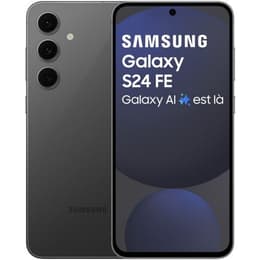
Galaxy S24 FE
Galaxy S24 FE
Starting at

Refurbished price:£250.00

Versus £741.91 new

See options
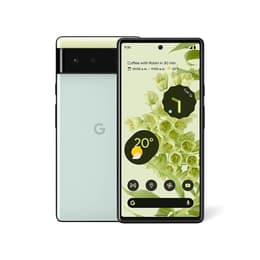
Google Pixel 6
Google Pixel 6
Starting at

Refurbished price:£101.00

Versus £649.99 new

See options

Ratings

The Samsung Galaxy S24 FE, released in late 2024, and the Google Pixel 6, launched in late 2021, represent different generations and approaches to the smartphone experience. While both operate on the Android platform, the Galaxy S24 FE offers a more recent hardware and software foundation with Samsung's One UI, alongside advanced AI capabilities. The Pixel 6, on the other hand, provides a pure Android experience and was notable for introducing Google's custom-designed processor.

Scores

Durability

The longevity of a smartphone is influenced by its release timeline, software support, and physical resilience.

  • Release Timeline: The Galaxy S24 FE, launched in October 2024, benefits from a more current starting point compared to the Google Pixel 6, which debuted in October 2021. This three-year difference significantly impacts their remaining support lifespans.
  • Software Longevity: Samsung has committed to an extensive seven years of OS upgrades and security updates for the Galaxy S24 FE, meaning it will receive software support until at least late 2031. The Google Pixel 6, initially promised three years of OS updates and five years of security updates, later had its OS update period extended to five years. This means the Pixel 6 will receive its last Android OS update around October 2026 and security updates will also conclude around that time.
  • Physical Durability: Both devices feature robust build materials and water resistance. The Galaxy S24 FE incorporates Gorilla Glass Victus+ on the front and Gorilla Glass 5 on the back, along with an aluminum frame and an IP68 rating for dust and water resistance. The Pixel 6 also features Gorilla Glass Victus on the front and Gorilla Glass 6 on the back, coupled with an IP68 rating, providing strong protection against everyday elements.

Year of Release

2024

2021

Compatible with latest Update

Yes

Yes

OS

Android

Android

Foldable

No

No

Performance

Evaluating performance involves looking at how each device handles daily tasks, multitasking, and demanding applications.

  • Processing Power: The Galaxy S24 FE is equipped with an Exynos 2400e processor, which is an underclocked version of a flagship-tier chip. This allows it to handle demanding apps and multitasking smoothly, providing a responsive user experience. The Google Pixel 6 features Google's custom-designed Tensor G1 processor, which was optimized for AI and machine learning tasks at its release, contributing to efficient on-device processing for features like speech recognition and computational photography.
  • Multitasking and Storage: Both phones typically come with 8GB of RAM, which is sufficient for managing multiple applications simultaneously without significant slowdowns. Storage options for both devices generally include 128GB and 256GB, offering ample space for apps, photos, and media.
  • Real-World Responsiveness: Users of the Galaxy S24 FE report that the phone feels very fast in day-to-day usage, with quick app opening times and overall smooth operation. The Pixel 6, at its launch, was praised for its fluid performance and snappy interface, particularly with its integration of Android 12.

Memory (GB)

8 GB

8 GB

Screen quality

The visual experience on a smartphone is largely defined by its display technology, resolution, and brightness capabilities.

  • Display Technology and Size: The Galaxy S24 FE features a larger 6.7-inch Dynamic AMOLED 2X display, offering vibrant colors and deep blacks. The Google Pixel 6 has a 6.4-inch OLED display, also known for its rich contrast and color accuracy.
  • Resolution and Refresh Rate: Both devices offer Full HD+ resolutions (1080x2340 for S24 FE, 1080x2400 for Pixel 6), providing clear and sharp visuals for everyday viewing. The Galaxy S24 FE boasts a 120Hz refresh rate, contributing to smoother scrolling and more fluid animations. The Pixel 6 features a 90Hz refresh rate, which still offers a noticeable improvement in smoothness over standard 60Hz displays.
  • Brightness and Outdoor Visibility: The Galaxy S24 FE's display can reach a peak brightness of up to 1900 nits, enhancing visibility in bright outdoor conditions. The Pixel 6 also provides good brightness for outdoor use, though specific peak brightness figures are less emphasized in its specifications.

Resolution

1080 x 2340

1080 x 2400

Screen type

Dynamic AMOLED 2X

AMOLED

Audiovisual

Camera capabilities are a significant factor for many users, encompassing both still photography and video recording.

  • Rear Camera Systems: The Galaxy S24 FE features a versatile triple-camera setup on the rear, including a 50MP main sensor with optical image stabilization (OIS), a 12MP ultrawide lens, and an 8MP telephoto lens with 3x optical zoom and OIS. The Google Pixel 6 comes with a dual-camera system, comprising a 50MP main sensor and a 12MP ultrawide lens.
  • Photography Performance: The Galaxy S24 FE delivers good results in various lighting conditions, with its 50MP main lens capable of producing sharp and well-balanced photos in daylight. However, its low-light performance is considered average due to smaller camera sensors. The Pixel 6 was highly praised for its camera quality, particularly its ability to capture excellent detail and accurate colors in daylight, and its strong performance in low-light conditions using features like Night Sight.
  • Video and Audio: The Galaxy S24 FE offers impressive video quality, comparable to some flagship phones, with good stabilization, especially for its telephoto lens. The Pixel 6 also provides strong video recording capabilities, with Google's Tensor chip enhancing video processing. Both devices include stereo speakers for an enhanced media consumption experience.

Main camera

50 megapixels

50 megapixels

Front camera

10 megapixels

8 megapixels

Miscellaneous

Beyond core features, several practical elements contribute to the overall user experience and device utility.

  • Connectivity and Ports: Both the Galaxy S24 FE and Google Pixel 6 support 5G connectivity, along with modern Wi-Fi standards (Wi-Fi 6/6E for S24 FE, Wi-Fi 6 for Pixel 6) and Bluetooth 5.2. The Galaxy S24 FE uses a USB-C port for charging and data transfer, while the Pixel 6 also features a USB-C port. Neither device includes a traditional headphone jack.
  • Biometric Security: Both smartphones incorporate in-display fingerprint sensors for secure and convenient unlocking. The Pixel 6 also includes Google's Titan M2 security module for enhanced data protection.
  • Design and Handling: The Galaxy S24 FE is slightly larger and heavier than some other models in its series, with dimensions of 162 x 77.3 x 8mm and a weight of 213 grams. The Pixel 6 measures 158.6 x 74.8 x 8.9 mm and weighs 207 grams, offering a substantial feel in hand. Both devices feature an aluminum frame, contributing to their solid build.

Weight

213 g

207 g

Screen size (in)

6.7

6.4

Mobile network

5G

5G

SIM card

Dual Physical SIM

Physical SIM + eSIM

Carrier compatibility

Unlocked

Unlocked

The Samsung Galaxy S24 FE and Google Pixel 6 cater to different user priorities, largely due to their release timelines and respective strengths. The Galaxy S24 FE, being a more recent release, is praised for its strong performance, vibrant display, and the inclusion of Galaxy AI features, offering a near-flagship experience. Users appreciate its extensive software support, promising updates for seven years, which is a significant advantage for long-term ownership. However, some users note that its camera performance, particularly in low light, might not match the very best, and its charging speeds are not the fastest available.

The Google Pixel 6, while older, is highly regarded for its exceptional camera capabilities, especially its computational photography and ability to capture detailed and color-accurate photos. Its pure Android experience and the integration of Google's Tensor chip for AI-driven features were also significant highlights at its launch. Criticisms often centered on its battery life for heavy users and the initial performance of its in-display fingerprint sensor.

Users prioritizing the latest software, long-term updates, and a comprehensive AI suite may find the Galaxy S24 FE well-suited to their needs. Its larger, smoother display and versatile camera system make it a strong contender for those seeking a modern Android experience. Conversely, users who prioritize a clean Android interface, exceptional still photography, and a device that was at the forefront of AI integration at its release might lean towards the Google Pixel 6. For those considering either device, exploring quality-assured refurbished options can provide an eco-friendly alternative to extend the life cycle of these smartphones.


See all articles

Our recent comparisons