

Galaxy S24 Ultra Vs Google Pixel 9a

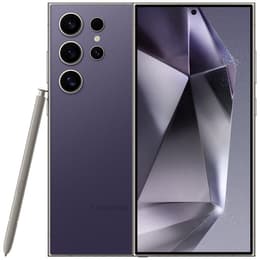
Galaxy S24 Ultra
Galaxy S24 Ultra
Starting at

Refurbished price:£426.00

Versus £1,357.64 new

See options
Google Pixel 9a
Google Pixel 9a
Starting at

Refurbished price:£319.00

Versus £499.00 new

See options

Ratings

The Samsung Galaxy S24 Ultra, released in January 2024, and the Google Pixel 9A, launched in April 2025, represent distinct approaches to the modern smartphone experience. While the S24 Ultra is positioned as a premium device offering extensive features and advanced hardware, the Pixel 9A focuses on delivering a streamlined Android experience with strong computational photography capabilities. Both devices run on the Android operating system, with each manufacturer providing their unique software interpretations and update commitments.

Scores

Durability

When considering the long-term usability of these devices, their release timelines and software support are key factors. Both manufacturers have committed to extended software support, ensuring a prolonged functional lifespan for users.

  • Software Longevity: The Samsung Galaxy S24 Ultra, released in January 2024, and the Google Pixel 9A, launched in April 2025, both offer a substantial seven years of operating system and security updates. This commitment from both brands means users can expect their devices to remain current and secure for an extended period.
  • Physical Resilience: The Galaxy S24 Ultra features a titanium frame and Corning Gorilla Armor on its display, providing enhanced scratch resistance, with visible marks appearing at Mohs level 7-8 in tests. It also boasts an IP68 rating for dust and water resistance. The Pixel 9A, while also durable, incorporates Corning Gorilla Glass 3 for screen protection and carries an IP67 rating for dust and water resistance, making it resilient against splashes and dust ingress.
  • Repairability Considerations: While specific repairability scores can vary, the S24 Ultra has been noted to have a repairability rating of 9/10, similar to its predecessor, partly due to features like pull tabs for the battery. The Pixel 9A, as part of the A-series, is generally designed for a balance of durability and repair access, though detailed scores may differ.

Year of Release

2024

2025

Compatible with latest Update

Yes

Yes

OS

Android

Android

Foldable

No

No

Performance

The performance of a smartphone significantly impacts daily interactions, from launching applications to managing multiple tasks simultaneously. Both the Galaxy S24 Ultra and the Pixel 9A are equipped with capable processors, but they cater to different usage intensities.

  • Processing Power: The Samsung Galaxy S24 Ultra is powered by a current-generation processor, designed to handle demanding applications, intensive gaming, and complex multitasking with fluidity. The Google Pixel 9A features the Google Tensor G4, which provides a responsive experience for everyday tasks, navigation, and Google's AI-driven features.
  • Multitasking and Storage: The S24 Ultra typically comes with 12GB of RAM and offers storage options up to 1TB, allowing for extensive multitasking and ample space for large files and applications. The Pixel 9A includes 8GB of RAM and storage options up to 256GB, which is sufficient for most users' daily needs and application management.
  • Battery Behavior: The Galaxy S24 Ultra houses a 5000mAh battery, consistently delivering excellent endurance, often lasting over a full day even for heavy users. The Pixel 9A is equipped with a 5100mAh battery, providing reliable power for a full day of typical usage, supported by efficient software management.

Memory (GB)

12 GB

8 GB

Screen quality

The display is a primary interface for smartphone interaction, and both devices offer distinct visual experiences tailored to their respective categories.

  • Display Technology and Clarity: The Samsung Galaxy S24 Ultra features a 6.8-inch Dynamic LTPO AMOLED 2X display with a QHD+ resolution (1440 x 3120 pixels), resulting in sharp and detailed visuals with deep blacks and vibrant colors. The Google Pixel 9A comes with a 6.3-inch OLED display offering an FHD+ resolution (1080 x 2424 pixels), providing clear images and good color reproduction for general viewing.
  • Brightness and Outdoor Visibility: The S24 Ultra's display can reach a peak brightness of 2600 nits, coupled with an anti-glare coating, which significantly enhances visibility in bright outdoor conditions. The Pixel 9A's screen also offers good brightness, with a peak of 2700 nits (1473 nits manually measured), ensuring comfortable viewing in various lighting environments.
  • Smoothness and Responsiveness: Both devices feature adaptive refresh rates for smooth scrolling and responsive interactions. The S24 Ultra offers a dynamic 1-120Hz refresh rate, adjusting to content for power efficiency and fluidity. The Pixel 9A provides a 60-120Hz adaptive refresh rate, contributing to a smooth user experience.

Resolution

1440 x 3120

2424 x 1080

Audiovisual

Camera capabilities are a significant differentiator, with both the Galaxy S24 Ultra and the Pixel 9A offering advanced photographic tools, albeit with different strengths.

  • Rear Camera Systems: The Samsung Galaxy S24 Ultra boasts a versatile quad-camera setup, including a 200MP main sensor, a 12MP ultrawide, a 10MP 3x telephoto, and a 50MP 5x telephoto lens, providing extensive zoom capabilities and detailed imagery. The Google Pixel 9A features a dual-camera system with a 48MP main sensor and a 13MP ultrawide lens, relying heavily on computational photography for image enhancement.
  • Photography Performance: The S24 Ultra excels in capturing high-resolution photos with strong detail and color consistency across its multiple lenses, performing well in various lighting conditions, including low light. Its 5x telephoto lens also offers impressive macro capabilities. The Pixel 9A is known for its computational photography, producing excellent still images with balanced exposure and vibrant colors, particularly in challenging lighting, making it a strong point-and-shoot option.
  • Video Recording and Audio: The S24 Ultra supports 8K video recording at 30fps and 4K at 120fps in Pro mode, along with advanced video features and good microphone quality. The Pixel 9A offers good video recording quality, typically up to 4K, and provides clear audio for calls and media consumption.

Front camera

12 megapixels

13 megapixels

Miscellaneous

Beyond core specifications, several practical elements contribute to the overall user experience and device utility.

  • Connectivity and Ports: The Samsung Galaxy S24 Ultra supports advanced connectivity standards, including Wi-Fi 7 and Bluetooth 5.3, and features a USB-C 3.2 port for fast data transfer and charging. The Google Pixel 9A typically includes Wi-Fi 6E or Wi-Fi 7 and Bluetooth 5.3, with a USB-C port for charging and data.
  • Biometrics and Unique Features: The S24 Ultra incorporates an ultrasonic in-display fingerprint sensor and notably includes an integrated S Pen stylus, offering unique productivity and creative functionalities. The Pixel 9A utilizes an in-display fingerprint sensor for secure unlocking and focuses on a clean Android experience with Google's AI features.
  • Physical Design and Handling: The Galaxy S24 Ultra is a larger and heavier device, measuring 162.30 x 79.00 x 8.60mm and weighing 232g, which provides a substantial feel and a large display area. The Pixel 9A is more compact and lighter, at 154.70 x 73.30 x 8.90mm and 185.90g, making it easier for one-handed use and portability.

Weight

232 g

186 g

Screen size (in)

6.8

6.3

Mobile network

5G

5G

SIM card

Dual Physical SIM + eSIM

Physical SIM + eSIM

Carrier compatibility

Unlocked

Unlocked

The Samsung Galaxy S24 Ultra and the Google Pixel 9A cater to different user priorities, each excelling in its own domain. User feedback for the S24 Ultra frequently praises its exceptional battery life, vibrant display, and versatile camera system, particularly its zoom capabilities. Some users appreciate the integrated S Pen for productivity and the overall premium build. Criticisms sometimes revolve around its size and weight, and some users have noted that while the hardware is powerful, the software experience can feel more controlled by Samsung's ecosystem.

The Pixel 9A, on the other hand, is often lauded for its strong camera performance, especially its computational photography which delivers consistent results in various conditions. Users value its clean Android interface and the promise of long-term software support. Common feedback highlights its capable performance for daily tasks and a comfortable form factor. Some reviews suggest that while its camera is excellent for stills, it may not offer the same versatility as multi-lens flagship systems, and its RAM might limit some of the most intensive AI features found on higher-end Pixel models.

Users prioritizing a comprehensive feature set, a large and bright display, extensive camera versatility with optical zoom, and integrated stylus functionality may find the Samsung Galaxy S24 Ultra well-suited to their needs. Conversely, individuals who value a more compact device, a pure Android experience, and a camera that consistently produces high-quality still images through advanced software processing might lean towards the Google Pixel 9A. Both devices offer a pathway to a quality smartphone experience, and considering a quality-assured refurbished option for either model can be an eco-friendly alternative for those seeking a sustainable choice.

See all articles

Our recent comparisons