
Compare models

Galaxy Z Flip7 Vs iPhone Air

  • 1-year minimum warranty
  • Free delivery on all items
  • Free 30-day returns
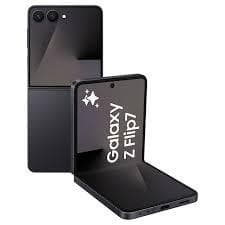
Galaxy Z Flip7
Starting at

Refurbished price:£470.00

Versus £1,156.31 new

See options
iPhone Air
Starting at

Refurbished price:£613.00

Versus £1,099.00 new

See options

Differences at a glance

The Samsung Galaxy Z Flip7 (2025) and the Apple iPhone Air (2025) represent two distinct visions of modern smartphone design, contrasting a clamshell foldable form factor with an ultra-slim slate construction. While both devices launched in mid-2025 and target users seeking modern features in a compact profile, they diverge significantly in hardware design and operating systems. The Galaxy Z Flip7 runs on Android with Samsung's custom interface, whereas the iPhone Air operates on iOS, offering two entirely different software ecosystems to daily users.

Available Models

Colour

Storage

Scores

Durability

Both smartphones arrived in mid-2025, placing them on similar generational timelines regarding hardware longevity and ongoing software support schedules.

  • Software support duration: The iPhone Air benefits from Apple's extended iOS update window, typically spanning five to six years of system patches, while the Galaxy Z Flip7 features long-term Android and security update commitments from Samsung.
  • Hardware resilience: The iPhone Air relies on a rigid titanium frame and reinforced glass layers designed to withstand daily wear, whereas the Galaxy Z Flip7 incorporates a flexible inner screen mechanism and a folding hinge that requires careful handling over years of use.
  • Repairability factors: Traditional slate devices like the iPhone Air generally offer straightforward component replacement paths, whereas foldable options like the Galaxy Z Flip7 involve specialized hinge and flexible display assemblies that demand professional servicing.

Year of Release

2025

2025

Compatible with latest Update

Yes

Yes

OS

Android

iOS

Foldable

Yes

No

Performance

Equipped with advanced internal configurations, both devices handle demanding applications and everyday multitasking smoothly without noticeable stutter or slowdowns.

  • Storage and memory configurations: Both models provide generous baseline memory allocations alongside high-capacity storage tiers, accommodating large media libraries and heavy app caches effortlessly.
  • Battery behavior: The iPhone Air utilizes an energy-efficient processor to stretch its slim battery through a standard day of mixed use, while the Galaxy Z Flip7 manages power across its dual-screen setup, often requiring a quick recharge during heavy usage days.
  • System responsiveness: Modern multi-core processing architecture ensures rapid app loading times, fluid split-screen multitasking on the foldable display, and responsive navigation across both mobile platforms.

Screen quality

Display technology is a primary differentiator, as the Galaxy Z Flip7 provides a transformable folding canvas alongside a secondary outer screen, while the iPhone Air focuses on a large, ultra-thin single pane.

  • Display architecture: The Galaxy Z Flip7 features a flexible dynamic OLED main screen that folds in half alongside a practical cover display, whereas the iPhone Air employs a vibrant Super Retina XDR OLED panel with high color accuracy.
  • Outdoor visibility: Both models incorporate high peak brightness modes that maintain clear readability under direct sunlight, ensuring content remains visible in bright environments.
  • Refresh rate and smoothness: High adaptive refresh rates up to 120Hz enable fluid scrolling, responsive touch interactions, and seamless animations across both device lineups.

Resolution

1080x2520

2736x1260

Audiovisual

Imaging capabilities are tailored to different shooting preferences, balancing versatile multi-lens arrays with streamlined single-sensor efficiency.

  • Camera system layout: The Galaxy Z Flip7 houses a dual rear camera setup comprising a high-resolution main sensor and an ultra-wide lens, while the iPhone Air features a single high-capacity 48-megapixel fusion sensor designed for clear everyday photography.
  • Low-light performance: Advanced image processing algorithms help both devices capture detailed low-light photos and steady video clips with balanced exposure levels.
  • Media consumption and audio: Built-in stereo speaker configurations deliver clear audio output for hands-free calls, video playback, and casual gaming sessions.

Main camera

50 megapixels

48 megapixels

Front camera

10 megapixels

18 megapixels

Miscellaneous

Physical dimensions and connectivity standards shape the everyday handling experience, separating pocket-friendly folding designs from lightweight ultra-thin profiles.

  • Handling and dimensions: The Galaxy Z Flip7 folds down into a compact square that slips easily into small pockets, whereas the iPhone Air offers an exceptionally slim and lightweight slate profile that rests comfortably in one hand.
  • Port types and charging: The iPhone Air relies on a standard USB-C port alongside wireless charging compatibility, while the Galaxy Z Flip7 also utilizes USB-C charging alongside flexible folding postures that double as a built-in stand.
  • Security sensors: Biometric authentication is handled via fast face recognition on the Apple device and a side-mounted fingerprint sensor integrated into the power key on the Samsung model.

Weight

188 g

165 g

Screen size (in)

6.9

6.5

Mobile network

5G

5G

SIM card

Physical SIM + eSIM

eSIM

Carrier compatibility

Unlocked

Unlocked

Connector

USB-C

USB-C

What the community thinks

User feedback highlights distinct preferences for each device across community forums and tech discussions. Owners of the Galaxy Z Flip7 frequently praise its compact folded footprint, versatile cover screen utility, and the convenience of props-free video calling afforded by its folding hinge. Conversely, some users note that the inner screen crease remains visible and battery longevity can be tested under heavy use. Meanwhile, iPhone Air users frequently commend its remarkably thin profile, lightweight build, and reliable everyday battery efficiency, though some miss having a dedicated ultra-wide auxiliary camera lens.

Users prioritizing a pocket-friendly clamshell design that folds in half and offers creative display angles will find the Galaxy Z Flip7 well-suited to their daily routine. On the other hand, users who prefer an ultra-slim, lightweight slate profile with a large continuous viewing area and streamlined software integration may lean toward the iPhone Air. For buyers exploring sustainable purchasing routes, choosing a quality-assured refurbished option provides a practical way to acquire these advanced technologies while supporting eco-friendly alternatives.