
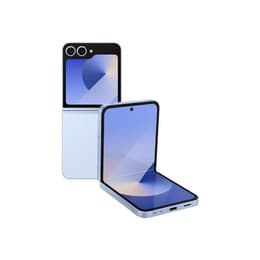

Galaxy Z Flip6 Vs Google Pixel Fold

Galaxy Z Flip6
Galaxy Z Flip6
Starting at

Refurbished price:£335.00

Versus £1,011.35 new

See options
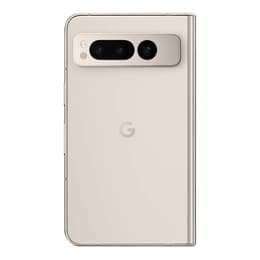
Google Pixel Fold
Google Pixel Fold
Starting at

Refurbished price:£373.00

Versus £1,499.00 new

See options

Ratings

The Samsung Galaxy Z Flip6 (2024) and the Google Pixel Fold (2023) represent distinct approaches to the foldable smartphone market. While both devices offer the versatility of a folding screen, they cater to different user preferences through their unique form factors and core functionalities. The Galaxy Z Flip6 is a clamshell-style phone that prioritizes portability and a traditional smartphone experience when closed, whereas the Google Pixel Fold unfolds into a larger, tablet-like display for enhanced productivity and media consumption. Both devices operate on the Android platform, offering a wide range of applications and customization options.

Scores

Durability

The expected lifespan of a smartphone is influenced by its build quality, software support, and the longevity of its internal components. These two foldable devices offer different timelines for software updates and varying approaches to physical durability.

  • Release Timeline: The Galaxy Z Flip6 was released in July 2024, making it a more recent device compared to the Google Pixel Fold, which launched in June 2023. This difference in release dates impacts their respective software support cycles.
  • Software Longevity: Samsung has committed to providing 7 years of Android OS updates, software updates, and security updates for the Galaxy Z Flip6, offering an extended period of support. The Google Pixel Fold, on the other hand, is guaranteed 5 years of OS and security updates from its release date.
  • Durability Features: Both devices incorporate robust designs for their folding mechanisms. The Galaxy Z Flip6 features an IP48 rating for water and dust resistance and utilizes Gorilla Glass Victus 2 on its cover screen. The Google Pixel Fold comes with an IPX8 water resistance rating and uses Gorilla Glass Victus for its cover and back panels.

Year of Release

2024

2023

Compatible with latest Update

Yes

Yes

OS

Android

Android

Foldable

Yes

Yes

Performance

Performance in a foldable smartphone is crucial for handling demanding applications, multitasking, and ensuring a smooth user experience across both folded and unfolded states. The internal components of these devices contribute to their overall responsiveness.

  • Processing Power: The Galaxy Z Flip6 is equipped with a current-generation processor, which provides a notable boost in speed and efficiency for everyday tasks and more intensive applications. The Google Pixel Fold utilizes a previous-generation processor, which still delivers capable performance for most user needs.
  • Multitasking Capabilities: With 12GB of RAM across all configurations, the Galaxy Z Flip6 is well-suited for seamless multitasking and running multiple applications simultaneously without slowdowns. The Google Pixel Fold also features 12GB of RAM, enabling efficient handling of various apps and transitions between its different screen modes.
  • Storage Options: Both devices offer internal storage options of 256GB and 512GB, providing ample space for applications, media, and documents. The Galaxy Z Flip6 uses a faster storage standard, which can contribute to quicker app loading and data transfer speeds.

Memory (GB)

12 GB

12 GB

Screen quality

The display is a primary interaction point for any smartphone, and for foldables, both the main and cover screens play a significant role in the user experience. Differences in display technology, size, and refresh rates impact visual quality and usability.

  • Main Display Technology: The Galaxy Z Flip6 features a 6.7-inch Dynamic AMOLED 2X main display, known for its vibrant colors, deep blacks, and high contrast. The Google Pixel Fold offers a larger 7.6-inch OLED main display, providing an expansive canvas for content. Both displays support a 120Hz refresh rate for smooth scrolling and responsive interactions.
  • Cover Screen Experience: The Galaxy Z Flip6 has a 3.4-inch Super AMOLED cover screen with a squarer aspect ratio, suitable for quick glances at notifications and widgets. The Google Pixel Fold's 5.8-inch OLED cover display has a wider, more traditional smartphone aspect ratio, making it more comfortable for typing and general use when folded.
  • Brightness and Clarity: Both devices offer high peak brightness levels, ensuring good visibility in various lighting conditions, including bright outdoor environments. The Galaxy Z Flip6's main display can reach up to 2600 nits, while the Google Pixel Fold's main display reaches 1450 nits and its cover display reaches 1550 nits.

Resolution

1080 x 2640

1840 x 2208

Screen type

Foldable Dynamic LTPO AMOLED 2X

Foldable OLED

Audiovisual

Camera capabilities are a significant consideration for many users, and both the Galaxy Z Flip6 and Google Pixel Fold offer distinct photographic experiences, leveraging their hardware and software processing.

  • Rear Camera Systems: The Galaxy Z Flip6 features a dual-camera setup with a 50MP wide-angle main sensor and a 12MP ultrawide lens, providing good detail and dynamic range in well-lit conditions. The Google Pixel Fold offers a more versatile triple-camera system, including a 48MP wide-angle, a 10.8MP ultrawide, and a 10.8MP telephoto lens with 5x optical zoom, allowing for greater flexibility in capturing distant subjects.
  • Photography Performance: The Galaxy Z Flip6 shows improvements in its main camera, offering good results in daylight and decent video stabilization. Users report that the Pixel Fold's cameras produce natural colors and benefit from Google's image processing, with its telephoto lens being a notable strength.
  • Selfie and Video Capabilities: Both devices offer front-facing cameras for selfies and video calls. The Galaxy Z Flip6 has a 10MP front camera, while the Pixel Fold includes a 9.5MP camera on the cover screen and an 8MP camera above the main display. The foldable form factors allow for creative use of the main rear cameras for high-quality selfies on both devices.

Main camera

50 megapixels

48 megapixels

Front camera

10 megapixels

8 megapixels

Miscellaneous

Beyond the core features, several practical elements contribute to the overall user experience, from how a device connects to other hardware to its physical design and biometric security.

  • Connectivity and Ports: The Galaxy Z Flip6 supports Wi-Fi 6E and Bluetooth 5.3, along with a USB Type-C 3.2 port for data transfer and charging. The Google Pixel Fold also features Wi-Fi 6E and a USB Type-C 3.2 Gen 2 port, with Bluetooth 5.2. Both devices offer 5G connectivity.
  • Physical Design and Handling: The Galaxy Z Flip6 is a compact clamshell, weighing 187g, making it highly portable when folded. The Google Pixel Fold, a book-style foldable, is heavier at 283g, offering a larger screen when unfolded but a more substantial feel when closed.
  • Biometric Security: Both smartphones incorporate fingerprint sensors for secure unlocking. The Galaxy Z Flip6 has a side-mounted fingerprint sensor, while the Google Pixel Fold also integrates a fingerprint sensor into its power button and offers face unlock on its outer display.

Weight

187 g

283 g

Screen size (in)

6.7

7.6

Mobile network

5G

5G

SIM card

Physical SIM + eSIM

Physical SIM + eSIM

Carrier compatibility

Unlocked

Unlocked

The Samsung Galaxy Z Flip6 and Google Pixel Fold cater to different user needs within the foldable smartphone segment. The Galaxy Z Flip6 is often praised for its compact, pocketable design when folded, making it a convenient option for users who prioritize portability and a traditional smartphone feel. Its updated processor and extended software support are frequently highlighted as strong points. Some users, however, note that while its camera has improved, it may not match the versatility of non-foldable flagships.

The Google Pixel Fold receives commendation for its expansive internal display, which offers a tablet-like experience for media consumption and multitasking. Its camera system, particularly the inclusion of a telephoto lens with optical zoom, is often cited as a significant advantage, benefiting from Google's renowned image processing. Criticisms sometimes revolve around its heavier build and the older generation processor compared to newer foldables.

Users prioritizing a highly portable device that folds into a small footprint, with a long software support commitment, may find the Galaxy Z Flip6 well-suited to their needs. Those who value a larger, tablet-like internal display for productivity and media, coupled with a versatile camera system that includes optical zoom, might lean towards the Google Pixel Fold. Both devices offer unique advantages, and considering a quality-assured refurbished option for either model can be an eco-friendly alternative for making an informed choice.

See all articles

Our recent comparisons





