
Smartphones
Compare models
Differences at a glance
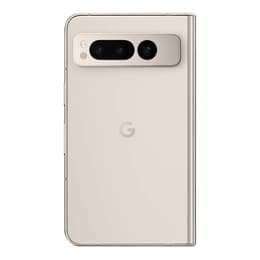
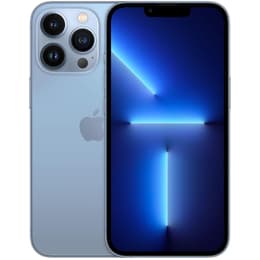
The Google Pixel Fold, released in 2023, represents Google's entry into the foldable smartphone market, offering a unique form factor that transforms from a traditional smartphone to a small tablet. In contrast, the iPhone 13 Pro, launched in 2021, is a conventional high-end smartphone from Apple, known for its refined design and powerful performance. These devices operate on distinct ecosystems, with the Pixel Fold running Android and the iPhone 13 Pro utilizing iOS, leading to fundamental differences in user experience and software integration. The primary differentiators lie in their physical design and the versatility offered by the Pixel Fold's dual-screen setup versus the iPhone's traditional, robust build.
Colour
Storage
The Google Pixel Fold, launched in mid-2023, is expected to receive operating system updates until at least June 2026 and security updates until June 2028, providing a solid five years of support. The iPhone 13 Pro, released in September 2021, typically receives iOS updates for five to six years, with security updates often extending beyond that, potentially until 2027 or 2028.
Year of Release
Compatible with latest Update
OS
Foldable
Both the Google Pixel Fold and iPhone 13 Pro offer robust performance, though their strengths are optimized for different user experiences. The Pixel Fold's processor excels in AI-driven tasks and multitasking across its dual displays, while the iPhone 13 Pro's chip delivers raw power for demanding applications and gaming.
The display experience is a major differentiator, with the Pixel Fold offering a versatile foldable design and the iPhone 13 Pro providing a premium traditional screen. The Pixel Fold features a 7.6-inch foldable OLED main display and a 5.8-inch OLED cover display, both with a 120Hz refresh rate, offering a large canvas when unfolded. The iPhone 13 Pro boasts a 6.1-inch Super Retina XDR OLED display with ProMotion technology, providing an adaptive refresh rate up to 120Hz.
Resolution
Screen type
Both the Google Pixel Fold and iPhone 13 Pro are recognized for their strong camera capabilities, though they approach photography with different strengths and features. The Pixel Fold features a triple rear camera system with a 48MP main sensor, a 10.8MP ultrawide, and a 10.8MP telephoto lens offering 5x optical zoom. The iPhone 13 Pro also has a triple 12MP rear camera system, comprising a main, ultrawide, and telephoto lens with 3x optical zoom.
Main camera
Front camera
Beyond core performance, several practical elements distinguish the Google Pixel Fold and iPhone 13 Pro, impacting daily usability and durability. The Pixel Fold, as a foldable, has a distinct physical presence compared to the traditional slab design of the iPhone 13 Pro.
Weight
Screen size (in)
Mobile network
SIM card
Carrier compatibility
User feedback for the Google Pixel Fold often highlights its innovative foldable design, providing a large, immersive screen for media and multitasking, and its capable camera system, particularly the 5x optical zoom. Common criticisms include its battery life for heavy users and the noticeable crease on the inner display. For the iPhone 13 Pro, users frequently praise its exceptional camera performance, the smooth 120Hz ProMotion display, and its impressive battery longevity. Some users express a desire for a USB-C port and note its relatively heavy build.
Users prioritizing a versatile device that can switch between a traditional smartphone and a larger tablet-like experience, especially for productivity and media consumption, may find the Google Pixel Fold well-suited to their needs. Its unique form factor and Android's adaptable interface cater to those seeking a novel mobile experience. Conversely, users who value a consistently powerful and refined traditional smartphone experience, with a focus on photography, video capabilities, and long-lasting battery life in a compact form, will likely lean towards the iPhone 13 Pro. Its robust ecosystem and established performance make it a reliable choice. Both devices offer distinct advantages, and choosing between them depends on individual priorities regarding form factor, operating system preference, and specific feature sets. For those considering a more sustainable choice, exploring quality-assured refurbished options for either model can provide an eco-friendly alternative.