
Galaxy Tab A9 (8.7", 2023) Vs iPad Air 7 (2025, M3 series)

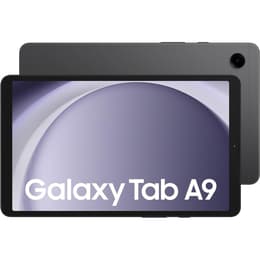
Galaxy Tab A9 (8.7", 2023)
Starting at

Refurbished price:£87.00

Versus £219.00 new

See options
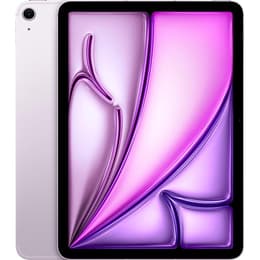
iPad Air 7 (2025, M3 series)
Starting at

Refurbished price:£457.00

Versus £599.00 new

See options

Ratings

The Samsung Galaxy Tab A9, released in October 2023, and the Apple iPad Air (M3 Series), launched in March 2025, represent distinct approaches to tablet computing. While both devices offer portable digital experiences, they cater to different user needs through their respective operating systems and hardware capabilities. The Galaxy Tab A9 focuses on essential functionality within the Android ecosystem, whereas the iPad Air (M3 Series) delivers advanced performance and features within Apple's iPadOS environment.

Scores

Durability

The expected practical lifespan of a tablet is influenced by its release timeline, software support, and build quality. These two devices, released two years apart, offer different longevity prospects.

  • Release Timeline: The Galaxy Tab A9 was introduced in October 2023, while the iPad Air (M3 Series) followed in March 2025. This difference in launch dates means the iPad Air benefits from a more recent hardware foundation and a longer potential support window.
  • Software Longevity: The Galaxy Tab A9 ships with Android 13 and is expected to receive two major Android updates, extending its software support to Android 15. The iPad Air (M3 Series) launched with iPadOS 18 and typically receives software updates for a longer duration, often five to six years or more, providing extended access to new features and security enhancements.
  • Repairability and Build: The Galaxy Tab A9 features a build that includes a metal back, offering a solid feel for its category. The iPad Air (M3 Series) utilizes a sleek aluminum design and is generally considered repairable, with Apple also highlighting its use of recycled content in its construction.

Year of Release

2023

2025

Compatible with latest Update

Yes

Yes

OS

Android

iPadOS

Performance

Performance is a key differentiator, with the internal components dictating how smoothly applications run, how quickly tasks are completed, and the overall responsiveness of the user experience.

  • Processing Power: The Galaxy Tab A9 is equipped with a processor designed for everyday tasks, handling web browsing, media streaming, and light gaming efficiently. The iPad Air (M3 Series), powered by Apple's M3 chip, offers significantly more processing power, enabling smooth multitasking, demanding applications like 3D rendering, and high-fidelity gaming.
  • Multitasking and Storage: The Galaxy Tab A9 is available with 4GB or 8GB of RAM, which is suitable for basic multitasking and app usage. Its storage options of 64GB or 128GB can be expanded via a microSD card. The iPad Air (M3 Series) comes with 8GB of unified memory across all configurations and offers larger internal storage options ranging from 128GB up to 1TB, providing ample space and capability for more intensive workflows.
  • Battery Behavior: The Galaxy Tab A9's 5100mAh battery provides varying endurance, with some tests showing around 6.75 hours of continuous video playback at maximum brightness, and up to 12-14 hours for web surfing. The iPad Air (M3 Series) is rated for up to 10 hours of web surfing or video streaming over Wi-Fi, with real-world usage often aligning closely with this estimate for typical tasks, though intensive applications can reduce this.

Memory (GB)

4 GB

8 GB

Screen quality

The visual experience is largely defined by the display technology, resolution, and brightness, impacting everything from reading to media consumption.

  • Display Technology and Resolution: The Galaxy Tab A9 features an 8.7-inch TFT LCD with a resolution of 1340 x 800 pixels, resulting in a pixel density of 179-189 ppi. This display is suitable for general content viewing. The iPad Air (M3 Series) offers a Liquid Retina IPS LCD display, available in 11-inch (2360x1640 pixels) or 13-inch (2732x2048 pixels) sizes, both with a higher pixel density of 264 ppi.
  • Brightness and Color: The Galaxy Tab A9's display provides adequate brightness for indoor use. The iPad Air (M3 Series) features a brighter display, with the 11-inch model reaching 500 nits and the 13-inch model reaching 600 nits, along with P3 wide color support and True Tone technology for more accurate and vibrant visuals, especially in varied lighting conditions.
  • Refresh Rate and Smoothness: Both tablets feature a standard 60Hz refresh rate. While the Galaxy Tab A9's 60Hz is typical for its category, some users of the iPad Air (M3 Series) coming from devices with higher refresh rates might notice the difference, though for most tasks, the 60Hz on the iPad Air is generally considered smooth.

Resolution

800 x 1340

2360 x 1640

Screen type

TFT LCD

Liquid Retina display

Pixel density

180ppp

264ppp

Audiovisual

Camera capabilities on tablets are often secondary to smartphones, but they remain important for video calls, document scanning, and casual photography.

  • Camera System: The Galaxy Tab A9 includes an 8MP rear camera with autofocus and a 2MP front-facing camera. The iPad Air (M3 Series) features a more advanced 12MP Wide rear camera capable of 4K video recording and Smart HDR 4, alongside a 12MP front-facing camera with Center Stage.
  • Photography and Video Quality: The Galaxy Tab A9's cameras are generally considered basic, sufficient for video calls and scanning documents, but not ideal for high-quality photography. The iPad Air (M3 Series) offers significantly better image and video quality, making it suitable for more detailed photography, high-resolution video recording, and enhanced video conferencing with Center Stage, which keeps the user framed during calls.
  • Microphone and Speaker Quality: The Galaxy Tab A9 features stereo speakers with Dolby Atmos support, providing a decent audio experience for media consumption. The iPad Air (M3 Series) also includes stereo speakers, offering good audio output for media and calls.

Miscellaneous

Beyond core specifications, various practical elements contribute to the overall user experience, including connectivity, physical design, and authentication methods.

  • Connectivity Options: The Galaxy Tab A9 supports Wi-Fi 5 (802.11ac) and Bluetooth 5.3, with an optional 4G LTE variant. The iPad Air (M3 Series) offers more advanced Wi-Fi 6E and Bluetooth 5.3, along with optional sub-6 GHz 5G connectivity for faster wireless data transfer.
  • Ports and Sensors: Both devices feature a USB-C port for charging and data transfer. The Galaxy Tab A9 retains a 3.5mm headphone jack, which is absent on the iPad Air (M3 Series). For authentication, the Galaxy Tab A9 uses face recognition, while the iPad Air (M3 Series) incorporates Touch ID integrated into the power button.
  • Dimensions and Handling: The 8.7-inch Galaxy Tab A9 is compact and lightweight at 332-333 grams, making it highly portable. The iPad Air (M3 Series) is available in 11-inch (460g) and 13-inch (616-617g) models, offering a balance between screen size and portability, with a thin profile of 6.1mm.

Weight

332 g

460 g

Width

21,1 cm

178.5 cm

Height

12,47 cm

247.6 cm

Depth

0,8 cm

6.1 cm

Screen size (in)

8.7

11

Network

Wi-Fi + 4G

Wi-Fi

Carrier compatibility

Unlocked

Without SIM Port

User sentiment for the Galaxy Tab A9 often highlights its value as an entry-level tablet, praising its solid build quality and adequate performance for basic tasks like web browsing, media consumption, and light gaming. Users appreciate its expandable storage and the inclusion of a headphone jack. Common criticisms include its lower-resolution display, basic camera quality, and slow charging speeds. Some users also note that the 60Hz display can be a drawback compared to higher refresh rate devices.

The iPad Air (M3 Series) is frequently lauded for its powerful performance, vibrant Liquid Retina display, and long software support. Users find it well-suited for demanding applications, creative work, and as a laptop replacement when paired with accessories. While its 60Hz refresh rate is sometimes mentioned as a point of comparison to more premium tablets, many users find it satisfactory for general use. Some users have reported mixed feelings regarding battery life under heavy loads and potential thermal throttling with intensive apps. The front-facing camera, while featuring Center Stage, has also received comments about its performance in low-light conditions.

Users prioritizing a compact, budget-friendly device for media consumption, casual browsing, and basic productivity within the Android ecosystem may find the Galaxy Tab A9 well-suited to their needs. Conversely, users seeking a powerful tablet for demanding applications, creative tasks, and a more integrated ecosystem experience with longer software support will likely lean towards the iPad Air (M3 Series). Both devices are available as quality-assured refurbished options, providing an eco-friendly alternative for consumers.

See all articles

Our recent comparisons