
Galaxy Z Flip6 Vs iPhone 16

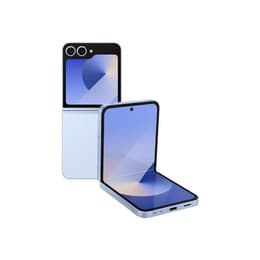
Galaxy Z Flip6
Galaxy Z Flip6
Starting at

Refurbished price:£338.00

Versus £1,011.35 new

See options
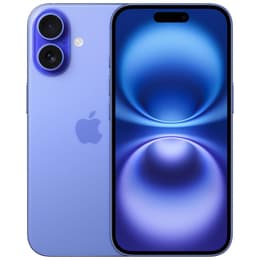
iPhone 16
iPhone 16
Starting at

Refurbished price:£475.00

Versus £699.00 new

See options

Ratings

The Samsung Galaxy Z Flip6, released in July 2024, and the Apple iPhone 16, launched in September 2024, represent distinct approaches to modern smartphone design. While the Galaxy Z Flip6 offers a unique foldable clamshell form factor running on Android, the iPhone 16 maintains a traditional slate design powered by Apple's iOS. These devices cater to different user preferences, with the Z Flip6 emphasizing portability and a dual-screen experience, and the iPhone 16 focusing on a streamlined, high-performance ecosystem.

Scores

Durability

When considering the long-term usability of these devices, both the Galaxy Z Flip6 and the iPhone 16 offer robust support and design considerations aimed at extending their practical lifespan.

  • Software Longevity: The Galaxy Z Flip6 is expected to receive software updates for seven years from its release, ensuring a prolonged period of access to the latest Android features and security enhancements. The iPhone 16, running iOS, typically receives major software updates for approximately five to six years, providing consistent performance and security over a significant duration.
  • Physical Resilience: The Galaxy Z Flip6 features an enhanced Armour Aluminum frame and an IP48 rating for dust and water resistance, marking an improvement in durability for foldable devices. Its main display is protected by a PET plastic screen protector, while the cover screen utilizes Gorilla Glass Victus 2, offering good scratch resistance. The iPhone 16 incorporates Apple's Ceramic Shield on its front display, which shows subtle scratch marks at level six on the Mohs hardness scale, with deeper grooves appearing at level seven. Its aluminum frame is more susceptible to scratches, but the device is IP68 rated for dust and water resistance, allowing submersion in deeper water for longer periods.
  • Repairability Aspects: The iPhone 16 introduces a new electricity-sensitive battery glue, which can simplify battery replacement procedures. While the Galaxy Z Flip6's foldable nature presents inherent complexities, its overall construction has seen improvements in resilience, with user reports indicating good durability for everyday use.

Year of Release

2024

2024

Compatible with latest Update

Yes

Yes

Foldable

Yes

No

Performance

Both the Galaxy Z Flip6 and the iPhone 16 are equipped with advanced internal components designed to deliver smooth and responsive user experiences, though their architectural differences lead to varied strengths.

  • Processing Power: The Galaxy Z Flip6 is powered by a current-generation processor optimized for Samsung devices, enabling it to handle demanding applications and multitasking with efficiency. This allows for smooth navigation, quick app loading, and capable performance in graphically intensive games. The iPhone 16 features Apple's latest chip, which provides substantial processing power for a fluid user interface, rapid application launches, and high-fidelity gaming. Users can expect consistent performance even with intensive workloads.
  • Multitasking and Storage: The Galaxy Z Flip6 comes with a generous amount of RAM, contributing to seamless transitions between multiple open applications and efficient background process management. It offers various storage options, catering to users with extensive media and application libraries. The iPhone 16 also provides ample RAM, ensuring smooth multitasking and responsiveness. It is available with different storage capacities, allowing users to choose based on their content storage needs.
  • Battery Performance: The Galaxy Z Flip6 houses a larger battery, which, combined with an efficient processor, contributes to extended usage times. Users have reported it lasting over 16 hours in web browsing tests and providing significant screen-on time, potentially spanning up to two days with moderate use. The iPhone 16, while having a smaller battery capacity, benefits from its optimized software and efficient chip, offering up to 22 hours of offline video playback and typically lasting a full day for most users.

Memory (GB)

12 GB

8 GB

Screen quality

The display experience on the Galaxy Z Flip6 and the iPhone 16 differs significantly due to their distinct form factors and display technologies.

  • Display Technology and Clarity: The Galaxy Z Flip6 features a 6.7-inch foldable Dynamic AMOLED 2X main display, offering vibrant colors and deep blacks. Its resolution provides a clear viewing experience for multimedia and daily tasks. The iPhone 16 is equipped with a 6.1-inch Super Retina XDR OLED display, known for its excellent contrast, color accuracy, and sharp text rendering.
  • Brightness and Refresh Rate: The Z Flip6's main display boasts a 120Hz refresh rate, contributing to smooth scrolling and fluid animations, and can reach up to 2,600 nits of peak brightness, ensuring good visibility even in bright outdoor conditions. The iPhone 16 maintains a 60Hz refresh rate, which provides a consistent visual experience, and offers up to 2,000 nits of peak outdoor brightness for clear viewing in various lighting environments.
  • Secondary Display and Viewing Experience: A key differentiator for the Z Flip6 is its 3.4-inch Super AMOLED cover display, which allows users to view notifications, control music, and take quick selfies without unfolding the device. While functional, its 60Hz refresh rate and resolution are more basic compared to the main screen. The iPhone 16, as a traditional smartphone, does not feature a secondary display, offering a singular, expansive viewing area.

Resolution

1080 x 2640

1179 x 2556

Screen type

Foldable Dynamic LTPO AMOLED 2X

Super Retina XDR OLED

Audiovisual

Both devices offer capable camera systems, but their configurations and photographic strengths cater to different user priorities.

  • Rear Camera Systems: The Galaxy Z Flip6 features a dual-camera setup with a 50-megapixel main sensor and a 12-megapixel ultra-wide lens. The main camera is noted for capturing photos with wide dynamic range and good detail in daylight, and offers strong video stabilization. The iPhone 16 also comes with a dual-camera system, including a 48-megapixel primary 'Fusion' camera and a 12-megapixel ultra-wide lens. This setup allows for 2x optical-quality zoom from the main sensor and improved macro photography using the ultra-wide lens.
  • Photography Performance: The Z Flip6's camera system shows improvements over its predecessor, particularly in its main sensor. However, some users have noted inconsistencies in portrait mode, noticeable noise in low-light conditions, and occasional white balance inaccuracies. The iPhone 16's camera delivers bolder colors, sharper zoom quality, and more accurate skin tones, especially when compared to older iPhone models. It also offers good low-light performance and the ability to capture spatial photos.
  • Video and Audio Capabilities: The Galaxy Z Flip6 is capable of sharp 4K video recording at up to 60 frames per second, with vibrant colors and strong dynamic range in well-lit conditions. The iPhone 16 provides high-quality video recording, including 4K Dolby Vision, and features like Audio Mix for enhanced sound capture, which can differentiate between background noises and voices.

Main camera

50 megapixels

48 megapixels

Front camera

10 megapixels

12 megapixels

Miscellaneous

Beyond their core functionalities, both the Galaxy Z Flip6 and the iPhone 16 incorporate various features that enhance user experience and connectivity.

  • Connectivity and Ports: The Galaxy Z Flip6 supports 5G connectivity and features a USB-C port for charging and data transfer. The iPhone 16 also offers 5G capabilities and includes Wi-Fi 7 for faster wireless internet, Bluetooth 5.3, and a USB-C port, though its data transfer speeds are at USB 2.0 levels.
  • Biometric Security and Interaction: The Galaxy Z Flip6 typically uses a side-mounted fingerprint sensor for secure unlocking. Its foldable design allows for unique interactions, such as Flex Mode for hands-free viewing. The iPhone 16 relies on Face ID for secure facial recognition. It introduces an Action Button, which can be customized for quick access to various functions, and a Camera Control button for enhanced photography interactions.
  • Design and Handling: The Galaxy Z Flip6 has a compact, clamshell design when folded, making it highly portable. When unfolded, it offers a full-sized smartphone experience. Its dimensions are 71.9 x 85.1 x 14.9mm folded and 71.9 x 165.1 x 6.9mm unfolded, weighing 187g. The iPhone 16 maintains a traditional slate form factor, measuring 147.6 × 71.6 × 7.8 mm and weighing 170g, offering a familiar and comfortable in-hand feel for many users.

Weight

187 g

170 g

Screen size (in)

6.7

6.1

Mobile network

5G

5G

SIM card

Physical SIM + eSIM

Physical SIM + eSIM

Carrier compatibility

Unlocked

Unlocked

The Samsung Galaxy Z Flip6 and the iPhone 16 cater to distinct user preferences, each offering a compelling set of features. Users often praise the Galaxy Z Flip6 for its innovative foldable design, which enhances portability and offers a unique interaction experience with its cover screen. The improved battery life and upgraded main camera are also frequently highlighted as significant advancements. However, some users express concerns about the functionality limitations of the cover screen, the subtle but still present crease on the main display, and occasional camera inconsistencies in challenging lighting conditions.

On the other hand, the iPhone 16 receives commendation for its powerful performance, the consistent and high-quality camera system with new features like 2x optical-quality zoom, and the introduction of the Action Button for customizable shortcuts. Criticisms often revolve around the display's 60Hz refresh rate, which some users find less fluid compared to higher refresh rate screens on other flagship devices, and the absence of a dedicated telephoto lens in the base model.

Users prioritizing a compact, stylish device with a unique foldable form factor and a versatile cover screen for quick interactions may find the Galaxy Z Flip6 well-suited to their needs. Its enhanced durability and extended software support also make it an attractive option for those seeking a long-lasting Android experience. Conversely, individuals who prefer a traditional smartphone design with a focus on a powerful and consistent ecosystem, robust camera performance for everyday photography, and a streamlined user experience will likely lean towards the iPhone 16. Its strong performance and long-term software commitment are key decision factors.

For those considering either device, exploring quality-assured refurbished options can provide an eco-friendly alternative, allowing access to these advanced technologies while supporting sustainable consumption practices.
See all articles

Our recent comparisons