Galaxy S20 5G Vs Galaxy Z Fold5

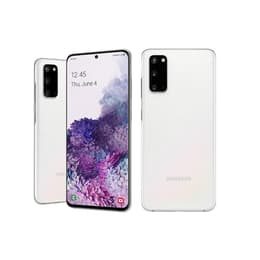
Galaxy S20 5G
Galaxy S20 5G
Starting at

Refurbished price:£133.00

Versus £899.00 new

See options
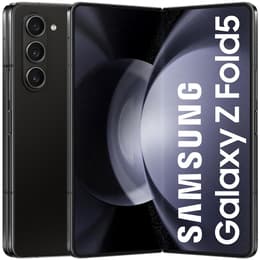
Galaxy Z Fold5
Galaxy Z Fold5
Starting at

Refurbished price:£413.00

Versus £1,770.61 new

See options

Ratings

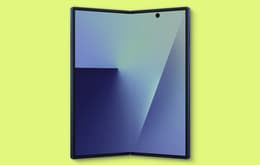
The Samsung Galaxy S20 5G, released in February 2020, is a traditional slab-style smartphone that introduced 5G connectivity and a high refresh rate display to the Galaxy S series. In contrast, the Samsung Galaxy Z Fold5, launched in August 2023, represents a more recent innovation in mobile technology, featuring a unique foldable design that transforms from a compact smartphone into a larger tablet-like experience. These devices cater to different user preferences, with the S20 5G offering a conventional premium smartphone experience and the Z Fold5 providing enhanced screen real estate and multitasking capabilities through its folding form factor. Both run on the Android operating system, though with different versions and ongoing software support timelines.

Scores

Durability

The practical lifespan and software support differ significantly between these two devices due to their respective release dates and Samsung's evolving update policies.

  • Release Timeline & Software Longevity: The Galaxy S20 5G, launched in early 2020, originally ran Android 10 and received three major Android OS updates, concluding its OS upgrade cycle with Android 13. Its security updates officially ended around March/April 2025, marking approximately five years of support. The Galaxy Z Fold5, released in mid-2023 with Android 13, is promised four major Android OS upgrades, extending its support to Android 17, and five years of security updates. This means the Z Fold5 offers a considerably longer period of official software and security updates.
  • Physical Durability & Repairability: The Galaxy S20 5G features a glass front and back with an aluminum frame and IP68 dust and water resistance. However, early models of the S20 series showed susceptibility to damage from drops, with repairability scores around 7 out of 10 for the S20 and 3 out of 10 for the S20+ due to strong adhesives. The Galaxy Z Fold5 boasts a more robust design with Gorilla Glass Victus 2 on its cover display and an IPX8 water resistance rating, though it lacks official dust resistance. Its hinge mechanism has been refined for durability, and while foldable phones present unique repair challenges, the Fold5 has shown improved repairability for components like batteries.
  • Expected Practical Lifespan: For users prioritizing the latest software features and security patches, the Galaxy Z Fold5 offers a longer practical lifespan. The S20 5G, while still functional, will no longer receive official updates, which could impact compatibility with newer applications and overall security over time.

Year of Release

2020

2023

Compatible with latest Update

No

Yes

OS

Android

Android

Foldable

No

Yes

Performance

Performance capabilities vary significantly, reflecting the generational gap and the distinct demands of each device's form factor.

  • Processor Capabilities & Responsiveness: The Galaxy S20 5G is powered by a capable processor from its era, providing smooth performance for everyday tasks, multitasking, and moderate gaming. Users generally experience responsive app loading and navigation. The Galaxy Z Fold5, featuring a much newer and more advanced processor, delivers enhanced performance, particularly noticeable in demanding applications, intensive multitasking across its larger display, and high-fidelity gaming. This newer hardware provides greater headroom for future software and applications.
  • RAM & Storage Options: Both devices come with 12GB of RAM, which is ample for efficient multitasking. The Galaxy S20 5G typically offers 128GB of internal storage, expandable via a microSD card. The Galaxy Z Fold5 offers larger internal storage options, starting from 256GB and going up to 1TB, utilizing faster UFS 4.0 storage technology, but without microSD expansion.
  • Battery Behavior: The Galaxy S20 5G has a 4000mAh battery, which some users found to offer adequate but not exceptional battery life, especially when the high refresh rate display was enabled. The Galaxy Z Fold5, with a 4400mAh battery, is designed to power two displays. Despite this, it generally provides all-day battery life for typical usage, benefiting from a more power-efficient processor.

Memory (GB)

12 GB

12 GB

Screen quality

The display experience is a primary differentiator, with the Galaxy Z Fold5 offering a unique and expansive viewing area compared to the traditional smartphone screen of the S20 5G.

  • Display Technology & Resolution: Both devices feature Dynamic AMOLED 2X displays, known for deep blacks and vibrant colors. The Galaxy S20 5G has a 6.2-inch display with a resolution of 1440x3200 pixels, resulting in a high pixel density. The Galaxy Z Fold5 offers a 7.6-inch main foldable display with a resolution of 2176x1812 pixels and a 6.2-inch cover display with 904x2316 pixels. The larger main screen of the Fold5 provides a tablet-like experience when unfolded.
  • Brightness & Refresh Rate: Both phones feature a 120Hz refresh rate for smooth scrolling and animations. The S20 5G supports 120Hz at FHD resolution, while the Fold5's main display offers an adaptive 1-120Hz refresh rate, optimizing for both smoothness and power efficiency. The Galaxy Z Fold5's main display can also achieve higher peak brightness levels, improving outdoor visibility compared to the S20 5G.
  • Screen Size & Viewing Experience: The Galaxy S20 5G provides a comfortable, one-handed viewing experience suitable for most smartphone tasks. The Galaxy Z Fold5's dual-screen setup offers versatility: a standard-sized cover screen for quick interactions and a large inner screen ideal for media consumption, productivity, and multitasking with multiple apps open simultaneously. The main foldable screen does have a visible crease, which is a characteristic of foldable technology.

Resolution

1440 x 3200

1812 x 2176

Screen type

Dynamic AMOLED 2X

Foldable Dynamic AMOLED 2X

Audiovisual

Both devices offer capable camera systems, but the Galaxy Z Fold5 benefits from newer sensor technology and computational photography advancements.

  • Camera System Capabilities: The Galaxy S20 5G features a triple-camera setup with a 12MP wide, 64MP telephoto (offering 3x hybrid optical zoom), and 12MP ultrawide lens. The Galaxy Z Fold5 also has a triple-camera system, comprising a 50MP wide, 10MP telephoto (with 3x optical zoom), and 12MP ultrawide lens. The Fold5's main sensor is newer, potentially offering improved light gathering and detail.
  • Photography Performance: The S20 5G was praised for its improved cameras, including good low-light performance and a fun 'Single Take' mode. However, some users noted that the camera could sometimes oversmooth faces. The Z Fold5's camera system delivers vibrant and detailed photos in good lighting, with a reliable ultrawide and telephoto lens. Its low-light performance is generally good, though some reviews suggest it doesn't quite match the best traditional flagship cameras.
  • Video Recording & Selfie Cameras: Both phones are capable of recording video at up to 8K resolution at 24 frames per second. For selfies, the S20 5G has a 10MP front camera. The Z Fold5 has a 10MP camera on its cover screen and a 4MP under-display camera on its main screen. The under-display camera is generally considered suitable for video calls rather than high-quality selfies.
  • Audio Experience: Both devices offer stereo speakers for media consumption. The Galaxy Z Fold5's speakers are noted for good sound quality.

Main camera

12 megapixels

50 megapixels

Front camera

10 megapixels

4 megapixels

Miscellaneous

Beyond core features, several practical elements distinguish these two Samsung smartphones.

  • Connectivity Options: Both the Galaxy S20 5G and Galaxy Z Fold5 support 5G connectivity, Wi-Fi 6 (802.11ax), and Bluetooth. The Z Fold5, being a newer device, supports Wi-Fi 6E and a more recent Bluetooth 5.3 standard, offering potentially faster and more stable wireless connections.
  • Port Types & Sensors: Both devices utilize a USB-C port for charging and data transfer and lack a 3.5mm headphone jack. The S20 5G features an in-display ultrasonic fingerprint sensor and face unlock. The Z Fold5 has a side-mounted fingerprint sensor integrated into the power button, along with face recognition.
  • Weight, Dimensions & Build Materials: The Galaxy S20 5G is a compact device, weighing 163 grams and measuring 151.7 x 69.1 x 7.9 mm, making it comfortable for one-handed use. It features a glass and aluminum construction. The Galaxy Z Fold5 is significantly heavier at 253 grams due to its folding mechanism and dual displays. When folded, it measures 154.9 x 67.1 x 13.4 mm, and when unfolded, it expands to 154.9 x 130.1 x 6.1 mm, offering a much larger screen area. Its build includes a refined hinge and Gorilla Glass Victus 2 for enhanced durability.

Weight

163 g

150 g

Screen size (in)

6.2

7.6

Mobile network

5G

4G

SIM card

Dual Physical SIM

Dual Physical SIM + eSIM

Carrier compatibility

Unlocked

Unlocked

Connector

USB-C

USB-C

User feedback for the Galaxy S20 5G often highlights its balanced performance, vibrant 120Hz display, and capable camera system within a comfortable, compact form factor. Common criticisms included its battery life, which some users found to be shorter, especially when utilizing the high refresh rate, and the camera's tendency to sometimes oversmooth images. For the Galaxy Z Fold5, users frequently praise its innovative foldable design, offering a large, immersive display for productivity and media consumption, its powerful performance, and the improved durability of its hinge. Points of concern often revolve around the quality of the under-display camera, the noticeable crease on the main screen, and its overall bulk and weight compared to traditional smartphones.

Users prioritizing a traditional, compact smartphone experience with solid performance and a good camera for everyday use may find the Galaxy S20 5G well-suited to their needs. Its smaller size makes it easier to handle and carry. Conversely, users who require a large screen for multitasking, media consumption, or specific productivity tasks, and are willing to embrace the unique form factor of a foldable device, will likely prefer the Galaxy Z Fold5. It offers a more modern and versatile computing experience in a mobile package. Both devices represent premium offerings from Samsung, and for those considering a sustainable choice, exploring quality-assured refurbished options for either model can provide an eco-friendly alternative.

See all articles

Our recent comparisons