
Galaxy A36 Vs Galaxy S23

Galaxy A36
Galaxy A36
Starting at

Refurbished price:£206.00

Versus £369.00 new

See options
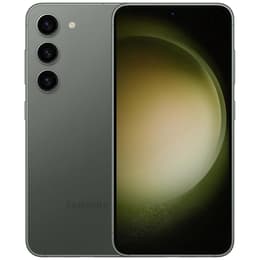
Galaxy S23
Galaxy S23
Starting at

Refurbished price:£186.84

Versus £1,019.00 new

See options

Ratings

The Samsung Galaxy A36, released in March 2025, and the Samsung Galaxy S23, launched in February 2023, represent different segments of Samsung's smartphone lineup. While both run on the Android operating system with Samsung's One UI, the A36 is positioned as a feature-rich mid-range device, whereas the S23 was a flagship model at its release. The primary distinctions lie in their processing power, camera capabilities, and overall build, catering to varying user priorities.

Scores

Durability

When considering the long-term usability of a smartphone, factors like software support, physical durability, and ease of repair are important. The Galaxy A36, being a newer device, benefits from an extended software support timeline compared to the Galaxy S23.

  • Software Longevity: The Galaxy A36 launched with Android 15 and is promised to receive up to six major Android operating system upgrades and six years of security patches, offering a longer period of official software support. The Galaxy S23, released with Android 13, was promised four years of OS updates and five years of security updates, with support expected to conclude around 2028.
  • Physical Durability: The Galaxy A36 features Gorilla Glass Victus+ on its display and an IP67 rating for dust and water resistance, meaning it can withstand immersion in up to 1 meter of water for 30 minutes. The Galaxy S23 offers a slightly higher level of protection with Gorilla Glass Victus 2 on both the front and back, and an IP68 rating, allowing for immersion in up to 1.5 meters of water for 30 minutes.
  • Repairability: The Galaxy A36 has a repairability score of 8.4 out of 10, indicating a relatively straightforward repair process for common components like the battery and screen, despite the use of strong adhesives. The Galaxy S23 also demonstrates good repairability, with features like pull tabs for easier battery replacement and internal labels to guide reassembly, receiving scores around 8.2 to 9 out of 10 in various assessments.

Year of Release

2025

2023

OS

Android

Android

Foldable

No

No

Performance

The performance of these two devices reflects their different market positions, with the Galaxy S23 offering a more robust experience for demanding tasks due to its flagship-tier internal components.

  • Processing Power: The Galaxy S23 is equipped with a high-end processor designed for intensive applications, complex multitasking, and graphically demanding games, ensuring a consistently smooth and responsive user experience. The Galaxy A36, while capable for everyday use, features a mid-range processor that handles common apps, web browsing, and light gaming effectively, though some users have reported occasional lag with heavy multitasking or demanding applications.
  • Multitasking and Responsiveness: With its more powerful internal architecture, the Galaxy S23 excels at switching between multiple applications quickly and maintaining performance under heavy loads. The Galaxy A36 provides adequate responsiveness for typical daily usage, but may show signs of slowing down when many apps are open simultaneously or during prolonged intensive use.
  • Battery Performance: The Galaxy A36 houses a larger 5000mAh battery, which, combined with its more power-efficient processor, generally translates to extended usage times and often lasts a full day or more for many users. The Galaxy S23 has a 3900mAh battery, which users typically find sufficient for a full day of moderate use, though heavy users might need to recharge before the day ends. The A36 also supports faster 45W charging compared to the S23's 25W.

Memory (GB)

6 GB

8 GB

Screen quality

Both the Galaxy A36 and Galaxy S23 offer vibrant displays, but the S23, as a former flagship, provides a more refined visual experience with higher peak brightness and advanced display technology.

  • Display Technology and Clarity: Both phones feature Super AMOLED or Dynamic AMOLED 2X displays with Full HD+ resolution (2340x1080 pixels), providing sharp images and rich colors. The Galaxy S23's Dynamic AMOLED 2X panel typically offers deeper blacks and more precise color reproduction, enhancing the viewing experience for high-quality content.
  • Brightness and Outdoor Visibility: The Galaxy S23 boasts a higher peak brightness of up to 1750 nits, making it exceptionally readable even in direct sunlight. The Galaxy A36's display is also bright and clear, with Samsung claiming it is 20% brighter than its predecessor, offering good visibility in various lighting conditions.
  • Refresh Rate and Smoothness: Both devices feature a 120Hz refresh rate, which contributes to smoother scrolling, more fluid animations, and a more responsive feel during interactions and gaming.
  • Screen Size: The Galaxy A36 offers a larger 6.7-inch display, providing a more expansive viewing area for media consumption and productivity. The Galaxy S23 has a more compact 6.1-inch screen, which some users prefer for easier one-handed use and portability.

Resolution

1080 x 2340

1080 x 2340

Audiovisual

The camera systems on the Galaxy A36 and Galaxy S23 cater to different levels of photographic expectation, with the S23 offering a more versatile and higher-quality imaging experience.

  • Rear Camera System: The Galaxy S23 features a triple camera setup with a 50MP main sensor, a 12MP ultrawide lens, and a 10MP telephoto lens, providing optical zoom capabilities and generally superior image processing. The Galaxy A36 also has a triple camera system, including a 50MP main sensor, an 8MP ultrawide, and a 5MP macro lens, which is capable of capturing good photos in well-lit conditions.
  • Photography Performance: The Galaxy S23 generally delivers sharper images with better detail, dynamic range, and color accuracy across various lighting conditions, including improved low-light performance. The Galaxy A36 performs well in adequate lighting, but some users have noted that its low-light camera performance can be less impressive.
  • Video Recording: The Galaxy S23 offers excellent video recording quality, features, and stabilization, making it suitable for capturing high-quality footage. The Galaxy A36 supports 4K video recording at 30fps and 10-bit HDR, providing good video capabilities for its segment.
  • Front Camera: Both devices are equipped with a 12MP front-facing camera, suitable for selfies and video calls. The S23's front camera often benefits from more advanced image processing, leading to slightly better results.

Front camera

12

12 megapixels

Miscellaneous

Beyond core performance and display, several practical elements differentiate the user experience between the Galaxy A36 and Galaxy S23.

  • Connectivity: Both smartphones support 5G connectivity, Wi-Fi, and Bluetooth, ensuring modern wireless communication capabilities. The Galaxy S23 typically supports newer Wi-Fi standards for potentially faster and more stable connections.
  • Ports and Biometrics: Both devices utilize a USB Type-C port for charging and data transfer. Neither includes a traditional 3.5mm headphone jack. For security, both feature in-display fingerprint sensors, with the S23's often being noted for its speed and reliability. The A36 also offers an optical fingerprint scanner.
  • Build Materials and Handling: The Galaxy S23 features a more premium construction with Gorilla Glass Victus 2 on both the front and back, and an aluminum frame, contributing to a solid in-hand feel. Its compact size (146.3 x 70.9 x 7.6mm) and lighter weight (168g) make it comfortable for one-handed use. The Galaxy A36 uses Gorilla Glass Victus+ on the front and a plastic frame, with a glass back, measuring 162.90 x 78.20 x 7.40mm and weighing 195g, offering a larger device footprint.
  • Expandable Storage: A notable difference is that the Galaxy A36 offers expandable storage via a microSD card, allowing users to increase storage capacity up to 1TB. The Galaxy S23 does not include a microSD card slot, relying solely on its internal storage options.

Weight

195 g

350 g

Screen size (in)

6,74

6.1

Mobile network

5G

5G

SIM card

Dual Physical SIM + eSIM

Physical SIM + eSIM

Carrier compatibility

Unlocked

Unlocked

Connector

USB-C

USB-C

User feedback for the Galaxy A36 often praises its robust battery life, bright display, and the promise of extensive software updates, making it a reliable device for general daily use and media consumption. Some users, however, have noted that its performance can be less consistent with demanding applications or heavy multitasking, and camera performance in low light might not meet higher expectations. Conversely, the Galaxy S23 is frequently lauded for its compact form factor, vibrant and bright display, and its consistently smooth performance across a wide range of tasks, including gaming and advanced photography. Criticisms sometimes point to its battery life, which, while decent for moderate use, may require more frequent charging for power users, and some reports mention occasional software hiccups or heating during intensive use.

Users prioritizing a larger screen, longer battery life, and extended software support for everyday tasks like browsing, social media, and streaming may find the Galaxy A36 well-suited to their needs. Its expandable storage is also a significant advantage for those who require ample space for photos, videos, and apps. For individuals who value a more compact design, superior processing power for demanding applications, a more advanced camera system with telephoto capabilities, and a premium build, the Galaxy S23 remains a strong contender. It offers a more refined overall experience for users who push their devices harder. Both models are available as quality-assured refurbished options, providing an eco-friendly alternative for consumers looking to make an informed and sustainable choice.


See all articles

Our recent comparisons