
Compare models
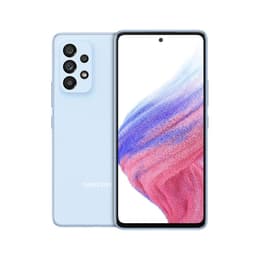
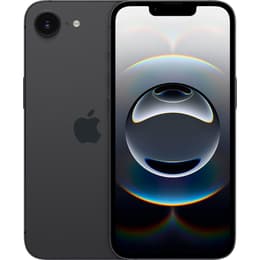
Galaxy A53 5G Vs iPhone 16e
- 1-year minimum warranty
- Free delivery on all items
- Free 30-day returns
Differences at a glance
The Samsung Galaxy A53 5G, released in March 2022, and the iPhone 16E, announced in February 2025 and discontinued in March 2026, represent different approaches to smartphone design and functionality. While the Galaxy A53 5G offers a comprehensive Android experience with a versatile camera system and expandable storage, the iPhone 16E provides a streamlined iOS experience with a focus on performance and a high-quality display. Both devices cater to users seeking reliable mobile technology, with the iPhone 16E serving as an entry-level option within Apple's more recent lineup.
Available Models
Colour
Storage (GB)
Scores
Durability
When considering the practical lifespan of these devices, their respective release and support timelines are key factors.
- Release and Support: The Galaxy A53 5G launched in early 2022 and was promised four generations of Android OS upgrades and five years of security updates, extending its software longevity well into the future. The iPhone 16E, released in early 2025, was discontinued in March 2026, meaning its direct availability was short-lived, though it supports iOS 26 and will likely receive software updates for several years from its release date.
- Durability Features: The Galaxy A53 5G features IP67 dust and water resistance and Gorilla Glass 5 for screen protection. The iPhone 16E offers enhanced durability with an IP68 rating for dust and water resistance and a Ceramic Shield front cover, designed for increased drop performance.
- Repairability: While specific repairability scores can vary, both devices are designed with modern smartphone construction, which often involves specialized tools for repairs. Users considering a longer-term device might also explore quality-assured refurbished options for either model, offering an eco-friendly alternative.
Year of Release
2022
2025
OS
Android
iOS
Foldable
No
No
Performance
The performance of a smartphone significantly impacts daily usage, from app responsiveness to multitasking capabilities.
- Processing Power: The Galaxy A53 5G is powered by an octa-core processor, which handles everyday applications and moderate multitasking smoothly. The iPhone 16E incorporates a more recent generation processor, providing a noticeable boost in speed and efficiency for demanding applications, complex games, and advanced AI features.
- Multitasking and Storage: The Galaxy A53 5G comes with 6GB or 8GB of RAM and offers expandable storage up to 1TB via a microSD card, which is beneficial for users who store large media libraries or numerous documents. The iPhone 16E features 8GB of RAM, contributing to fluid multitasking, and offers internal storage options up to 512GB, though without expansion capabilities.
- Battery Behavior: The Galaxy A53 5G is equipped with a substantial 5000 mAh battery, providing ample power for extended use throughout the day. The iPhone 16E, with its 4005 mAh battery, is optimized for power efficiency, offering up to 26 hours of video playback and 90 hours of audio playback, indicating strong endurance for its form factor.
Screen quality
The display is a primary interface for smartphone interaction, and both devices offer distinct visual experiences.
- Display Technology and Size: The Galaxy A53 5G features a 6.5-inch Super AMOLED display, known for its vibrant colors and deep blacks. The iPhone 16E has a 6.1-inch Super Retina XDR OLED display, which also delivers excellent contrast and color accuracy, though in a slightly more compact form factor.
- Resolution and Clarity: Both phones offer high-resolution displays, with the Galaxy A53 5G at 1080x2400 pixels and the iPhone 16E at 2532x1170 pixels, resulting in sharp text and clear images for typical viewing distances.
- Brightness and Refresh Rate: The Galaxy A53 5G boasts a 120Hz refresh rate for smoother scrolling and animations. The iPhone 16E maintains a standard 60Hz refresh rate but offers high brightness levels, with up to 800 nits typical and 1200 nits peak for HDR content, ensuring good visibility even in bright outdoor conditions.
Resolution
1080 x 2400
2532x1170
Audiovisual
Camera capabilities are a significant consideration for many users, and these devices offer different photographic strengths.
- Rear Camera System: The Galaxy A53 5G features a versatile quad-camera setup, including a 64MP main sensor with optical image stabilization (OIS), a 12MP ultrawide lens, and dedicated macro and depth sensors, providing flexibility for various shooting scenarios. The iPhone 16E simplifies its rear camera to a single 48MP Fusion main sensor with OIS, which also enables a 12MP 2x optical-quality telephoto zoom by cropping the sensor.
- Photography Performance: The Galaxy A53 5G delivers detailed everyday photos and offers a wider field of view with its ultrawide lens. The iPhone 16E's larger main sensor and advanced image processing contribute to strong low-light performance and detailed images, particularly with its Photonic Engine and Smart HDR features.
- Video Recording and Front Camera: Both devices are capable of recording 4K video, with the iPhone 16E supporting up to 60 frames per second, offering smoother motion capture. For selfies and video calls, the Galaxy A53 5G has a 32MP front camera, while the iPhone 16E features a 12MP TrueDepth front camera with autofocus and advanced portrait capabilities.
Front camera
32 megapixels
TrueDepth 12MP
Miscellaneous
Beyond core features, several practical elements contribute to the overall user experience of a smartphone.
- Connectivity and Ports: Both devices support 5G connectivity, essential for modern high-speed mobile data. The Galaxy A53 5G uses Wi-Fi 5 (802.11ac) and Bluetooth 5.1, while the iPhone 16E features the newer Wi-Fi 6 (802.11ax) and Bluetooth 5.3, offering potentially faster and more stable wireless connections. Both utilize a USB-C port for charging and data transfer.
- Biometric Security and Navigation: The Galaxy A53 5G incorporates an in-display fingerprint sensor for secure unlocking. The iPhone 16E relies on Face ID for facial recognition security and includes an Action Button for customizable shortcuts.
- Design and Handling: The Galaxy A53 5G has dimensions of 159.6 x 74.8 x 8.1 mm and weighs 189g, offering a comfortable grip for its screen size. The iPhone 16E is slightly more compact and lighter at 146.7 x 71.5 x 7.8 mm and 167g, making it easier for one-handed use.
Weight
189 g
167 g
Screen size (in)
6.5
6.1
Mobile network
5G
5G
SIM card
Dual Physical SIM
eSIM
Carrier compatibility
Unlocked
Unlocked
Connector
USB-C
USB-C
What the community thinks
The Samsung Galaxy A53 5G and the iPhone 16E cater to different user preferences, each offering a distinct set of advantages. Users often praise the Galaxy A53 5G for its vibrant AMOLED display, long battery life, and the flexibility of its quad-camera system, particularly the inclusion of expandable storage. Some common criticisms might include its processor performance not matching flagship devices or the presence of pre-installed software.
The iPhone 16E, despite its relatively short market availability, was noted for its powerful processor, high-quality OLED display, and the integration of Apple Intelligence features. Users appreciate its compact design and robust build quality with Ceramic Shield and IP68 rating. Potential concerns could stem from its 60Hz display refresh rate compared to some Android counterparts, and the absence of an ultrawide camera found on other iPhone models.
Users prioritizing a larger, high-refresh-rate display, versatile camera options, and the ability to expand storage will find the Galaxy A53 5G well-suited to their needs. It's a strong choice for those who prefer the Android ecosystem and value customization. Conversely, users who prioritize a powerful and efficient processor, a premium OLED display in a more compact form, and the integrated experience of the iOS ecosystem will likely lean towards the iPhone 16E. Its focus on core performance and advanced features makes it appealing for those seeking a streamlined and secure mobile experience.
Both devices, whether new or as a quality-assured refurbished option, offer compelling features for their respective audiences, enabling informed and sustainable choices.