Compare models

Galaxy A25 Vs iPhone Air

  • 1-year minimum warranty
  • Free delivery on all items
  • Free 30-day returns
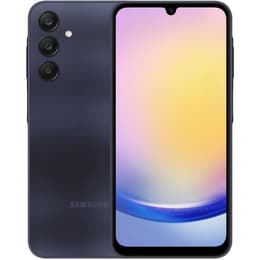
Galaxy A25
Starting at

Refurbished price:£162.00

Versus £278.90 new

See options
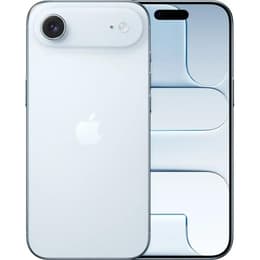
iPhone Air
Starting at

Refurbished price:£604.00

Versus £1,099.00 new

See options

Differences at a glance

The Samsung Galaxy A25 (2024) and the Apple iPhone Air (2025) represent two entirely different approaches to modern smartphone engineering. While the Galaxy A25 focuses on delivering accessible everyday capabilities within the Android ecosystem, the iPhone Air emphasizes an ultra-slim titanium build and high-tier processing performance running on iOS. These contrasting devices cater to very different user priorities regarding design, software, and daily utility.

Available Models

Colour

Storage

Scores

Durability

When examining longevity, both smartphones approach software updates and hardware durability through different lifecycles and build philosophies.

  • Software Support: The Galaxy A25 receives multiple generations of Android OS upgrades, while the iPhone Air benefits from Apple's extended software update schedule, ensuring long-term feature and security currency.
  • Build Integrity: The Galaxy A25 utilizes a durable plastic frame structure, whereas the iPhone Air incorporates a grade-5 titanium frame and reinforced glass shielding for enhanced structural rigidity.
  • Repairability and Lifespan: Both models maintain standard component repair pathways, though choosing a quality-assured refurbished option provides a sustainable choice that extends active device utility.

Year of Release

2023

2025

Compatible with latest Update

Yes

Yes

OS

Android

iOS

Foldable

No

No

Performance

Daily responsiveness and operational speed differ significantly based on internal hardware configurations and software optimization.

  • Multitasking and App Handling: The iPhone Air handles demanding applications and intensive multitasking smoothly thanks to its high-tier processor and generous RAM allocation, whereas the Galaxy A25 manages standard daily tasks, web browsing, and casual switching efficiently with its mid-range processor.
  • Storage Configurations: The Galaxy A25 offers expandable storage via a microSD card slot alongside built-in capacities, while the iPhone Air relies on fixed internal storage tiers ranging from larger base capacities upwards.
  • Battery Behavior: The Galaxy A25 features a larger capacity battery designed to comfortably clear a full day of typical mixed usage, while the iPhone Air balances its ultra-thin profile with an optimized power-efficient processor to sustain daily operational demands.

Screen quality

Visual output and display technologies offer distinct viewing experiences tailored to media consumption and outdoor legibility.

  • Display Technology: The Galaxy A25 employs a Super AMOLED panel known for deep contrast and vivid colors, while the iPhone Air utilizes an advanced OLED display equipped with high peak outdoor brightness levels.
  • Motion and Refresh Rate: Both devices support a smooth 120 Hz maximum refresh rate, ensuring fluid scrolling through web pages, menus, and compatible applications.
  • Panel Dimensions: The Galaxy A25 features a 6.5-inch notched display, matching the 6.5-inch screen size of the iPhone Air, which adopts a modern pill-shaped cutout layout.

Resolution

1080x2340

2736x1260

Screen type

Super AMOLED

Super Retina XDR

Audiovisual

Optics and multimedia output vary depending on the multi-lens versatility of one device versus the specialized single-lens approach of the other.

  • Rear Camera Systems: The Galaxy A25 equips a triple-lens rear setup including a main optical-image-stabilized sensor, an ultra-wide lens, and a macro sensor, while the iPhone Air utilizes a single high-resolution 48 MP main fusion camera system.
  • Video and Low-Light Recording: The iPhone Air delivers refined stabilization and detail preservation in varied lighting conditions, whereas the Galaxy A25 provides dependable everyday photo capture suitable for standard sharing and documentation.
  • Audio and Media Output: The iPhone Air features a streamlined mono speaker arrangement with high clarity, while the Galaxy A25 includes a traditional 3.5mm headphone jack for wired audio accessories alongside its internal speaker.

Main camera

50 megapixels

48 megapixels

Front camera

13 megapixels

18 megapixels

Miscellaneous

Physical dimensions, connectivity standards, and daily handling characteristics shape how each device fits into routine use.

  • Dimensions and Weight: The iPhone Air stands out with an exceptionally thin profile and a lightweight 165-gram build, whereas the Galaxy A25 has a thicker, traditional profile weighing 197 grams.
  • Biometrics and Security: The Galaxy A25 relies on a convenient side-mounted fingerprint scanner, while the iPhone Air utilizes facial recognition technology.
  • Connectivity and Ports: The iPhone Air adopts a universal USB-C connection alongside advanced Wi-Fi 7 capabilities, while the Galaxy A25 features standard dual-band Wi-Fi and 5G network support.

Weight

197 g

165 g

Screen size (in)

6.5

6.5

Mobile network

5G

5G

SIM card

Physical SIM

eSIM

Carrier compatibility

Unlocked

Unlocked

Connector

USB-C

USB-C

What the community thinks

User feedback from online communities highlights distinct preferences for each device based on daily habits and platform loyalty. Owners of the Galaxy A25 frequently praise its dependable battery longevity, inclusion of expandable storage, and the presence of a headphone jack. Conversely, discussions surrounding the iPhone Air center on appreciation for its remarkably lightweight, ultra-thin form factor, premium titanium frame, and swift processing capabilities, though some users note the absence of extra rear camera lenses and higher base costs as points for consideration. Selecting an eco-friendly alternative through a quality-assured refurbished option can also make high-tier technology more accessible.

Users prioritizing an ultra-slim design, fluid multitasking headroom, and the iOS ecosystem may lean toward the iPhone Air, while individuals seeking expandable storage, a traditional headphone jack, and straightforward everyday Android functionality will find the Galaxy A25 well-suited to their needs. Reviewing these practical differences helps clarify which device aligns best with your specific daily requirements.