
Compare models

Google Pixel 8a Vs iPhone 16 Pro Max

  • 1-year minimum warranty
  • Free delivery on all items
  • Free 30-day returns
Google Pixel 8a
Google Pixel 8a
Starting at

Refurbished price:£214.00

Versus £499.00 new

See options
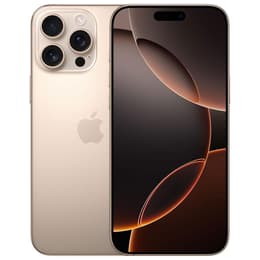
iPhone 16 Pro Max
iPhone 16 Pro Max
Starting at

Refurbished price:£653.00

Versus £1,199.00 new

See options

Differences at a glance

The Google Pixel 8a, released in May 2024, and the iPhone 16 Pro Max, launched in September 2024, represent distinct approaches to the modern smartphone experience. While the Pixel 8a offers a feature-rich Android experience with a strong focus on artificial intelligence and photography in a more accessible package, the iPhone 16 Pro Max delivers Apple's premium iOS ecosystem with top-tier performance, advanced camera capabilities, and a larger display. These devices cater to different user preferences, primarily distinguished by their operating systems and overall design philosophies.

Scores

Durability

When considering the longevity of these devices, both offer substantial software support, though their physical durability and repairability present different considerations.

  • Software Support: The Google Pixel 8a stands out with a commitment to seven years of OS and security updates, extending its software lifespan until May 2031. This ensures the device remains current with the latest Android features and security patches for an extended period. The iPhone 16 Pro Max, running on iOS, typically receives 5-7 years of major OS updates, with its original operating system being iOS 18 and current updates reaching iOS 26.3.1 (a) as of March 2026.
  • Physical Durability: The Pixel 8a features a plastic back, an aluminum frame, and Gorilla Glass 3 on the front, offering IP67 dust and water resistance, meaning it can withstand submersion in up to 1 meter of water for 30 minutes. The iPhone 16 Pro Max boasts a more robust build with a titanium frame, Ceramic Shield front cover, and a textured matte glass back, providing IP68 water and dust resistance, allowing for submersion in deeper water for longer durations.
  • Repairability: The Pixel 8a generally receives a moderate to low repairability score, with some sources indicating scores around 4-6 out of 10, due to factors like strong adhesives and a soldered charging port, though Google does offer parts and guides for repair. The iPhone 16 Pro Max, like its predecessors, tends to have a lower repairability score, with the iPhone 15 Pro Max receiving a 4 out of 10 from iFixit, primarily due to component pairing and software locks that complicate independent repairs.

Year of Release

2024

2024

Compatible with latest Update

Yes

Yes

Foldable

No

No

Performance

The performance capabilities of the Google Pixel 8a and the iPhone 16 Pro Max reflect their respective positions in the smartphone market, with the iPhone offering a higher-end experience.

  • Processing Power: The Google Pixel 8a is equipped with Google's Tensor G3 processor, which provides smooth performance for everyday applications, multitasking, and moderate gaming. It handles demanding tasks efficiently, though it may not match the raw power of the most premium devices. The iPhone 16 Pro Max features Apple's advanced A18 Pro chip, a 3nm processor designed for exceptional speed and efficiency. This chip delivers extremely powerful performance, effortlessly managing intensive applications, advanced gaming, and complex AI workloads with its upgraded Neural Engine.
  • Storage and Multitasking: The Pixel 8a is available with 128GB or 256GB of internal storage, paired with 8GB of RAM, which supports efficient multitasking for typical user needs. The iPhone 16 Pro Max offers more extensive storage options, including 256GB, 512GB, and 1TB, providing ample space for large files and applications. Its optimized iOS environment and substantial internal memory ensure seamless transitions between numerous open applications.
  • Battery Performance: The Pixel 8a houses a 4492 mAh battery, which typically provides a full day of use for moderate users, though heavy usage might necessitate more frequent charging. The iPhone 16 Pro Max is equipped with a larger 4676 mAh battery, the largest in an iPhone to date, and combined with the efficiency of its processor, it is designed to offer extended battery life, often lasting more than a full day for many users.

Memory (GB)

8 GB

8 GB

Screen quality

The visual experience on both devices is delivered through high-quality displays, each with distinct characteristics that cater to different viewing preferences.

  • Display Technology and Clarity: The Google Pixel 8a features a 6.1-inch OLED display with a Full HD+ resolution of 1080 x 2400 pixels, providing clear and vibrant visuals for everyday content consumption. The iPhone 16 Pro Max comes with a larger 6.9-inch Super Retina XDR OLED display, offering a higher resolution of 2868 x 1320 pixels at 460 pixels per inch, resulting in exceptionally sharp images and text.
  • Brightness and Refresh Rate: Both phones offer impressive brightness levels, with the Pixel 8a reaching up to 2000 nits of peak brightness, ensuring good visibility even in bright outdoor conditions. The iPhone 16 Pro Max also achieves a peak brightness of 2000 nits for HDR content and a typical brightness of 1000 nits, providing excellent clarity across various lighting environments. The Pixel 8a features a 120Hz adaptive refresh rate, which enhances the smoothness of scrolling and animations, though it does not drop below 60Hz. The iPhone 16 Pro Max incorporates ProMotion technology, offering an adaptive refresh rate up to 120Hz, which can dynamically adjust to optimize both smoothness and power efficiency.
  • Design and Viewing Experience: The Pixel 8a maintains a traditional display design with a punch-hole camera. The iPhone 16 Pro Max features a more expansive display with thinner bezels and the Dynamic Island, contributing to a highly immersive viewing experience.

Resolution

1080 x 2400

1320 x 2868

Screen type

OLED

LTPO Super Retina XDR OLED

Audiovisual

Both smartphones offer advanced camera systems, but they approach photography and videography with different strengths and feature sets.

  • Rear Camera Systems: The Google Pixel 8a is equipped with a dual-camera setup, featuring a 64 MP main sensor with optical image stabilization (OIS) and a 13 MP ultrawide lens with a 120-degree field of view. This system is known for its reliable point-and-shoot capabilities and excellent computational photography, producing consistently good images in various conditions. The iPhone 16 Pro Max boasts a sophisticated Pro Camera System, including a 48 MP main sensor, a new 48 MP ultrawide camera, and a 5x telephoto tetraprism camera for enhanced optical zoom. This setup is designed for professional-grade photography with superior detail and versatility.
  • Photography Features and Performance: The Pixel 8a leverages Google's AI-powered features such as Magic Eraser, Photo Unblur, Magic Editor, Best Take, and Audio Magic Eraser, which enhance photos and videos post-capture. It performs well in low-light conditions, delivering clear images despite its sensor size. The iPhone 16 Pro Max offers new Photographic styles and advanced computational photography, excelling in capturing intricate details and vibrant colors across diverse lighting scenarios.
  • Video and Audio Quality: For video recording, the Pixel 8a supports 4K resolution at up to 60 frames per second. The iPhone 16 Pro Max elevates video capabilities with features like 4K 120fps recording in Dolby Vision and ProRes video, providing extensive options for high-quality video creation. Both devices feature stereo speakers for media consumption, and neither includes a traditional 3.5mm headphone jack.

Main camera

64 megapixels

48 megapixels

Front camera

13 megapixels

12 megapixels

Miscellaneous

Beyond core performance and camera, several practical elements differentiate the user experience between these two smartphones.

  • Connectivity and Ports: The Google Pixel 8a supports 5G connectivity, Wi-Fi 6E, and Bluetooth 5.3, ensuring fast and stable wireless connections. It features a USB-C 3.2 port for charging and data transfer. The iPhone 16 Pro Max offers the latest connectivity standards, including 5G (sub-6 GHz and mmWave), Wi-Fi 7 (802.11be), and Bluetooth 5.3, providing even faster and more efficient wireless performance. It also incorporates a USB-C port, which supports USB 3 transfer speeds up to 10Gb/s, allowing for rapid data transfers and versatile accessory compatibility.
  • Biometric Security and Additional Features: The Pixel 8a includes an optical under-display fingerprint sensor and supports face unlock for convenient and secure access. The iPhone 16 Pro Max relies on Face ID for secure facial recognition. It also introduces an Action Button, which can be customized for various functions, and a new Camera Control Button for quick photo and video capture.
  • Physical Design and Handling: The Pixel 8a measures 152.1 x 72.7 x 8.9 mm and weighs 188 grams, making it a relatively compact and manageable device. Its plastic back and aluminum frame contribute to its lighter feel. The iPhone 16 Pro Max is a larger and heavier device, with dimensions of 163.0 x 77.6 x 8.25 mm and a weight of 227 grams. Its titanium construction offers a premium feel and enhanced durability.

Weight

188 g

227 g

Screen size (in)

6.1

6.9

Mobile network

5G

5G

SIM card

Physical SIM + eSIM

Physical SIM + eSIM

Carrier compatibility

Unlocked

Unlocked

Connector

USB-C

USB-C (USB 3)

What the community thinks

User sentiment for the Google Pixel 8a often highlights its exceptional camera performance, particularly its computational photography features and AI editing tools, which are frequently praised for delivering impressive results for its category. Users also appreciate its long-term software support and the clean Android experience. Criticisms sometimes point to its battery life, which, while adequate for moderate use, may require more frequent charging for heavy users.

For the iPhone 16 Pro Max, users consistently commend its powerful performance, large and vibrant display, and the advanced capabilities of its camera system, especially for video recording. The premium build quality and the seamless integration within the Apple ecosystem are also frequent points of praise. Common discussions around Pro Max models often revolve around their larger size and weight, which some users find less convenient for one-handed use, though this is a trade-off for the expansive screen and battery life.

Users prioritizing a compact device with a strong emphasis on AI-enhanced photography and long-term software updates within the Android ecosystem may find the Google Pixel 8a well-suited to their needs. Its balanced feature set makes it a practical choice for everyday tasks and capturing moments with ease. Conversely, users who seek the utmost in processing power, a large and immersive display, advanced video capabilities, and a premium build within the iOS ecosystem will likely lean towards the iPhone 16 Pro Max. This device is ideal for power users, content creators, and those who value the latest technological advancements.

Both devices are available as quality-assured refurbished options, providing an eco-friendly alternative for consumers looking to make informed and sustainable choices.