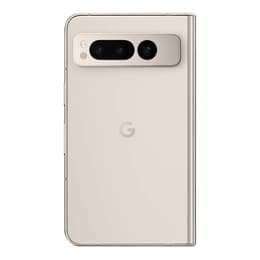

Google Pixel 8 Pro Vs Google Pixel Fold

Google Pixel 8 Pro
Google Pixel 8 Pro
Starting at

Refurbished price:£217.00

Versus £960.91 new

See options
Google Pixel Fold
Google Pixel Fold
Starting at

Refurbished price:£363.00

Versus £1,499.00 new

See options

Ratings

The Google Pixel 8 Pro, released in October 2023, and the Google Pixel Fold, launched in June 2023, represent distinct approaches to the modern smartphone experience. While both devices operate on the Android platform and offer a suite of Google's intelligent features, they diverge significantly in their form factor and intended use. The Pixel 8 Pro is a traditional slab-style flagship, prioritizing a robust camera system and extended software support, whereas the Pixel Fold introduces a foldable design, offering a larger, tablet-like display when unfolded for enhanced productivity and media consumption.

Scores

Durability

The expected practical lifespan of a smartphone is influenced by its physical durability and the duration of software support it receives. These two Pixel devices offer different timelines in this regard.

  • Release Timeline and Software Support: The Pixel 8 Pro, released in October 2023, benefits from an industry-leading commitment of seven years of OS, security, and Feature Drop updates, extending its software longevity well into 2030. In contrast, the Pixel Fold, launched in June 2023, is guaranteed five years of OS and security updates, meaning its support will continue until at least June 2028.
  • Physical Durability: The Pixel 8 Pro features Gorilla Glass Victus 2 on both its front and back, along with an aluminum frame and an IP68 rating for dust and water resistance. The Pixel Fold, while also featuring an aluminum frame and Gorilla Glass Victus on its cover display and back, utilizes a plastic foldable screen and has an IPX8 water resistance rating, lacking official dust resistance. User reports suggest the Pixel 8 Pro handles drops well, with its screen showing resilience. The foldable nature of the Pixel Fold introduces potential durability concerns related to the hinge and the internal display, though some users have found its passport-like design commendable.
  • Repairability: The Pixel 8 Pro has been noted to have a moderate repairability score, with some components like the battery requiring careful disassembly. The Pixel Fold's repairability has been described as manageable for a foldable, with some parts being relatively accessible, though the internal screen and battery removal can be challenging.

Year of Release

2023

2023

Compatible with latest Update

Yes

Yes

Foldable

No

Yes

Performance

Both devices are powered by Google's custom-designed processors, offering smooth performance for daily tasks, though with some differences in their capabilities.

  • Processor Capabilities: The Pixel 8 Pro is equipped with a newer generation processor, which provides enhanced speeds for both general computing and graphics-intensive applications. This translates to smoother operation for demanding apps and mobile gaming, along with improved thermal efficiency compared to its predecessor. The Pixel Fold utilizes the previous generation processor, which still handles everyday applications and multitasking effectively, but may exhibit warmer temperatures during prolonged heavy use.
  • System Responsiveness and Multitasking: Both phones offer a responsive user experience. The Pixel 8 Pro's newer processor and 12GB of RAM contribute to its ability to manage numerous applications simultaneously without significant slowdowns. The Pixel Fold also comes with 12GB of RAM, allowing for efficient multitasking, particularly when utilizing its larger internal display for split-screen applications.
  • Battery Behavior: The Pixel 8 Pro houses a 5050 mAh battery, which generally provides over a full day of use for many users, even with moderate to heavy activity. The Pixel Fold, with its 4821 mAh battery and two displays, offers good battery life, with users reporting it can last a full day, especially when primarily using the cover screen.

Memory (GB)

12 GB

12 GB

Screen quality

The display experience is a primary differentiator between these two devices, offering distinct advantages based on user preferences.

  • Display Technology and Clarity: The Pixel 8 Pro features a 6.7-inch LTPO OLED display with a resolution of 1344 x 2992 pixels, providing sharp images and vibrant colors. The Pixel Fold offers a 7.6-inch foldable OLED main display (1840 x 2208 pixels) and a 5.8-inch OLED cover display (1080 x 2092 pixels), both providing clear visuals.
  • Brightness and Outdoor Visibility: The Pixel 8 Pro's display can reach a peak brightness of up to 2400 nits, making it exceptionally bright and highly visible even in direct sunlight. The Pixel Fold's cover display reaches up to 1200 nits peak brightness, and its internal display up to 1000 nits, offering good visibility in most conditions, though the Pixel 8 Pro has an advantage in extremely bright environments.
  • Refresh Rate and Viewing Experience: Both devices feature adaptive refresh rates up to 120Hz, ensuring smooth scrolling and fluid animations. The Pixel 8 Pro's display can dynamically adjust its refresh rate down to 1Hz for power efficiency. The Pixel Fold's wider cover display is often praised for its usability, making it feel less cramped than some other foldable phones. The larger internal display of the Fold provides an immersive viewing experience for media and productivity.

Resolution

1344 x 2992

1840 x 2208

Screen type

LTPO OLED

Foldable OLED

Audiovisual

Both Pixel devices are known for their strong camera capabilities, leveraging Google's computational photography, though the Pixel 8 Pro offers a more advanced hardware setup.

  • Camera System Capabilities: The Pixel 8 Pro features a versatile triple-camera system with a 50 MP main sensor, a 48 MP ultrawide sensor, and a 48 MP telephoto lens with 5x optical zoom. The Pixel Fold also has a triple-camera setup, including a 48 MP main sensor, a 10.8 MP ultrawide, and a 10.8 MP telephoto lens with 5x optical zoom.
  • Photography Performance: The Pixel 8 Pro's camera system, combined with its newer processor, delivers consistent and high-quality photos in various lighting conditions, including improved low-light performance. Users often praise its ability to capture accurate colors and details. The Pixel Fold also produces strong images with Google's signature processing, though some users note the Pixel 8 Pro's cameras offer a slight edge in overall quality and detail, particularly with the ultrawide and telephoto lenses.
  • Video Recording and Audio: Both phones offer capable video recording, with the Pixel 8 Pro benefiting from newer software enhancements for stabilization and clarity. The microphone quality on both devices is generally good for calls and recording. Speaker output on both provides a satisfactory media consumption experience.

Main camera

50 megapixels

48 megapixels

Front camera

10.5 megapixels

8 megapixels

Miscellaneous

Beyond core features, several practical elements contribute to the overall user experience of these devices.

  • Connectivity and Ports: The Pixel 8 Pro supports Wi-Fi 7 and Bluetooth 5.3, offering the latest in wireless connectivity standards. The Pixel Fold supports Wi-Fi 6E and Bluetooth 5.2. Both devices utilize a USB-C 3.2 port for charging and data transfer.
  • Biometric Security: The Pixel 8 Pro features an optical under-display fingerprint sensor and advanced face recognition. The Pixel Fold incorporates a side-mounted fingerprint sensor integrated into the power button, which users often find reliable and convenient.
  • Physical Characteristics: The Pixel 8 Pro measures 162.6 x 76.5 x 8.8 mm and weighs 213 grams, offering a comfortable in-hand feel with its matte glass back and rounded corners. The Pixel Fold is significantly heavier at 283 grams and has different dimensions when folded (158.7 x 83.5 x 12.1 mm) and unfolded (158.7 x 139.7 x 5.8 mm), giving it a more substantial feel.
  • Additional Sensors: The Pixel 8 Pro includes a unique skin temperature thermometer, alongside standard sensors like an accelerometer, gyroscope, and barometer. The Pixel Fold includes the standard array of sensors.

Weight

213 g

283 g

Screen size (in)

6.7

7.6

Mobile network

5G

5G

SIM card

Physical SIM + eSIM

Physical SIM + eSIM

Carrier compatibility

Unlocked

Unlocked

User feedback for the Google Pixel 8 Pro frequently highlights its exceptional camera performance, consistent software experience, and the extended software support commitment as major strengths. Many users appreciate the bright, flat display and the overall refined design. Some common criticisms include occasional battery life concerns for very heavy users and the processor's performance not always matching the absolute top-tier competitors in raw benchmarks, though it remains smooth for daily use.

For the Google Pixel Fold, common praise points revolve around its innovative foldable form factor, the utility of its wide cover display, and the immersive experience of the large internal screen for media and multitasking. Users also commend its robust hinge design and surprisingly good battery life for a foldable device. Criticisms often focus on its weight, the visible crease on the internal display, and the fact that some apps are not fully optimized for the foldable screen.

Users prioritizing a traditional smartphone experience with a leading camera system, a very bright display, and the longest possible software support will find the Pixel 8 Pro well-suited to their needs. Its robust build and consistent performance make it a reliable daily driver. Conversely, users who value a versatile device that can transform from a compact phone to a larger tablet for productivity and media consumption may lean toward the Pixel Fold. Its unique form factor offers distinct advantages for specific use cases, despite its added weight and the inherent characteristics of foldable screens.

Both devices offer compelling features within their respective categories, and choosing a quality-assured refurbished option can be an eco-friendly alternative for acquiring either of these advanced smartphones.

See all articles

Our recent comparisons