
Galaxy A14 5G Vs Galaxy S20 5G

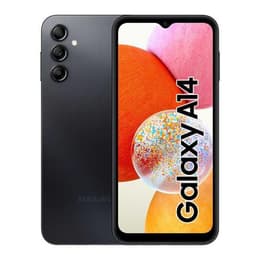
Galaxy A14 5G
Galaxy A14 5G
Starting at

Refurbished price:£80.00

Versus £289.00 new

See options
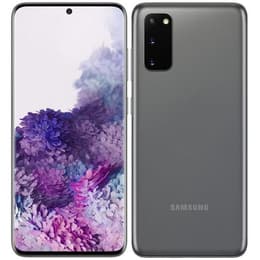
Galaxy S20 5G
Galaxy S20 5G
Starting at

Refurbished price:£133.00

Versus £899.00 new

See options

Ratings

The Samsung Galaxy A14 5G (released January 2023) and the Samsung Galaxy S20 5G (released February 2020) are both Android smartphones from Samsung, yet they cater to different user expectations and segments. While the Galaxy A14 5G focuses on delivering essential smartphone features with modern connectivity, the Galaxy S20 5G, a former flagship, offers a more premium experience with advanced display technology and camera capabilities. Their primary differentiators lie in their release timelines, display quality, and overall performance, reflecting their original market positioning.

Scores

Durability

The expected practical lifespan of these devices is influenced by their release dates and Samsung's software support policies.

  • Release Timeline and OS Support: The Galaxy A14 5G, launched in early 2023 with Android 13, was promised two major OS upgrades (up to Android 15) and four years of security updates, extending until 2027. In contrast, the Galaxy S20 5G, released in early 2020 with Android 10, received three major OS updates (up to Android 13) and five years of security updates, with official support ending in April 2025.
  • Software Longevity: Users prioritizing the latest Android versions and security patches for a longer period will find the Galaxy A14 5G offers a more current software experience for a few more years. The Galaxy S20 5G, while still functional, will no longer receive official software updates, which could impact compatibility with newer applications over time.
  • Physical Durability: The Galaxy S20 5G features an IP68 rating for dust and water resistance and Corning Gorilla Glass 6 protection, indicating a higher level of physical resilience. The Galaxy A14 5G does not carry an official IP rating, suggesting less protection against environmental elements.

Year of Release

2023

2020

Compatible with latest Update

Yes

No

OS

Android

Android

Foldable

No

No

Performance

When considering performance, these two devices offer distinct experiences shaped by their internal components and design philosophies.

  • Processor Capabilities: The Galaxy S20 5G, as a former flagship, is equipped with a more powerful processor designed for demanding applications and intensive multitasking, resulting in smoother operation and faster app loading times. The Galaxy A14 5G features a capable octa-core processor that handles everyday tasks, web browsing, and light gaming effectively, though it may exhibit slower performance with more resource-intensive applications.
  • RAM and Multitasking: The Galaxy S20 5G typically comes with 12GB of RAM, allowing for seamless switching between numerous applications and maintaining performance under heavy loads. The Galaxy A14 5G offers configurations with 4GB, 6GB, or 8GB of RAM, which is sufficient for general use but may lead to more frequent app reloads when many applications are open simultaneously.
  • Storage Options: Both devices offer 128GB of internal storage in their base models and support microSD card expansion up to 1TB, providing ample space for apps, photos, and media.

Memory (GB)

4 GB

12 GB

Screen quality

The visual experience on these smartphones differs significantly due to their display technologies and specifications.

  • Display Technology and Resolution: The Galaxy S20 5G boasts a 6.2-inch Dynamic AMOLED 2X display with a high resolution of 1440x3200 pixels, delivering deep blacks, vibrant colors, and sharp detail. The Galaxy A14 5G features a larger 6.6-inch PLS LCD display with a resolution of 1080x2408 pixels, offering clear visuals suitable for general media consumption.
  • Refresh Rate and Smoothness: The Galaxy S20 5G provides a 120Hz refresh rate (at FHD resolution), contributing to a noticeably smoother scrolling experience and more fluid animations. The Galaxy A14 5G has a 90Hz refresh rate, which is an improvement over standard 60Hz displays, offering a smoother feel during navigation and some content.
  • Brightness and Viewing Experience: The Dynamic AMOLED 2X panel on the Galaxy S20 5G typically achieves higher peak brightness, enhancing visibility in bright outdoor conditions and supporting HDR10+ content for a more immersive viewing experience. The Galaxy A14 5G's LCD panel offers adequate brightness for indoor use, but outdoor visibility may be less optimal compared to the S20 5G.

Resolution

1080 x 2408

1440 x 3200

Screen type

PLS LCD

Dynamic AMOLED 2X

Audiovisual

The camera systems on the Galaxy A14 5G and Galaxy S20 5G are designed for different photographic needs and expectations.

  • Rear Camera System: The Galaxy S20 5G features a versatile triple-camera setup with a 12MP primary sensor, a 64MP telephoto lens for optical zoom capabilities, and a 12MP ultrawide lens, allowing for a wide range of photographic styles and detailed shots. The Galaxy A14 5G includes a triple-camera system with a 50MP main sensor, complemented by 2MP macro and 2MP depth sensors, focusing on clear everyday photos and portrait effects.
  • Photography Performance: Users generally find the Galaxy S20 5G's camera system to offer more advanced features and better performance in challenging lighting conditions, producing images with greater dynamic range and detail. The Galaxy A14 5G's main camera is capable of capturing good photos in well-lit environments, but its performance in low light or with complex scenes may be less refined.
  • Video Recording and Audio: The Galaxy S20 5G supports high-resolution video recording, including 8K at 24fps and 4K at 30/60fps, along with advanced stabilization. The Galaxy A14 5G offers standard video recording capabilities suitable for casual use. User feedback on the Galaxy S20 5G indicates generally good camera performance, while some A14 5G users have noted issues with focus and sound quality.

Main camera

50 megapixels

12 megapixels

Front camera

13 megapixels

10 megapixels

Miscellaneous

Beyond core features, several practical elements differentiate these two Samsung smartphones.

  • Connectivity and Ports: Both devices support 5G connectivity. The Galaxy S20 5G includes Wi-Fi 6 (802.11ax) for faster and more stable wireless connections, while the Galaxy A14 5G supports Wi-Fi 5 (802.11ac). Both utilize a USB Type-C port for charging and data transfer.
  • Biometric Security: The Galaxy S20 5G features an in-display fingerprint sensor and face unlock for convenient and secure access. The Galaxy A14 5G incorporates a side-mounted fingerprint sensor.
  • Design and Handling: The Galaxy S20 5G is lighter at 163 grams and has a more compact design, making it easier to handle with one hand. The Galaxy A14 5G is heavier at 204 grams and has a slightly larger form factor. The S20 5G also features a glass body, contributing to a more premium feel.

Weight

201 g

163 g

Screen size (in)

6.6

6.2

Mobile network

5G

5G

SIM card

Dual Physical SIM

Dual Physical SIM

Carrier compatibility

Unlocked

Unlocked

Connector

USB-C + Jack 3.5mm

USB-C

User feedback for the Samsung Galaxy A14 5G often highlights its excellent battery life and capable main camera as strong points, particularly for its segment. However, some users have reported concerns regarding occasional touching issues, overheating, and general buggy performance, along with less impressive sound quality. The Galaxy S20 5G, despite being an older model, is frequently praised for its snappy performance, responsive fingerprint reader, and generally good camera system. Criticisms for the S20 5G include potential issues like green lines on the screen and camera glass cracking, and its speakers are sometimes noted as a weaker point.

Users prioritizing a more current software experience and extended security updates for essential daily tasks may find the Galaxy A14 5G well-suited to their needs. Its large battery capacity is a significant advantage for those requiring long usage times between charges. Conversely, users who value a more premium build, a superior display with a higher refresh rate, and a more versatile camera system for advanced photography will likely lean towards the Galaxy S20 5G, understanding that its official software support has concluded. Both devices offer a pathway to sustainable tech consumption through quality-assured refurbished options, allowing users to make an informed choice that aligns with their priorities and environmental consciousness.

See all articles

Our recent comparisons