
Galaxy A14 5G Vs iPhone SE (2020)

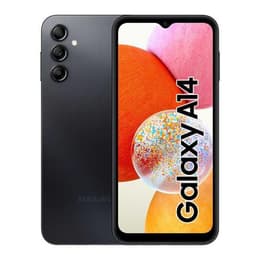
Galaxy A14 5G
Galaxy A14 5G
Starting at

Refurbished price:£80.00

Versus £289.00 new

See options
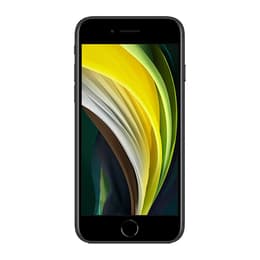
iPhone SE (2020)
iPhone SE (2020)
Starting at

Refurbished price:£67.00

Versus £289.00 new

See options

Ratings

The Samsung Galaxy A14 5G, released in January 2023, and the Apple iPhone SE 2020, launched in April 2020, are both smartphones designed to offer essential features for everyday use. While the Galaxy A14 5G runs on the Android operating system, the iPhone SE 2020 operates on Apple's iOS. A key difference lies in their design philosophy, with the A14 5G featuring a larger display and a more modern aesthetic, while the iPhone SE 2020 retains a compact form factor with a physical home button.

Scores

Durability

When considering the longevity of these devices, their release timelines and software support policies are important factors.

  • Release Timeline: The iPhone SE 2020 was released in April 2020, making it an older device compared to the Galaxy A14 5G, which launched in January 2023. This difference in release date impacts their remaining software support.
  • OS Support Duration: Apple typically provides major iOS updates for 5-7 years after an iPhone's release. The iPhone SE 2020, having launched with iOS 13, is still receiving official iOS updates as of early 2026, with expectations for continued support for at least another year or two. The Galaxy A14 5G, which launched with Android 13, is promised two major OS upgrades and four years of security updates, meaning it should receive Android 14 and 15, with security patches extending until 2027.
  • Repairability: The Galaxy A14 5G has a repairability score of 8 out of 10, partly due to its user-friendly design and the use of an adhesive pull tab for easier battery replacement. The iPhone SE 2020 received a repairability score of 6 out of 10 from iFixit, noting that common repairs like screen and battery replacements are relatively straightforward, though the glass back is difficult to replace.

Year of Release

2023

2020

Compatible with latest Update

Yes

Yes

OS

Android

iOS

Foldable

No

No

Performance

The performance of a smartphone is crucial for daily tasks, app usage, and overall responsiveness.

  • Processor Capabilities: The iPhone SE 2020 is equipped with a processor that delivered flagship-level performance at its release, allowing it to handle demanding applications and multitasking smoothly. The Galaxy A14 5G features a processor that provides reliable performance for everyday tasks and moderate multitasking, though some users have reported occasional lags and stutters with app animations.
  • System Responsiveness: Users of the iPhone SE 2020 generally experience a fluid and responsive interface, with quick app loading times. The Galaxy A14 5G offers a generally smooth experience for typical usage, but may exhibit slower app loading and transitions compared to devices with more powerful processors.
  • Battery Behavior: The Galaxy A14 5G is known for its substantial 5000 mAh battery, often providing extended usage, with some users reporting up to two days of use with moderate activity. The iPhone SE 2020 has a smaller 1821 mAh battery, which, despite software optimizations, typically requires more frequent charging for heavy users, though it can last through a full day of moderate use.

Memory (GB)

4 GB

3 GB

Screen quality

The display is a primary interface for smartphone interaction, and both devices offer different viewing experiences.

  • Display Technology and Size: The Galaxy A14 5G features a larger 6.6-inch PLS LCD display, providing more screen real estate for content consumption. The iPhone SE 2020 has a more compact 4.7-inch Retina IPS LCD display.
  • Resolution and Clarity: The Galaxy A14 5G offers a Full HD+ resolution (1080 x 2408 pixels), resulting in a clear viewing experience. The iPhone SE 2020 has a lower resolution (750 x 1334 pixels), but its smaller screen size still provides a sharp image for its display dimensions.
  • Refresh Rate and Brightness: The Galaxy A14 5G features a 90Hz refresh rate, contributing to smoother scrolling and a more fluid visual experience. Its typical brightness is around 400 nits. The iPhone SE 2020 has a standard 60Hz refresh rate and a higher typical brightness of 625 nits, which can be beneficial for outdoor visibility.

Resolution

1080 x 2408

750 x 1334

Screen type

PLS LCD

Retina IPS LCD

Audiovisual

Camera capabilities are a significant consideration for many users, and these devices approach photography differently.

  • Rear Camera System: The Galaxy A14 5G features a triple-camera setup with a 50 MP main sensor, accompanied by 2 MP macro and 2 MP depth sensors. The iPhone SE 2020 has a single 12 MP wide-angle rear camera.
  • Photography Performance: The Galaxy A14 5G's main camera performs well in good lighting conditions, capturing decent details and vibrant images, though low-light performance can be a challenge. The iPhone SE 2020's single camera, enhanced by its powerful processor, delivers strong image quality in good light, with good detail and color accuracy, but it lacks a dedicated Night Mode for very low-light scenarios.
  • Video Recording: Both devices are capable of recording Full HD (1080p) video at 30 frames per second. The iPhone SE 2020 can also record 4K video at up to 60 frames per second, offering more detailed video capture.

Main camera

50 megapixels

12 megapixels

Front camera

13 megapixels

7 megapixels

Miscellaneous

Beyond core features, several practical elements contribute to the overall user experience.

  • Connectivity: The Galaxy A14 5G supports 5G networks, offering faster mobile data speeds where available, along with Wi-Fi 5 and Bluetooth 5.2. The iPhone SE 2020 supports 4G LTE, Wi-Fi 6, and Bluetooth 5.0.
  • Ports and Sensors: The Galaxy A14 5G includes a USB-C 2.0 port and a 3.5mm headphone jack, offering versatile connectivity for accessories and audio. It features a side-mounted fingerprint sensor. The iPhone SE 2020 uses a Lightning port and does not have a headphone jack. It incorporates a front-mounted fingerprint sensor (Touch ID).
  • Dimensions and Build: The Galaxy A14 5G is larger and heavier, with dimensions of 167.7 x 78 x 9.1 mm and a weight of 202g, featuring a plastic back and frame. The iPhone SE 2020 is more compact and lighter at 138.4 x 67.3 x 7.3 mm and 148g, with a glass front and back and an aluminum frame.

Weight

201 g

148 g

Screen size (in)

6.6

4.7

Mobile network

5G

4G

SIM card

Dual Physical SIM

Physical SIM + eSIM

Carrier compatibility

Unlocked

Unlocked

Connector

USB-C + Jack 3.5mm

Lightning

The Samsung Galaxy A14 5G and the iPhone SE 2020 cater to different user preferences, each with distinct strengths.

Users often praise the Galaxy A14 5G for its long-lasting battery life and its large, smooth 90Hz display, which enhances the viewing experience for media and general browsing. Its inclusion of a 3.5mm headphone jack and expandable storage are also frequently highlighted as practical advantages. However, some users note that its performance can feel less fluid with demanding applications, and its camera struggles in low-light conditions.

The iPhone SE 2020 is commonly lauded for its powerful internal components, which provide a highly responsive user experience and ensure strong performance for a wide range of tasks. Its compact size is a significant draw for those who prefer a smaller device for one-handed use, and its camera is well-regarded for its image quality in good lighting. Criticisms often point to its smaller battery capacity, the dated design with larger bezels, and the absence of a dedicated Night Mode for photography.

Users prioritizing a large display, extended battery life, and the flexibility of Android with expandable storage may find the Galaxy A14 5G well-suited to their needs. Conversely, individuals who value a compact form factor, robust performance for demanding apps, and the long-term software support of iOS may lean toward the iPhone SE 2020. Both devices offer a reliable smartphone experience, and choosing between them often comes down to these specific priorities. For those considering a more sustainable choice, quality-assured refurbished options for both models are available, providing an eco-friendly alternative.

See all articles

Our recent comparisons