
Google Pixel 8a Vs Motorola Moto E13

Google Pixel 8a
Google Pixel 8a
Starting at

Refurbished price:£214.00

Versus £467.97 new

See options
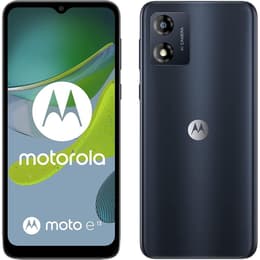
Motorola Moto E13
Motorola Moto E13
Starting at

Refurbished price:£74.00

Versus £83.99 new

See options

Ratings

The Google Pixel 8a, released in May 2024, and the Motorola Moto E13, launched in January 2023, represent distinct approaches to smartphone design and functionality. While both are Android devices, the Pixel 8a offers a more advanced feature set and extended software support, positioning it as a capable mid-range option. The Moto E13, conversely, focuses on essential smartphone capabilities, running a lighter version of Android to optimize performance on more modest hardware.

Scores

Durability

The expected practical lifespan and software support differ significantly between these two devices.

  • Software Longevity: The Google Pixel 8a stands out with an impressive commitment to software updates, promising seven years of OS and security updates from its release date. This means it is expected to receive updates until at least May 2031, offering prolonged access to new features and security enhancements. In contrast, the Motorola Moto E13, running Android 13 (Go edition), typically receives fewer and less frequent major OS updates, focusing more on security patches for a shorter period.
  • Physical Durability: The Pixel 8a features Corning Gorilla Glass 3 for screen protection and boasts an IP67 rating for dust and water resistance, indicating it can withstand immersion in up to 1 meter of water for 30 minutes. The Moto E13 has an IP52 rating, providing protection against dust and splashes but not full submersion.
  • Repairability: While specific repairability scores for these exact models are not readily available, Google's Pixel line generally aims for a reasonable level of repairability. The Moto E13, as an entry-level device, may present different challenges or advantages in terms of component accessibility.

Year of Release

2024

2023

Compatible with latest Update

Yes

No

OS

Android

Android

Foldable

No

No

Performance

Performance capabilities vary considerably, influencing how each device handles daily tasks and demanding applications.

  • Processing Power: The Google Pixel 8a is equipped with a more advanced processor, enabling it to handle demanding applications, complex multitasking, and graphic-intensive games with notable smoothness and responsiveness. Users can expect quick app loading times and fluid navigation. The Motorola Moto E13, powered by a more modest processor and running Android Go Edition, is designed for essential tasks and lighter applications. It provides adequate performance for basic communication, web browsing, and casual use, but may exhibit slower response times with more intensive workloads.
  • Memory and Storage: The Pixel 8a comes with 8GB of RAM, facilitating efficient multitasking and app switching without significant slowdowns. It offers storage options of 128GB or 256GB, utilizing faster UFS 3.1 storage for quicker data access. The Moto E13 typically features 2GB or 4GB of RAM, which is suitable for its Android Go operating system but limits its capacity for extensive multitasking. Its internal storage is commonly 64GB, with some variants offering 32GB or 128GB, and it supports microSD card expansion for additional space.
  • Battery Behavior: The Pixel 8a houses a 4492 mAh battery, which, combined with its efficient processor and software optimizations, generally provides a full day of use for most users. It supports 18W wired fast charging and 7.5W wireless charging. The Moto E13 features a larger 5000 mAh battery. Due to its lower-resolution display and less powerful processor, it can often achieve extended battery life, sometimes lasting beyond a single day on a charge, though it supports slower 10W wired charging and lacks wireless charging.

Memory (GB)

8 GB

2 GB

Screen quality

The visual experience offered by each device's display presents clear differences in technology and clarity.

  • Display Technology and Resolution: The Google Pixel 8a features a 6.1-inch OLED display with a Full HD+ resolution (1080x2400 pixels), delivering vibrant colors, deep blacks, and excellent contrast. The Motorola Moto E13 has a larger 6.5-inch IPS LCD screen with an HD+ resolution (720x1600 pixels). While it provides ample screen real estate, the IPS LCD technology and lower resolution result in less vibrant colors and less sharp image quality compared to the Pixel 8a's OLED panel.
  • Refresh Rate and Brightness: The Pixel 8a offers a dynamic 120Hz refresh rate, contributing to smoother scrolling and a more fluid user interface experience. It also boasts a high peak brightness of up to 2000 nits, making it highly visible even in bright outdoor conditions. The Moto E13 has a standard 60Hz refresh rate, which is typical for its category, and its brightness levels are suitable for indoor use but may struggle more under direct sunlight.
  • Viewing Experience: The Pixel 8a's smaller, higher-resolution OLED screen provides a more immersive and detailed viewing experience, particularly for media consumption and detailed tasks. The Moto E13's larger screen size can be beneficial for users who prefer more expansive viewing, despite the lower resolution and less vibrant display.

Resolution

1080 x 2400

720 x 1600

Screen type

OLED

IPS LCD

Audiovisual

The camera systems on these smartphones cater to different photography expectations and capabilities.

  • Rear Camera System: The Google Pixel 8a features a dual-camera setup on the rear, including a 64MP main sensor with optical image stabilization (OIS) and a 13MP ultrawide lens. This combination allows for detailed photos, good low-light performance, and versatile shooting options. The Motorola Moto E13 is equipped with a single 13MP main rear camera. It is designed for basic photography, performing adequately in well-lit conditions but offering less detail and dynamic range, especially in challenging lighting.
  • Front Camera and Video: For selfies and video calls, the Pixel 8a includes a 13MP front-facing camera capable of capturing detailed images and high-quality video. It also supports 4K video recording at 30/60fps with its rear cameras. The Moto E13 has a 5MP front camera, suitable for casual selfies and video calls. Both devices can record 1080p video at 30fps, but the Pixel 8a offers more advanced video features and stabilization.
  • Photography Features and User Experience: The Pixel 8a benefits from Google's advanced computational photography, offering features like Magic Editor, Best Take, and Real Tone, which enhance photo quality and editing capabilities. Users generally praise its ability to capture true colors and high-quality images. The Moto E13's camera experience is more straightforward, with users noting that the camera application can be slow to launch and process images, potentially missing spontaneous moments.

Main camera

64 megapixels

13 megapixels

Front camera

13 megapixels

5 megapixels

Miscellaneous

Beyond core features, several practical elements distinguish these two devices in terms of connectivity, design, and user interaction.

  • Connectivity and Ports: The Google Pixel 8a supports 5G connectivity, Wi-Fi 6e, and Bluetooth 5.3, offering faster wireless speeds and more reliable connections. It features a USB-C 3.2 port for data transfer and charging. The Motorola Moto E13 supports 4G LTE, Wi-Fi 5 (802.11 a/b/g/n/ac), and Bluetooth 5.0. It includes a USB-C 2.0 port and retains a 3.5mm headphone jack, which is absent on the Pixel 8a.
  • Biometric Security and Sensors: The Pixel 8a incorporates an in-display fingerprint sensor for secure unlocking, along with face unlock capabilities. It also includes a comprehensive suite of sensors such as an accelerometer, gyroscope, proximity sensor, ambient light sensor, barometer, and magnetometer. The Moto E13 relies on face unlock for biometric security and includes essential sensors like an accelerometer, proximity sensor, and ambient light sensor, but lacks a fingerprint sensor.
  • Design and Handling: The Pixel 8a has dimensions of 152.1 x 72.7 x 8.9 mm and weighs 188g, featuring a matte plastic back and an aluminum frame, contributing to a comfortable in-hand feel and a more premium aesthetic. The Moto E13 measures 164.2 x 75 x 8.5 mm and weighs 179g, with a plastic body that is lightweight and designed for comfortable handling, though it has a more basic design.

Weight

188 g

181 g

Screen size (in)

6.1

6.5

Mobile network

5G

4G

SIM card

Physical SIM + eSIM

Dual Physical SIM

Carrier compatibility

Unlocked

Unlocked

The Google Pixel 8a and Motorola Moto E13 cater to different user needs, reflecting their respective positions in the smartphone market. Users frequently praise the Pixel 8a for its exceptional camera performance, often comparing it favorably to more expensive devices, and its long-term software support is a significant advantage. Its compact size and smooth performance are also commonly highlighted as positive attributes. Some users, however, have noted occasional heating during intensive use.

Conversely, the Motorola Moto E13 is often lauded for its impressive battery life, largely due to its efficient hardware and Android Go operating system. Its affordability and inclusion of a headphone jack are also frequently appreciated. Criticisms often revolve around its camera's slow operation and overall system responsiveness, which can be sluggish for anything beyond basic tasks.

Users prioritizing a high-quality camera, extended software longevity, and a fluid user experience for demanding applications will find the Google Pixel 8a well-suited to their needs. Its advanced display and robust performance make it a strong contender for those who value a premium smartphone experience. On the other hand, individuals seeking a straightforward device for essential communication, web browsing, and media consumption, with a focus on battery endurance, may lean towards the Motorola Moto E13. It serves as a practical option for users who require basic smartphone functionality without advanced features.

For those considering either device, exploring quality-assured refurbished options can provide an eco-friendly alternative, offering a sustainable choice for acquiring technology.


See all articles

Our recent comparisons