
Compare models
Galaxy A16 Vs iPhone Air
- 1-year minimum warranty
- Free delivery on all items
- Free 30-day returns
Differences at a glance
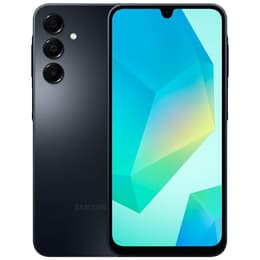
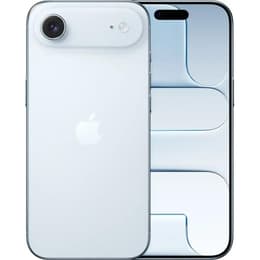
The Samsung Galaxy A16 (2024) and the Apple iPhone Air (2025) represent entirely different approaches to modern smartphone design, targeting distinct user priorities and ecosystems. While the Galaxy A16 focuses on accessible everyday functionality within the Android environment, the iPhone Air emphasizes a featherlight, ultra-slim profile running iOS.
These devices differ significantly in their launch years, core hardware philosophies, and physical engineering, making each suited to very different daily requirements.
Available Models
Colour
Storage (GB)
Scores
Durability
When evaluating longevity, both devices offer robust software support lifelines, though they approach hardware durability through different design choices.
- Software lifecycle: The iPhone Air benefits from Apple's extended update timeline, while the Galaxy A16 provides multi-year security patches suitable for long-term daily use.
- Build resilience: The iPhone Air utilizes a titanium frame and reinforced glass panels, whereas the Galaxy A16 features a standard plastic-and-glass construction designed for everyday resilience.
- Repair framework: Both manufacturers provide structured repair options, supporting a quality-assured refurbished option for consumers seeking sustainable technology choices.
Year of Release
2024
2025
Compatible with latest Update
Yes
Yes
OS
Android
iOS
Foldable
No
No
Performance
System responsiveness and day-to-day processing capabilities differ notably, driven by contrasting hardware configurations and memory capacities.
- Multitasking capacity: The iPhone Air handles demanding application switching and heavy graphic workflows smoothly, while the Galaxy A16 manages routine messaging, web browsing, and casual apps reliably.
- Battery endurance: The Galaxy A16 features a high-capacity battery that comfortably lasts through a full day of standard use, whereas the iPhone Air balances a slim profile with efficient power management requiring standard daily charging.
- Storage configurations: The iPhone Air offers high-tier internal capacity tiers starting at larger baselines, while the Galaxy A16 includes expandable storage via memory cards for flexible media archiving.
Screen quality
Display performance shapes the media consumption experience, with both models offering bright panels equipped for various lighting conditions.
- Panel technology: The iPhone Air features an advanced OLED screen with deep contrast and a smooth high refresh rate, while the Galaxy A16 utilizes a clear Super AMOLED display with a standard 90 Hz refresh rate.
- Outdoor visibility: The iPhone Air achieves high peak outdoor brightness levels for clear legibility in direct sunlight, whereas the Galaxy A16 provides adequate brightness for typical daylight viewing.
- Viewing area: The iPhone Air offers a balanced 6.5-inch viewing space, compared to the slightly larger 6.7-inch display found on the Galaxy A16.
Resolution
1080 x 2340
2736x1260
Screen type
Super AMOLED
Super Retina XDR
Audiovisual
Optics and media capture hardware cater to different photography habits, ranging from streamlined single-lens setups to versatile multi-sensor arrays.
- Rear camera versatility: The Galaxy A16 features a triple-lens rear setup including macro and ultra-wide options, whereas the iPhone Air employs a single high-resolution main lens focusing on advanced computational photography.
- Video recording: The iPhone Air supports high-definition video capture with advanced stabilization features, while the Galaxy A16 handles standard 1080p and 4K recording for casual sharing.
- Audio output: The iPhone Air delivers clear mono sound for quick media listening, whereas the Galaxy A16 provides straightforward loudspeaker functionality for calls and notifications.
Main camera
50 megapixels
48 megapixels
Front camera
13 megapixels
18 megapixels
Miscellaneous
Physical dimensions and connectivity standards determine how comfortably each device integrates into daily travel and accessory ecosystems.
- Port architecture: The iPhone Air relies entirely on a USB-C connection and wireless charging standards, while the Galaxy A16 includes traditional wired connectivity options alongside its charging port.
- Handling and weight: The iPhone Air stands out for its exceptionally thin profile and light 165-gram weight, whereas the Galaxy A16 has a slightly heavier 200-gram chassis with a traditional thickness profile.
- Security features: The Galaxy A16 uses a convenient side-mounted fingerprint sensor, while the iPhone Air relies on advanced facial recognition technology.
Weight
200 g
165 g
Screen size (in)
6.7
6.5
Mobile network
4G
5G
SIM card
Dual Physical SIM
eSIM
Carrier compatibility
Unlocked
Unlocked
Connector
USB-C
USB-C
What the community thinks
User feedback from online communities highlights distinct preferences for each device. Owners of the Galaxy A16 frequently praise its reliable battery longevity, expandable storage flexibility, and straightforward everyday reliability. Conversely, users of the iPhone Air highlight its breakthrough slim design, featherlight handling in the hand, and smooth display performance as standout daily benefits. At the same time, some users note the single rear camera on the iPhone Air requires a shift in photography habits, while Galaxy A16 users occasionally point out that heavy multitasking can push the limits of its processor.
Users prioritizing a featherlight physical profile, premium media viewing, and long-term ecosystem alignment may prefer the iPhone Air, while users seeking reliable battery endurance, expandable storage, and straightforward Android functionality will find the Galaxy A16 well-suited to their needs. For consumers exploring sustainable technology, choosing a quality-assured refurbished option provides an eco-friendly alternative that extends device lifecycles without compromising on performance standards.