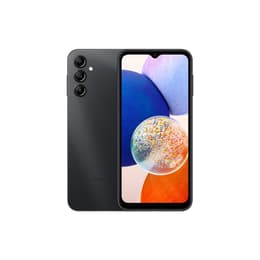
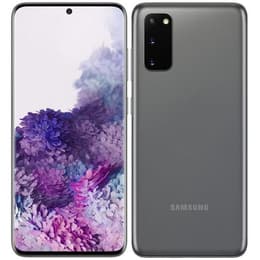

Galaxy A14 Vs Galaxy S20 5G

Galaxy A14
Galaxy A14
Starting at

Refurbished price:£82.00

Versus £269.00 new

See options
Galaxy S20 5G
Galaxy S20 5G
Starting at

Refurbished price:£133.00

Versus £899.00 new

See options

Ratings

The Samsung Galaxy A14, released in 2023, and the Samsung Galaxy S20 5G, launched in 2020, represent distinct segments within Samsung's smartphone lineup. While both operate on the Android platform, the Galaxy A14 is positioned as a more recent entry-level device, focusing on essential features, whereas the Galaxy S20 5G was a flagship model in its time, offering advanced capabilities and a premium build. This comparison will explore their practical differences to help users determine which device aligns best with their needs.

Scores

Durability

The longevity of a smartphone is influenced by its physical resilience and ongoing software support. These two devices offer different profiles in terms of durability and expected lifespan.

  • Software Support: The Galaxy A14, being a newer device, launched with Android 13 and is expected to receive two major OS updates and four years of security updates, extending its software support until approximately 2027. The Galaxy S20 5G, initially released with Android 10, has received updates up to Android 13, and has reached its end of life for major Android updates, though it may still receive security patches for a period.
  • Build Materials: The Galaxy S20 5G features a more robust construction with Gorilla Glass 6 on both its front and back, complemented by an aluminum frame, and boasts an IP68 rating for dust and water resistance. The Galaxy A14 typically uses a plastic build and does not carry an official IP rating, indicating less protection against environmental elements.
  • Practical Lifespan: Users prioritizing the latest software features and extended security updates might find the Galaxy A14 offers a longer period of official support. However, the Galaxy S20 5G's more durable physical construction and higher-grade components could contribute to its physical longevity, provided users are comfortable with an older software version.

Year of Release

2023

2020

Compatible with latest Update

No

No

OS

Android

Android

Foldable

No

No

Performance

Performance is a key differentiator, impacting how smoothly applications run and how efficiently the device handles daily tasks.

  • Processing Power: The Galaxy S20 5G, powered by a high-end processor for its release year, delivers a responsive experience, handling demanding applications and multitasking with ease. The Galaxy A14, equipped with a processor designed for everyday use, capably manages common tasks and light gaming, though it may show limitations with more intensive applications.
  • Memory and Storage: The Galaxy S20 5G typically comes with 8GB or 12GB of RAM, providing ample capacity for fluid multitasking and app switching, alongside 128GB of internal storage, expandable via microSD. The Galaxy A14 offers 4GB or 6GB of RAM and 64GB or 128GB of internal storage, also expandable, which is suitable for general use but may require more frequent app management for heavy users.
  • Battery Behavior: The Galaxy A14 features a larger 5000 mAh battery, which generally translates to extended usage times for many users. The Galaxy S20 5G has a 4000 mAh battery, which, while smaller, is supported by faster charging capabilities and wireless charging options.

Memory (GB)

4 GB

12 GB

Screen quality

The display is the primary interface for interaction, and these devices offer distinct visual experiences.

  • Display Technology and Resolution: The Galaxy S20 5G features a 6.2-inch Dynamic AMOLED 2X display with a high resolution of 3200x1440 pixels, delivering vibrant colors, deep blacks, and excellent contrast. The Galaxy A14 utilizes a 6.6-inch PLS LCD panel with a resolution of 1080x2408 pixels, offering clear visuals suitable for general content consumption.
  • Refresh Rate and Smoothness: The Galaxy S20 5G supports a 120Hz refresh rate, providing a noticeably smoother scrolling and gaming experience, particularly at lower resolutions. The Galaxy A14 5G variant offers a 90Hz refresh rate, while the 4G model has a standard 60Hz refresh rate, which is adequate for most daily interactions.
  • Brightness and Viewing Experience: The AMOLED display of the Galaxy S20 5G generally offers higher peak brightness, making it more comfortable for outdoor viewing and HDR content. The larger screen size of the Galaxy A14 provides a more expansive canvas for media consumption, though its LCD technology may not match the contrast levels of the S20 5G.

Resolution

1080 x 2408

1440 x 3200

Screen type

PLS LCD

Dynamic AMOLED 2X

Audiovisual

Camera capabilities are a significant factor for many users, and both phones offer different photographic strengths.

  • Rear Camera System: The Galaxy S20 5G features a versatile triple-camera setup, including a 12MP wide lens, a 64MP telephoto lens with 3x hybrid optical zoom, and a 12MP ultrawide lens, capable of capturing detailed images and 8K video recording. The Galaxy A14 comes with a 50MP main camera, a 5MP ultrawide, and a 2MP macro lens, providing good performance in well-lit conditions for everyday photography.
  • Low-Light and Video Performance: The Galaxy S20 5G's larger sensors and advanced processing contribute to better low-light performance and more stable video recording with features like Super Steady Video. The Galaxy A14 performs adequately in good lighting, but its low-light capabilities and video stabilization may not match the S20 5G.
  • Front Camera and Audio: For selfies, the Galaxy S20 5G has a 10MP front camera with dual pixel autofocus, while the Galaxy A14 features a 13MP front camera. The Galaxy S20 5G also offers stereo speakers and Dolby Atmos support for a more immersive audio experience.

Main camera

50 megapixels

12 megapixels

Front camera

13 megapixels

10 megapixels

Miscellaneous

Beyond core features, several practical elements contribute to the overall user experience.

  • Connectivity and Ports: Both devices support 5G connectivity, enabling faster mobile data speeds. The Galaxy A14 retains a 3.5mm headphone jack, which is absent on the Galaxy S20 5G. Both utilize USB-C for charging and data transfer.
  • Biometric Security: The Galaxy S20 5G incorporates an under-display ultrasonic fingerprint sensor for secure unlocking. The Galaxy A14 typically features a side-mounted fingerprint sensor integrated into the power button. Both also offer face recognition.
  • Design and Handling: The Galaxy S20 5G has a more compact design, weighing around 163 grams, with a thickness of 7.9mm. The Galaxy A14 is slightly larger and heavier, at approximately 202 grams and 9.1mm thick, which can impact one-handed use.

Weight

201 g

163 g

Screen size (in)

6.6

6.2

Mobile network

4G

5G

SIM card

Dual Physical SIM

Dual Physical SIM

Carrier compatibility

Unlocked

Unlocked

User feedback often highlights the Galaxy S20 5G's strong performance, vibrant display, and capable camera system as its main strengths, even several years after its release. Users appreciate its premium feel and advanced features that were flagship-level at the time. Some common criticisms, however, include its battery life compared to newer devices and the end of major software updates.

The Galaxy A14 is generally praised for its large battery capacity and its ability to handle everyday tasks reliably. Users often find it a practical choice for essential smartphone functions. Criticisms sometimes point to its display technology and overall performance not matching higher-end devices.

Users prioritizing a premium display, advanced camera features, and robust performance for demanding applications may find the Galaxy S20 5G more suitable, especially if they value a compact form factor. Conversely, users who prioritize extended battery life, a larger screen for casual use, and a more recent software update cycle for basic tasks might lean towards the Galaxy A14. For those seeking a balance of quality and sustainability, considering a quality-assured refurbished option for either model can be an eco-friendly alternative.
See all articles

Our recent comparisons