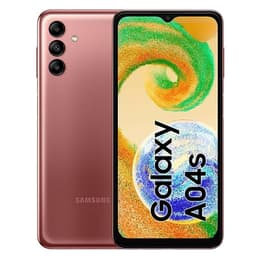
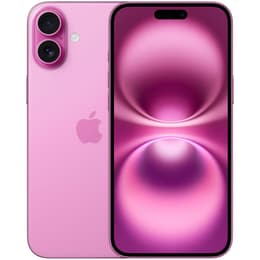

Galaxy A04S Vs iPhone 16 Plus

Galaxy A04S
Galaxy A04S
Starting at

Refurbished price:£99.00

Versus £179.00 new

See options
iPhone 16 Plus
iPhone 16 Plus
Starting at

Refurbished price:£503.46

Versus £799.00 new

See options

Ratings

The Samsung Galaxy A04S, released in September 2022, is an entry-level Android smartphone designed for essential daily tasks. In contrast, the iPhone 16 Plus, launched in September 2024, represents a premium iOS device offering advanced features and robust performance. These two devices cater to distinct user needs, with the iPhone 16 Plus providing a more powerful and feature-rich experience, while the Galaxy A04S focuses on fundamental smartphone functionality.

Scores

Durability

The longevity of a smartphone is significantly influenced by its release date and the manufacturer's commitment to software updates.

  • Release Timeline: The Galaxy A04S was released in September 2022, making it an older device compared to the iPhone 16 Plus, which launched in September 2024. This two-year difference impacts their respective lifespans.
  • Software Support: The iPhone 16 Plus is expected to receive major iOS updates for approximately 5 to 7 years from its release, potentially until 2031, ensuring access to new features and security patches for an extended period. The Galaxy A04S, running Android 12 at launch, typically receives software and security updates for a shorter duration, often around two to three years, meaning its software support cycle is nearing its end.
  • Practical Lifespan: Users prioritizing long-term software support and access to the latest operating system features will find the iPhone 16 Plus offers a considerably longer practical lifespan. The Galaxy A04S remains functional for basic tasks, but its software will become outdated sooner.

Year of Release

2022

2024

Compatible with latest Update

Yes

Yes

Foldable

No

No

Performance

Performance capabilities vary significantly between these two devices, impacting how smoothly they handle applications and multitasking.

  • Everyday Responsiveness: The iPhone 16 Plus features a current-generation processor, enabling swift app loading, seamless multitasking, and smooth navigation through demanding applications and games. The Galaxy A04S, with its octa-core processor, handles general day-to-day tasks comfortably, but users may experience minor stutters or slower performance when running multiple apps or more intensive applications.
  • Multitasking Efficiency: The iPhone 16 Plus typically includes ample memory, contributing to efficient multitasking and the ability to switch between applications without significant delays. The Galaxy A04S, often equipped with 3GB or 4GB of RAM, may struggle with numerous open applications, potentially leading to slower transitions and app reloads.
  • Storage Options: The iPhone 16 Plus offers internal storage options up to 512GB, without expandable storage. The Galaxy A04S provides up to 128GB of internal storage, with the flexibility to expand up to 1TB using a microSD card, which can be beneficial for users with large media libraries.

Memory (GB)

3 GB

8 GB

Screen quality

The visual experience differs considerably due to the display technologies and specifications of each device.

  • Display Technology and Clarity: The iPhone 16 Plus features a 6.7-inch Super Retina XDR OLED display, offering deep blacks, vibrant colors, and high contrast. Its resolution of 2796 x 1290 pixels results in sharp and detailed visuals. The Galaxy A04S has a 6.5-inch PLS LCD display with a resolution of 720 x 1600 pixels, providing adequate clarity for everyday use but with less contrast and color depth compared to an OLED panel.
  • Brightness and Refresh Rate: The iPhone 16 Plus achieves a peak outdoor brightness of 2000 nits, ensuring excellent visibility even in bright sunlight, and a typical brightness of 1000 nits. It maintains a standard 60Hz refresh rate. The Galaxy A04S offers a 90Hz refresh rate for smoother scrolling, but its peak brightness of 400 nits may present challenges for outdoor visibility in direct sunlight.
  • Viewing Experience: The iPhone 16 Plus incorporates a Dynamic Island, which integrates alerts and activities into an interactive area at the top of the display. Both devices offer large screens suitable for media consumption, though the iPhone's OLED panel provides a more immersive viewing experience.

Resolution

720 x 1600

1290 x 2796

Screen type

PLS LCD

Super Retina XDR OLED

Audiovisual

Camera capabilities present a significant distinction, with the iPhone 16 Plus offering a more advanced photography and videography experience.

  • Rear Camera System: The iPhone 16 Plus features an advanced dual-camera system, including a 48MP Fusion Main camera with sensor-shift optical image stabilization and a 12MP Ultrawide camera. It can achieve a 2x telephoto effect by cropping the main sensor. The Galaxy A04S has a triple rear camera setup with a 50MP main sensor, a 2MP macro lens, and a 2MP depth sensor.
  • Photography Performance: The iPhone 16 Plus benefits from computational photography features like Photonic Engine, Deep Fusion, and Smart HDR 5, which enhance image quality, especially in challenging lighting conditions. It also supports Spatial video recording. The Galaxy A04S provides acceptable image quality for a budget phone, with its 50MP main sensor capable of capturing detailed photos in good lighting.
  • Video Recording and Front Camera: The iPhone 16 Plus records 4K Dolby Vision video at various frame rates and features a 12MP front camera with autofocus. The Galaxy A04S records video up to 1080p at 30fps and has a 5MP front camera.

Main camera

50 megapixels

48 megapixels

Front camera

5 megapixels

12 megapixels

Miscellaneous

Beyond core features, several practical elements contribute to the overall user experience and daily usability.

  • Connectivity and Ports: The iPhone 16 Plus supports 5G and Wi-Fi 7, offering faster wireless speeds and improved network performance, along with a USB-C port for charging and data transfer. The Galaxy A04S supports 4G LTE and Wi-Fi 5, and includes a USB-C port as well as a 3.5mm headphone jack, which is absent on the iPhone.
  • Security and Biometrics: The iPhone 16 Plus utilizes Face ID for secure facial recognition. The Galaxy A04S features a side-mounted fingerprint sensor for biometric authentication.
  • Build Materials and Durability: The iPhone 16 Plus features an aluminum design with a Ceramic Shield front cover and an IP68 rating for water and dust resistance, indicating a robust build. The Galaxy A04S has a plastic construction and does not carry an official IP rating. The iPhone 16 Plus also includes an Action button for quick access to various functions.

Weight

195 g

199 g

Screen size (in)

6.5

6.7

Mobile network

4G

5G

SIM card

Dual Physical SIM

Physical SIM + eSIM

Carrier compatibility

Unlocked

Unlocked

Connector

USB-C

USB-C (USB 2)

User feedback for the Galaxy A04S often highlights its strong battery life and acceptable camera performance for its category, making it a practical choice for essential smartphone functions. Common criticisms point to its moderate performance and a screen that, while functional, does not offer the vibrancy or clarity of higher-end devices.

The iPhone 16 Plus receives praise for its excellent battery life, sharp camera capabilities, and swift performance, particularly with the integration of Apple Intelligence features. Some users have noted that its 60Hz display, while bright and clear, is not as smooth as higher refresh rate screens found on some competing devices.

Users prioritizing a device for basic communication, social media, and extended battery life without needing high-end performance or advanced camera features may find the Galaxy A04S well-suited to their needs. Conversely, individuals seeking a powerful smartphone with a premium display, advanced camera system, long-term software support, and robust performance for demanding applications and AI features will likely lean toward the iPhone 16 Plus. Both devices serve different segments of the market, and choosing between them depends on individual priorities for features, performance, and ecosystem preference. For those considering a more sustainable choice, quality-assured refurbished options are available for both models.

See all articles

Our recent comparisons