
Compare models
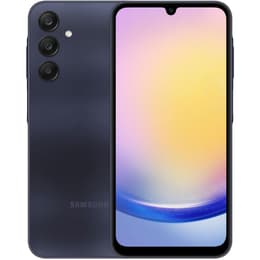
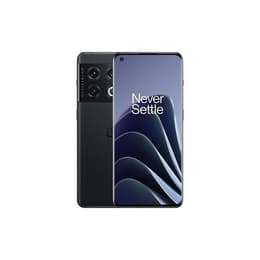
Galaxy A25 Vs OnePlus 10 Pro
- 1-year minimum warranty
- Free delivery on all items
- Free 30-day returns
Differences at a glance
The Samsung Galaxy A25, released in late 2023, and the OnePlus 10 Pro, launched in early 2022, are both Android smartphones that cater to different user expectations. While the Galaxy A25 focuses on delivering essential features with a strong software commitment, the OnePlus 10 Pro offers a more advanced hardware experience. Both devices run on the Android operating system, but they differ significantly in their performance capabilities and display technologies.
Available Models
Colour
Storage (GB)
Scores
Durability
The practical lifespan of a smartphone is heavily influenced by its release timeline, software support, and physical durability.
- Release Timeline: The Samsung Galaxy A25 was released in December 2023, making it a newer device compared to the OnePlus 10 Pro, which launched in January 2022. This difference in release dates means the Galaxy A25 benefits from a more recent starting point for software updates.
- OS Support: Samsung has committed to providing the Galaxy A25 with four years of major Android OS updates and five years of security updates, extending its software longevity significantly. The OnePlus 10 Pro, while initially having a shorter support promise, received an extended policy, ultimately getting four major Android OS updates (up to Android 16) and five years of security patches, with support expected until 2027.
- Durability: The OnePlus 10 Pro features a more robust build with Gorilla Glass Victus on the front and Gorilla Glass 5 on the back, alongside an aluminum frame. The Galaxy A25 uses Gorilla Glass 5 for its display but has a plastic back and frame.
Year of Release
2023
2022
Compatible with latest Update
Yes
Yes
OS
Android
Android
Foldable
No
No
Performance
Performance is a key differentiator, impacting how smoothly applications run and how efficiently the device handles demanding tasks.
- Processor Capabilities: The OnePlus 10 Pro is equipped with a processor designed for high-end performance, allowing it to handle graphically intensive games and complex applications with ease, providing a fluid user experience. The Galaxy A25 features a processor that capably manages everyday tasks, web browsing, and social media, though some users have noted occasional lag or slower responsiveness with more demanding applications.
- Multitasking and Responsiveness: The OnePlus 10 Pro generally offers a more responsive experience, with applications loading quickly and seamless transitions between multiple open apps. The Galaxy A25 provides adequate performance for typical multitasking, but users engaging in heavy app switching or intensive background processes might observe slight delays.
- Battery Behavior: Both devices house a 5000 mAh battery capacity. The OnePlus 10 Pro supports significantly faster wired charging at 80W (65W in North America) and also offers 50W wireless charging, allowing for rapid power replenishment. The Galaxy A25 supports 25W wired charging.
Screen quality
The display is the primary interface for user interaction, and differences in screen technology and specifications can greatly affect the visual experience.
- Display Technology and Clarity: The OnePlus 10 Pro features a 6.7-inch LTPO2 Fluid AMOLED display with a higher resolution of 1440 x 3216 pixels, resulting in a sharper and more detailed image. The Galaxy A25 has a 6.5-inch Super AMOLED display with a resolution of 1080 x 2340 pixels. Both technologies offer vibrant colors and deep blacks.
- Refresh Rate and Smoothness: Both phones offer a 120Hz refresh rate for smoother scrolling and animations. The OnePlus 10 Pro's LTPO2 technology allows for an adaptive refresh rate, which can dynamically adjust from 1Hz to 120Hz, potentially contributing to power efficiency.
- Brightness Levels: The OnePlus 10 Pro can reach a peak brightness of 1300 nits, providing excellent visibility even in bright outdoor conditions. The Galaxy A25 offers a peak brightness of 1000 nits, which is generally sufficient for most outdoor scenarios.
Resolution
1080 x 2340
1440 x 3216
Screen type
Super AMOLED
LTPO2 Fluid AMOLED
Audiovisual
Camera systems are a crucial aspect for many users, capturing moments and providing creative tools for photography and videography.
- Rear Camera System: The OnePlus 10 Pro features a versatile triple-camera setup with a 48 MP main sensor, a 50 MP ultrawide lens, and an 8 MP telephoto lens with 3.3x optical zoom, benefiting from Hasselblad color calibration. The Galaxy A25 also has a triple-camera system, including a 50 MP main sensor with optical image stabilization (OIS), an 8 MP ultrawide, and a 2 MP macro lens.
- Photography Performance: The OnePlus 10 Pro generally delivers detailed images with accurate color reproduction, though some users have noted inconsistencies in color science across different lenses and occasional over-sharpening. The Galaxy A25's main camera performs well in good lighting conditions, but its low-light performance and the quality of its ultrawide and macro sensors have received mixed feedback.
- Video Recording and Front Camera: Both devices are capable of recording high-quality video. The OnePlus 10 Pro features a 32 MP front camera, offering higher resolution for selfies and video calls compared to the Galaxy A25's 13 MP front camera.
Main camera
50 megapixels
48 megapixels
Front camera
13 megapixels
32 megapixels
Miscellaneous
Beyond core features, several practical elements contribute to the overall user experience and device utility.
- Connectivity and Ports: Both smartphones support 5G connectivity. The OnePlus 10 Pro includes Wi-Fi 6 and a USB-C 3.1 port, offering faster data transfer speeds. The Galaxy A25 supports Wi-Fi 5 and has a USB-C 2.0 port, but it retains a 3.5mm headphone jack, which is absent on the OnePlus 10 Pro.
- Biometric Security: The OnePlus 10 Pro utilizes an under-display optical fingerprint sensor for unlocking. The Galaxy A25 features a side-mounted fingerprint sensor integrated into the power button.
- Design and Build: The OnePlus 10 Pro has a more premium construction with glass on both the front and back, framed by aluminum, giving it a weight of 200.5g. The Galaxy A25, weighing 197g, features a glass front and a plastic back and frame, which can offer a different tactile experience.
Weight
197 g
201 g
Screen size (in)
6.5
6.7
Mobile network
5G
5G
SIM card
Dual Physical SIM
Dual Physical SIM
Carrier compatibility
Unlocked
Unlocked
What the community thinks
The Samsung Galaxy A25 and OnePlus 10 Pro offer distinct propositions for smartphone users. The Galaxy A25 is often praised for its vibrant Super AMOLED display, reliable battery life, and Samsung's commitment to extended software updates, making it a solid choice for users who prioritize long-term software support and a clear viewing experience for everyday tasks. However, some users have expressed concerns regarding its processor's performance, noting occasional lag and heating, particularly in certain regions, and mixed results from its camera in challenging lighting conditions.
Conversely, the OnePlus 10 Pro is frequently lauded for its powerful performance, stunning high-resolution LTPO2 AMOLED display, and exceptionally fast wired and wireless charging capabilities. Its camera system, co-developed with Hasselblad, generally produces high-quality images, though some users have reported inconsistencies in color processing and performance degradation over time. Initial user feedback also highlighted concerns about software stability and thermal management during intensive use.
Users prioritizing a device with a more recent release, guaranteed long-term software updates, and a traditional headphone jack for media consumption may find the Samsung Galaxy A25 well-suited to their needs. Those who value top-tier processing power for gaming and demanding applications, a superior display, and rapid charging speeds, and are comfortable with a slightly older flagship, might lean towards the OnePlus 10 Pro. Both devices, when considered as quality-assured refurbished options, present an eco-friendly alternative for consumers seeking capable smartphones.