
Galaxy A14 5G Vs iPhone 16

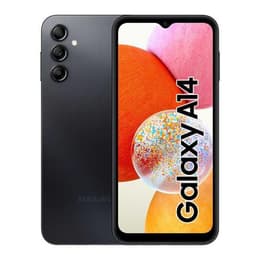
Galaxy A14 5G
Galaxy A14 5G
Starting at

Refurbished price:£80.00

Versus £289.00 new

See options
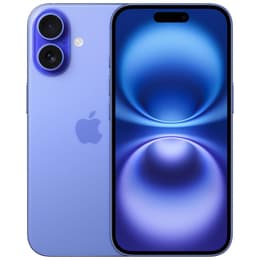
iPhone 16
iPhone 16
Starting at

Refurbished price:£475.00

Versus £699.00 new

See options

Ratings

The Samsung Galaxy A14 5G, released in January 2023, and the Apple iPhone 16, launched in September 2024, represent distinct approaches to smartphone design and functionality. While the Galaxy A14 5G offers a robust Android experience with expandable storage and a high refresh rate display, the iPhone 16 focuses on a refined iOS ecosystem, advanced camera capabilities, and enhanced repairability. These differences cater to varying user preferences, from those prioritizing extensive customization and battery life to those seeking seamless performance and a premium user experience.

Scores

Durability

The longevity of a smartphone is influenced by its release timeline, software support, and repairability.

  • Software Support: The Galaxy A14 5G launched with Android 13 and is slated to receive two major OS upgrades, extending its software currency until Android 15, expected around 2025. It also benefits from four years of security updates, continuing until 2027. In contrast, the iPhone 16, released with iOS 18, is guaranteed a minimum of five years of software support from its launch date, extending until at least September 2029. Historically, Apple devices often receive OS updates for 5 to 7 years or more.
  • Repairability: The iPhone 16 marks a significant stride in repairability, achieving an iFixit score of 7 out of 10, a notable improvement over previous generations. This is attributed to design changes that facilitate easier access for repairs, including battery swaps, from both the front and back of the device. Specific repairability scores for the Galaxy A14 5G are not widely available, but budget-friendly Android devices typically present more challenges for self-repair.
  • Practical Lifespan: Users can expect the iPhone 16 to maintain optimal performance and receive critical updates for a longer duration, making it a suitable choice for those who prefer to keep their devices for an extended period. The Galaxy A14 5G offers a respectable lifespan for its category, particularly for users who do not require the absolute latest software features beyond its guaranteed update cycle.

Year of Release

2023

2024

Compatible with latest Update

Yes

Yes

Foldable

No

No

Performance

Performance in daily use, from app handling to multitasking, is a key differentiator between these two devices.

  • Processing Power: The iPhone 16 is equipped with Apple's A18 chip, a 3nm processor designed for efficient and powerful operation. This translates to smooth handling of demanding applications, responsive multitasking, and a fluid user interface, particularly benefiting from features like Apple Intelligence. The Galaxy A14 5G utilizes an octa-core processor, providing solid performance for everyday tasks. However, some users have noted occasional lags and stutters during app animations, suggesting it is better suited for moderate usage rather than intensive multitasking or gaming.
  • Battery Behavior: The Galaxy A14 5G features a substantial 5000mAh battery, capable of lasting through a full day of moderate to heavy use, with some users reporting up to 2-4 days with lighter usage. Its 15W wired charging takes approximately 2 to 2.5 hours for a full charge. The iPhone 16, with its 3561 mAh battery, offers improved battery life compared to its predecessor, providing up to 22 hours of offline video playback and generally lasting 15-18 hours with typical daily use. It supports 20W fast charging, along with MagSafe and Qi 2 wireless charging.
  • Storage and Responsiveness: The iPhone 16 offers storage options up to 512GB, but without expansion capabilities. Its 8GB of RAM contributes to its overall system responsiveness. The Galaxy A14 5G provides more flexible storage with options up to 128GB and the ability to expand via a microSD card up to 1TB, which is beneficial for users with large media libraries. It comes with 4GB, 6GB, or 8GB RAM configurations.

Memory (GB)

4 GB

8 GB

Screen quality

The visual experience is significantly shaped by the display technology and its characteristics.

  • Display Technology and Resolution: The iPhone 16 features a 6.1-inch Super Retina XDR OLED display, offering a resolution of 2556 x 1179 pixels, resulting in sharp and vibrant visuals with deep blacks. The Galaxy A14 5G comes with a larger 6.6-inch PLS LCD display, providing a resolution of 1080 x 2408 pixels (FHD+). While its colors are vibrant, the LCD technology may not offer the same contrast levels as OLED.
  • Refresh Rate and Brightness: A key difference lies in the refresh rate; the Galaxy A14 5G boasts a 90Hz refresh rate, contributing to smoother scrolling and a more fluid visual experience. The iPhone 16, however, maintains a standard 60Hz refresh rate, which some users may find less fluid compared to devices with higher refresh rates. For brightness, the iPhone 16 offers a typical maximum of 1000 nits, with peak HDR brightness reaching 1600 nits and outdoor peak brightness up to 2000 nits, ensuring excellent visibility even in bright sunlight. The Galaxy A14 5G's display, while vibrant indoors, can be dim and challenging to view in direct outdoor sunlight.
  • Viewing Experience: The iPhone 16 includes a Dynamic Island, integrating notifications and activities seamlessly into the display. Both devices offer a large viewing area, but the iPhone 16's OLED panel generally provides a more immersive and color-accurate experience, while the Galaxy A14 5G's larger screen size might appeal to those who prioritize screen real estate.

Resolution

1080 x 2408

1179 x 2556

Screen type

PLS LCD

Super Retina XDR OLED

Audiovisual

The camera systems of both smartphones cater to different photography needs and expectations.

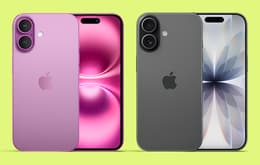
  • Rear Camera Capabilities: The iPhone 16 features a dual-camera system with a 48MP main wide-angle camera and a 12MP ultra-wide camera. It offers improved low-light performance, sharper zoom quality, and more accurate skin tones, especially when upgrading from older iPhone models. The main camera also supports 2x optical zoom and can capture spatial photos and videos. The Galaxy A14 5G sports a triple-camera setup, including a 50MP main sensor, a 2MP macro lens, and a 2MP depth sensor. It performs well in good lighting conditions, producing vibrant images with good HDR handling, but its low-light performance is less capable. It notably lacks an ultra-wide camera.
  • Front Camera and Video Recording: For selfies and video calls, the iPhone 16 is equipped with a 12MP front camera. It supports 4K video recording at 60 frames per second. The Galaxy A14 5G has a 13MP front camera that captures good detail and skin tones in adequate lighting. Both front and rear cameras on the Galaxy A14 5G are limited to 1080p video recording at 30 frames per second, with digital stabilization.
  • Photography Features: The iPhone 16 introduces a new Camera Control button for quick access to camera functions and settings, enhancing the shooting experience. Its faster processor also contributes to negligible shutter lag, making it more responsive for capturing fast-moving subjects. The Galaxy A14 5G's camera app is clean, and its 50MP main sensor does a decent job of capturing details, though it may not offer the same level of advanced computational photography as the iPhone.

Main camera

50 megapixels

48 megapixels

Front camera

13 megapixels

12 megapixels

Miscellaneous

Beyond core features, several practical elements contribute to the overall user experience and device utility.

  • Connectivity and Ports: Both devices support 5G connectivity, ensuring access to faster mobile networks. The iPhone 16 features Wi-Fi 7 and Bluetooth 5.3, along with a USB-C port for charging and data transfer. It also includes Ultra-wideband (UWB) for enhanced spatial awareness and NFC for contactless payments. The Galaxy A14 5G supports Wi-Fi 802.11 a/b/g/n/ac and Bluetooth 5.2, also featuring a USB Type-C 2.0 port and NFC. A notable inclusion on the Galaxy A14 5G is a traditional headphone jack, which is absent on the iPhone 16.
  • Design and Handling: The iPhone 16 measures 147.6 x 71.6 x 7.8 mm and weighs 170g, offering a compact and lightweight design. It boasts IP68 dust and water resistance, providing durability against environmental elements. The Galaxy A14 5G is larger and heavier at 167.7 x 78 x 9.1 mm and 204g. Its build materials are typically plastic, which can contribute to its overall durability in everyday use.
  • Security and Additional Features: The iPhone 16 relies on Face ID for biometric authentication and includes advanced safety features like Crash Detection and Emergency SOS via satellite. It also features a customizable Action button. The Galaxy A14 5G incorporates a side-mounted fingerprint sensor for secure unlocking. Both devices include standard sensors such as accelerometers, ambient light sensors, and gyroscopes.

Weight

201 g

170 g

Screen size (in)

6.6

6.1

Mobile network

5G

5G

SIM card

Dual Physical SIM

Physical SIM + eSIM

Carrier compatibility

Unlocked

Unlocked

Connector

USB-C + Jack 3.5mm

USB-C (USB 2)

Choosing between the Samsung Galaxy A14 5G and the iPhone 16 involves weighing different priorities in smartphone usage. User feedback for the Galaxy A14 5G often praises its long-lasting battery and the inclusion of a headphone jack and expandable storage, making it a practical choice for users who value these features. However, some users have noted its performance can feel sluggish with demanding tasks and its camera struggles in low-light conditions.

The iPhone 16, on the other hand, receives commendation for its powerful performance, improved camera capabilities, and significantly enhanced repairability, which is a welcome change for many. A common point of discussion, however, is its 60Hz display, which some users find outdated compared to competitors offering higher refresh rates.

Users prioritizing a seamless and powerful operating system, advanced camera features, and a longer software support window may find the iPhone 16 better suited to their needs. Its robust ecosystem and improved repairability also contribute to a potentially longer practical lifespan. Conversely, individuals who value extensive battery life, the flexibility of expandable storage, and the convenience of a headphone jack might lean towards the Galaxy A14 5G. It serves as a reliable device for everyday communication and media consumption without the need for top-tier processing power.

For those considering either device, exploring quality-assured refurbished options can provide an eco-friendly alternative, offering both models with thorough testing and warranties.
See all articles

Our recent comparisons