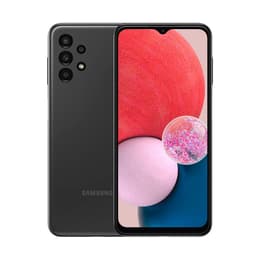
Galaxy A13 Vs Sony Xperia 5 IV

Galaxy A13
Galaxy A13
Starting at

Refurbished price:£73.00

Versus £249.00 new

See options
Sony Xperia 5 IV
Sony Xperia 5 IV
Starting at

Refurbished price:£298.00

Versus £1,199.00 new

See options

Ratings

The Samsung Galaxy A13, released in March 2022, and the Sony Xperia 5 IV, launched in September 2022, are both Android smartphones that cater to different user expectations. While the Galaxy A13 focuses on delivering essential smartphone functionalities, the Xperia 5 IV offers a more advanced experience with a compact design. Both devices run on the Android operating system, providing access to a wide ecosystem of applications and services.

Scores

Durability

When considering the long-term usability of these devices, their release timelines and software support policies are key factors.

  • Software Longevity: The Sony Xperia 5 IV, being a more premium device, typically receives longer software support from Sony, including major Android version upgrades and security patches, extending its usable life. The Samsung Galaxy A13, while receiving updates, is generally slated for fewer major OS upgrades and security updates, typically two OS upgrades and four years of security updates from its release. [3]
  • Physical Durability: The Xperia 5 IV features Corning Gorilla Glass Victus on both its front and back, along with a metal frame, contributing to its robust build and offering enhanced resistance against drops and scratches. [2, 5, 9, 23] It also boasts an IP65/IP68 rating for water and dust resistance, providing protection against immersion and dust ingress. [1, 5, 13] In contrast, the Galaxy A13 uses Corning Gorilla Glass 5 for its display and has a plastic back and frame. [3, 15] It carries an IPX2 rating, indicating resistance to light splashes but not full water immersion or dust. [16, 34]
  • Practical Lifespan: Users seeking a device that will remain current with software and offer higher physical resilience over several years may find the Xperia 5 IV more suitable. The Galaxy A13, while functional, may see its software support end sooner and offers less protection against environmental elements.

Year of Release

2022

2022

Compatible with latest Update

No

No

OS

Android

Android

Foldable

No

No

Performance

The performance capabilities of these two smartphones present a notable difference, impacting how smoothly they handle various tasks.

  • System Responsiveness: The Sony Xperia 5 IV is equipped with a powerful processor designed to manage demanding applications, complex multitasking, and graphics-intensive games with fluidity. [2, 13] Users can expect quick app loading times and a generally smooth navigation experience. The Samsung Galaxy A13, on the other hand, features a processor that handles everyday tasks adequately but may exhibit noticeable lag and occasional stutters, especially with more intensive applications or extensive multitasking. [6, 11]
  • Multitasking and Storage: The Xperia 5 IV typically comes with 8GB of RAM, allowing for efficient switching between multiple open applications without significant slowdowns. It also offers internal storage options of 128GB or 256GB, expandable via microSD. [1, 2, 13] The Galaxy A13 is available with various RAM configurations, including 3GB, 4GB, or 6GB, and storage options from 32GB to 128GB, also expandable with a microSD card. [10, 15, 21] While expandable storage is a plus for both, the Xperia 5 IV's higher base RAM contributes to a more seamless multitasking experience.
  • Battery Behavior: Both devices are equipped with a 5000 mAh battery, providing substantial power for extended use. [1, 4, 19] The Xperia 5 IV supports 30W wired fast charging and includes wireless charging and a battery share function, offering versatile power management. [1, 9, 13] The Galaxy A13 supports 15W wired charging, which is slower but still contributes to its ability to last through a full day for many users. [4, 20]

Memory (GB)

4 GB

8 GB

Screen quality

The visual experience on these devices differs significantly due to their display technologies and specifications.

  • Display Technology and Clarity: The Sony Xperia 5 IV features a 6.1-inch FHD+ HDR OLED display, which delivers deep blacks, vibrant colors, and excellent contrast. [1, 9] Its resolution of 2520 x 1080 pixels results in a sharp image with a pixel density of 449 ppi. [2, 8] The Samsung Galaxy A13 comes with a larger 6.6-inch PLS TFT LCD screen, offering a resolution of 2408 x 1080 pixels and a pixel density of 400 ppi. [3, 14, 26] While the A13's display is clear for its class, it does not match the color richness and contrast of an OLED panel.
  • Brightness and Refresh Rate: The Xperia 5 IV's display boasts a 120Hz refresh rate, providing smoother scrolling and more fluid animations, and can reach high brightness levels, making it easier to view outdoors. [1, 9, 13] The Galaxy A13 has a standard 60Hz refresh rate, which is adequate for general use but lacks the smoothness of a higher refresh rate display. [4] Its brightness levels are also generally lower than the Xperia 5 IV, which might affect outdoor visibility.
  • Viewing Experience: Users who prioritize a cinematic viewing experience with rich colors, high contrast, and smooth motion will find the Xperia 5 IV's OLED display with its 21:9 aspect ratio particularly appealing. [1, 2] The Galaxy A13 offers a larger screen size, which can be beneficial for general content consumption, but with a more conventional viewing experience.

Resolution

1080 x 2408

1080 x 2520

Screen type

PLS LCD

OLED

Audiovisual

The camera systems on the Galaxy A13 and Xperia 5 IV are designed for different levels of photographic capability and user needs.

  • Rear Camera System: The Sony Xperia 5 IV features a versatile triple-camera setup, all with 12MP sensors: a main wide-angle lens, an ultrawide lens, and a telephoto lens with 2.5x optical zoom. [1, 5, 13] This configuration allows for a wide range of photographic scenarios, from expansive landscapes to detailed close-ups. The Samsung Galaxy A13 has a quad-camera array, including a 50MP main sensor, a 5MP ultrawide, a 2MP macro, and a 2MP depth sensor. [4, 6, 14] While the 50MP main sensor can capture detailed images in good lighting, the ultrawide and other auxiliary lenses are generally considered to offer more basic performance. [32, 35]
  • Photography and Video Features: The Xperia 5 IV excels in advanced photography and videography, offering features like Real-time Eye AF, Real-time Tracking, and the ability to record 4K video at 120fps across all its rear cameras. [1, 5, 13] It also includes dedicated Photography Pro and Cinematography Pro apps for greater creative control. The Galaxy A13 records video up to 1080p at 30fps and lacks advanced features like night mode or slow-motion video. [4, 35] Its camera performance is generally suitable for casual photography in well-lit conditions.
  • Front Camera Quality: For selfies and video calls, the Xperia 5 IV is equipped with a 12MP front camera capable of 4K video recording. [1, 13] The Galaxy A13 features an 8MP front camera that handles basic selfie needs. [4, 35]

Main camera

50 megapixels

12 megapixels

Front camera

8 megapixels

12 megapixels

Miscellaneous

Beyond the core specifications, several practical elements differentiate these two smartphones in daily use.

  • Connectivity and Ports: The Sony Xperia 5 IV supports 5G connectivity, offering faster mobile data speeds, along with Wi-Fi 6 and Bluetooth 5.2. [1, 19] It includes a USB-C port (SuperSpeed USB 3.2) and notably retains a 3.5mm headphone jack, which is a significant advantage for users with wired audio accessories. [1, 13] The Samsung Galaxy A13 is a 4G LTE device, featuring Wi-Fi 5 and Bluetooth 5.0. [11, 14] It also has a USB-C 2.0 port and a 3.5mm headphone jack. [11, 17]
  • Biometric Security and Handling: The Xperia 5 IV incorporates a side-mounted fingerprint sensor for secure and convenient unlocking. [2, 13] Its compact dimensions (156 x 67 x 8.2 mm) and lighter weight (172g) contribute to easier one-handed use and portability. [1, 2, 23] The Galaxy A13 also features a side-mounted fingerprint sensor. [14, 17] With slightly larger dimensions (165.1 x 76.4 x 8.8 mm) and a weight of 195g, it offers a larger screen but might feel less compact in hand. [14, 18, 36]
  • Build Materials and Features: The Xperia 5 IV's premium build with Gorilla Glass Victus on both sides and a metal frame provides a more refined feel and enhanced durability. [2, 23] It also includes NFC for contactless payments. [1, 13] The Galaxy A13's construction primarily uses plastic for the back and frame, which is common for its segment. [15]

Weight

195 g

172 g

Screen size (in)

6.6

6,1

Mobile network

4G

5G

SIM card

Dual Physical SIM

Physical SIM + eSIM

Carrier compatibility

Unlocked

Unlocked

User feedback for the Sony Xperia 5 IV often praises its compact form factor, powerful performance, and advanced camera capabilities, particularly its video recording features and the inclusion of a 3.5mm headphone jack. [9, 13, 30] Some users note that its powerful processor can lead to heating under heavy use. [13] The Samsung Galaxy A13 is frequently commended for its long-lasting battery life and large display, making it a practical choice for everyday communication and media consumption. [4, 20, 24] However, common criticisms include its slower performance, which can result in a less fluid user experience, and the basic quality of its ultrawide camera. [6, 11, 32]

Users prioritizing a compact device with high-end performance, a superior display, and advanced camera features, especially for creative video work, may find the Sony Xperia 5 IV to be a strong contender. Its robust build and comprehensive connectivity options also cater to those seeking a premium experience. Conversely, individuals who value a large screen, extended battery life, and essential smartphone functions for daily tasks, and who are less concerned with demanding applications or advanced photography, might lean towards the Samsung Galaxy A13. Both devices offer a quality-assured refurbished option, providing an eco-friendly alternative for consumers looking to make sustainable choices.


See all articles

Our recent comparisons