
Google Pixel 6A Vs Motorola Moto E13

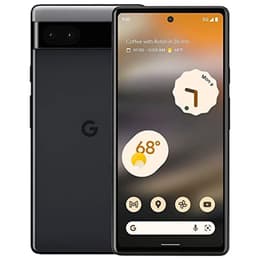
Google Pixel 6A
Google Pixel 6A
Starting at

Refurbished price:£107.00

Versus £459.00 new

See options
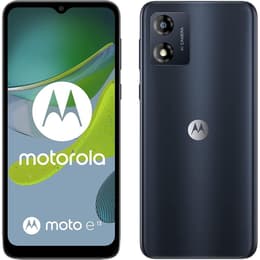
Motorola Moto E13
Motorola Moto E13
Starting at

Refurbished price:£74.00

Versus £83.99 new

See options

Ratings

The Google Pixel 6A (2022) and the Motorola Moto E13 (2023) are both smartphones designed for different user needs. While the Pixel 6A focuses on delivering a balanced experience with a strong emphasis on camera performance and software, the Moto E13 is positioned as an entry-level device prioritizing essential smartphone functions and battery longevity. Both devices run on the Android operating system, though the Moto E13 utilizes the lighter Android Go Edition.

Scores

Durability

When considering the practical lifespan of these devices, several factors come into play, including software support and repairability.

  • Release Timeline and Software Support: The Google Pixel 6A, released in July 2022, benefits from Google's extended software commitment, receiving operating system updates until at least July 2027 and security updates for the same duration. This provides a longer period of modern features and security protections. The Motorola Moto E13, launched in January 2023, runs on Android 13 Go Edition. While it receives software updates, the specific duration of major OS upgrades is less defined, and user reports indicate less frequent updates compared to the Pixel.
  • Repairability: The Pixel 6A generally scores well in repairability, with ratings around 6.5 to 7 out of 10. Its design allows for relatively straightforward disassembly, and the battery is noted as being easy to remove. The Moto E13 also has a repairability score of 6.5 out of 10, with accessible battery components. However, replacing the screen on the Moto E13 requires disassembling several other components.
  • Expected Practical Lifespan: Users prioritizing long-term software support and access to the latest Android features will find the Pixel 6A offers a more extended practical lifespan. The Moto E13, while physically repairable, may see its software experience age more quickly due to less consistent updates.

Year of Release

2022

2023

Compatible with latest Update

Yes

No

OS

Android

Android

Foldable

No

No

Performance

The performance of a smartphone is crucial for daily tasks, from launching applications to multitasking and gaming.

  • Processor Capabilities: The Google Pixel 6A is equipped with a processor designed by Google, which enables smooth operation and efficient handling of demanding applications and games. Users often report a responsive experience with no significant lag during regular use or gaming. The Motorola Moto E13 features a Unisoc T606 processor. This processor is suitable for basic tasks, but some users have noted slower performance, especially when running multiple applications or more intensive games.
  • System Responsiveness and Multitasking: The Pixel 6A, with its 6GB of RAM, provides ample capacity for multitasking, allowing users to switch between apps without significant slowdowns. The Moto E13 is available with various RAM configurations, including 2GB, 4GB, and 8GB. Models with lower RAM may experience more noticeable delays and app reloads when managing several applications simultaneously.
  • Storage and Battery Behavior: The Pixel 6A comes with 128GB of internal storage without expansion options. Its 4410 mAh battery is generally reported to last a full day for most users, though charging speeds are not particularly fast. The Moto E13 offers storage options of 64GB or 128GB, with the benefit of expandable storage via a microSD card up to 1TB. Its larger 5000 mAh battery, combined with a less demanding processor and lower resolution display, often results in good battery life for typical usage, though it also supports 10W wired charging.

Memory (GB)

6 GB

2 GB

Screen quality

The display is a primary interface for smartphone interaction, influencing everything from media consumption to daily navigation.

  • Display Technology and Clarity: The Google Pixel 6A features a 6.1-inch OLED display with a Full HD+ resolution (2400 x 1080 pixels). This technology provides deep blacks and vibrant colors, contributing to a rich visual experience. The Motorola Moto E13 has a larger 6.5-inch IPS LCD screen with an HD+ resolution (1600 x 720 pixels). While offering a larger viewing area, the IPS LCD technology and lower resolution result in less contrast and sharpness compared to the Pixel 6A's OLED panel.
  • Refresh Rate and Smoothness: Both devices feature a standard 60Hz refresh rate. While some users initially express concern about the Pixel 6A's 60Hz display, many find the software optimization makes the experience feel fluid in everyday use. The Moto E13's 60Hz refresh rate is typical for its category.
  • Brightness and Viewing Experience: The Pixel 6A's OLED display generally offers good brightness levels, making it suitable for various lighting conditions. The smaller screen size also contributes to a more compact form factor, which some users prefer for one-handed use. The Moto E13's IPS LCD display provides adequate brightness for indoor use, but outdoor visibility might be more challenging in direct sunlight. The larger screen is beneficial for users who prioritize screen real estate for media or browsing.

Resolution

1080 x 2400

720 x 1600

Screen type

OLED

IPS LCD

Audiovisual

Camera capabilities are a significant differentiator for many smartphone users, impacting the quality of photos and videos captured.

  • Rear Camera System: The Google Pixel 6A is equipped with a dual-camera system on the rear, featuring a 12.2-megapixel main sensor and a 12-megapixel ultrawide sensor. It is highly praised for its image processing, delivering detailed and color-accurate photos in various conditions, including good low-light performance. The Motorola Moto E13 has a single 13-megapixel rear camera. This camera is suitable for basic photography in well-lit environments, but its performance in challenging conditions, such as low light, is more limited.
  • Front Camera and Video Recording: For selfies, the Pixel 6A includes an 8-megapixel front camera, which users describe as competent for daytime shots. It supports 4K video recording at up to 60 frames per second, offering high-quality video capture. The Moto E13 features a 5-megapixel front camera, which is adequate for video calls and casual selfies. It records video at 1080p resolution at 30 frames per second.
  • Software Features and Audio: The Pixel 6A benefits from Google's advanced computational photography features like Magic Eraser, Real Tone, and Night Sight, enhancing the overall photo quality. Both phones offer standard microphone quality for calls. The Pixel 6A's speaker output is generally considered good for media consumption.

Main camera

12.2 megapixels

13 megapixels

Front camera

8 megapixels

5 megapixels

Miscellaneous

Beyond the core features, several practical elements contribute to the overall user experience of a smartphone.

  • Connectivity and Ports: The Google Pixel 6A supports 5G connectivity, including both mmWave and Sub-6GHz bands, along with modern Wi-Fi standards and Bluetooth. It features a USB-C port for charging and data transfer but lacks a 3.5mm headphone jack. The Motorola Moto E13 offers 4G connectivity, dual-band Wi-Fi, and Bluetooth 5.0. It includes a USB-C 2.0 port and retains a 3.5mm headphone jack, which can be a convenience for users with wired headphones. It does not include NFC for contactless payments.
  • Sensors and Biometrics: The Pixel 6A incorporates an in-display fingerprint sensor for secure unlocking. While some users have reported mixed experiences, many find it works reliably. The Moto E13 does not feature a fingerprint sensor but offers face unlock as an alternative biometric authentication method.
  • Build Materials and Durability: The Pixel 6A has a plastic back that is designed to feel premium, along with Corning Gorilla Glass 3 on the front. It carries an IP67 rating for dust and water resistance, providing a good level of protection against environmental elements. The Moto E13 features a plastic body and glass front, with an IP52 rating for dust and splash resistance, offering basic protection.
  • Dimensions and Handling: The Pixel 6A is a more compact device, weighing 178g and featuring a 6.1-inch screen, making it comfortable for one-handed use. The Moto E13 is slightly larger and heavier at 179.5g with its 6.5-inch display, which might appeal to users who prefer a larger screen.

Weight

250 g

181 g

Screen size (in)

6.1

6.5

Mobile network

5G

4G

SIM card

Physical SIM + eSIM

Dual Physical SIM

Carrier compatibility

Unlocked

Unlocked

The Google Pixel 6A and Motorola Moto E13 cater to distinct segments of the smartphone market, each with its own set of strengths and considerations.

For the Pixel 6A, common praise points from users include its exceptional camera performance, smooth and clean Android software experience, and its compact form factor. Many users appreciate its responsive performance for everyday tasks and even some gaming. Criticisms often revolve around its 60Hz display, which some find less fluid than higher refresh rate screens, and its slower charging speeds. The in-display fingerprint sensor has also received mixed feedback, with some users experiencing inconsistencies.

The Motorola Moto E13 is frequently lauded for its large battery capacity, which, combined with its less demanding hardware, often translates to extended usage times. Its expandable storage is also a notable advantage for users who need more space for media and files. However, user feedback frequently highlights significant performance limitations, with reports of apps crashing, general sluggishness, and the device getting warm during use. The camera quality is generally considered basic, and the lack of a fingerprint sensor is a common point of concern.

Users prioritizing a high-quality camera, consistent software updates, and a compact, premium-feeling device for a balanced smartphone experience may prefer the Google Pixel 6A. Its processing power handles demanding applications with ease, making it suitable for those who engage in more intensive mobile activities. Conversely, users who prioritize a large display, long battery life for light usage, and expandable storage, and who primarily use their phone for basic communication, browsing, and media consumption, might find the Motorola Moto E13 aligns better with their needs. It is particularly suited for those seeking a straightforward device without advanced features.

Both models are available as quality-assured refurbished options, providing an eco-friendly alternative for consumers looking to make a sustainable choice while still acquiring a capable device.


See all articles

Our recent comparisons