
Compare models
Galaxy A05 Vs iPhone Air
- 1-year minimum warranty
- Free delivery on all items
- Free 30-day returns
Differences at a glance
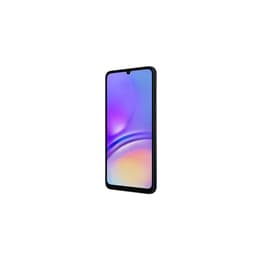
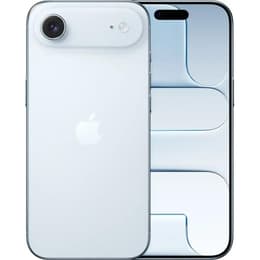
The Samsung Galaxy A05 (2023) and the Apple iPhone Air (2025) are smartphones designed for entirely different tiers of the mobile market, representing a budget Android option and an ultra-slim modern flagship device respectively. While they differ vastly in release year, build philosophy, and software ecosystems, comparing them highlights how entry-level hardware contrasts with bleeding-edge engineering. Running on Android and iOS respectively, these two models cater to distinct consumer expectations regarding daily functionality and design.
Available Models
Colour
Storage (GB)
Scores
Durability
When examining longevity and durability, both devices reflect their respective market positions through software support schedules and physical build resilience.
- Software Support: The Galaxy A05 receives standard entry-level Android updates spanning a couple of years, whereas the iPhone Air benefits from Apple's extended multi-year iOS support framework.
- Build Resilience: The Galaxy A05 utilizes a plastic frame and back panel suited for standard handling, while the iPhone Air features a grade-5 titanium frame and advanced glass protection designed for enhanced structural rigidity.
- Expected Lifespan: Users can anticipate standard long-term reliability from both handsets, though the iPhone Air maintains hardware headroom that keeps it functional across intensive software cycles for a longer duration.
Year of Release
2023
2025
Compatible with latest Update
No
Yes
OS
Android
iOS
Foldable
No
No
Performance
Performance capabilities vary drastically based on internal architecture, memory allocation, and software optimization between the two devices.
- Multitasking and Speed: The Galaxy A05 handles basic web browsing and messaging reliably with modest RAM configurations, whereas the iPhone Air manages heavy 3D gaming and demanding multi-app workflows smoothly through its high-performance processor and large memory capacity.
- Storage Variants: The Galaxy A05 offers foundational storage capacities with expandable storage support via microSD, while the iPhone Air provides large onboard solid-state storage tiers without physical expansion slots.
- Battery Behavior: The Galaxy A05 features a large battery capacity that comfortably sustains moderate everyday tasks, while the ultra-thin profile of the iPhone Air houses a smaller power cell that requires more frequent recharging during intensive use.
Screen quality
Display technology creates a significant divergence in visual output, brightness, and motion clarity during media consumption.
- Panel Technology: The Galaxy A05 employs a standard HD+ PLS LCD screen for basic clarity, while the iPhone Air incorporates a vibrant OLED display with deep blacks and high contrast ratios.
- Refresh Rate: The Galaxy A05 relies on a standard 60Hz refresh rate for basic scrolling, whereas the iPhone Air features an adaptive high refresh rate reaching up to 120Hz for smoother visual transitions.
- Outdoor Usability: The iPhone Air achieves high peak outdoor brightness levels for clear visibility under direct sunlight, outperforming the more modest brightness output of the entry-level LCD panel.
Resolution
720 x 1600
2736x1260
Screen type
PLS LCD
Super Retina XDR
Audiovisual
Media capture and audio output capabilities reflect the specialized engineering choices of each manufacturer.
- Camera Systems: The Galaxy A05 includes a dual-lens setup focused on a high-megapixel main sensor and a depth helper, whereas the iPhone Air streamlines photography to a single advanced wide lens with high-resolution output and powerful computational imaging.
- Video and Low Light: The iPhone Air delivers stabilized high-definition video recording and sharp low-light captures, while the Galaxy A05 performs adequately in bright daylight conditions for casual snapshots.
- Audio Delivery: The iPhone Air utilizes specialized audio configurations for media playback, whereas the Galaxy A05 relies on standard single-speaker output suitable for basic notifications and calls.
Main camera
50 megapixels
48 megapixels
Front camera
8 megapixels
18 megapixels
Miscellaneous
Practical daily features, physical dimensions, and connectivity standards dictate how each device integrates into a user's routine.
- Connectivity Standards: The Galaxy A05 supports 4G networks and standard Wi-Fi protocols, whereas the iPhone Air incorporates advanced 5G connectivity, Wi-Fi 7, and eSIM capabilities.
- Physical Dimensions: The Galaxy A05 features a thicker plastic chassis weighing 195 grams, while the iPhone Air introduces an exceptionally thin and lightweight titanium build scaling down to 165 grams.
- Physical Ports: Both models utilize a USB-C port for charging, with the Galaxy A05 retaining traditional audio jack accommodations depending on the regional variation.
Weight
195 g
165 g
Screen size (in)
6.7
6.5
Mobile network
4G
5G
SIM card
Physical SIM
eSIM
Carrier compatibility
Unlocked
Unlocked
Connector
USB-C
USB-C
What the community thinks
User feedback and community discussions indicate that the Samsung Galaxy A05 earns praise for reliable calling, basic messaging reliability, and a dependable large battery life. However, users frequently note that its display resolution and processing speeds are limited to basic tasks. Conversely, the iPhone Air receives widespread acclaim for its breakthrough lightweight profile, premium titanium finish, and responsive display, though some users express concern over its higher battery drain during heavy workflows and the absence of physical SIM card trays.
Users prioritizing long-lasting battery life, expandability, and a straightforward communication tool will find the Galaxy A05 well-suited to their needs, while users prioritizing cutting-edge design, high-end processing, and advanced display technology may lean toward the iPhone Air. Selecting the right model depends entirely on individual daily demands and feature preferences. For those exploring sustainable tech alternatives, opting for a quality-assured refurbished option provides a practical way to acquire capable electronics while supporting eco-friendly purchasing habits.