
iPhones
Compare models
Differences at a glance
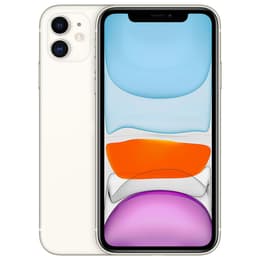
The iPhone 11, released in September 2019, and the Sony Xperia 5 IV, launched in September 2022, represent distinct approaches to smartphone design and functionality from two different ecosystems. While both devices offer a compact form factor, the Xperia 5 IV benefits from a three-year technological advancement, bringing with it a more modern Android experience compared to the iPhone 11's iOS platform. Key differentiators lie in their display technologies, camera systems, and underlying processing power.
Colour
Storage
When considering the long-term usability of these devices, their respective release timelines and software support policies are important factors. The iPhone 11, having been released in 2019, has received several major iOS updates, with compatibility extending to iOS 18 in September 2024 and iOS 26 in September 2025, indicating a robust software longevity from Apple. The Sony Xperia 5 IV, released in 2022, launched with Android 12 and is upgradable to Android 14, with Sony typically providing 2-3 major OS updates and around three years of security updates. Both devices feature IP68 water and dust resistance, offering protection against environmental elements. The Xperia 5 IV further enhances its physical durability with Corning Gorilla Glass Victus on both the front and back.
Year of Release
Compatible with latest Update
OS
Foldable
The performance capabilities of the iPhone 11 and the Sony Xperia 5 IV reflect their generational difference. The iPhone 11 is powered by an A13 Bionic chip, paired with 4GB of RAM, offering smooth operation for everyday applications and moderate multitasking. It handles most tasks efficiently, including web browsing, social media, and many popular games. The Sony Xperia 5 IV, featuring a Snapdragon 8 Gen 1 Mobile Platform and 8GB of RAM, delivers a significantly more powerful experience, capable of handling demanding applications, intensive gaming, and extensive multitasking with greater ease and responsiveness.
The visual experience on these two smartphones differs considerably due to their display technologies and specifications. The iPhone 11 features a 6.1-inch Liquid Retina IPS LCD display with a resolution of 1792 x 828 pixels, resulting in a pixel density of 326 ppi and a standard 60Hz refresh rate. This display offers accurate color reproduction and good brightness for typical indoor use. In contrast, the Sony Xperia 5 IV boasts a 6.1-inch FHD+ HDR OLED display with a higher resolution of 2520 x 1080 pixels, yielding a sharper 449 ppi, and a smoother 120Hz refresh rate.
Resolution
Screen type
Both devices offer capable camera systems, but the Sony Xperia 5 IV presents a more versatile setup with advanced features. The iPhone 11 is equipped with a dual 12MP rear camera system, comprising a wide-angle lens (f/1.8) and an ultra-wide-angle lens (f/2.4 with a 120° field of view). It includes features like Night mode and Deep Fusion for improved low-light performance and detail, and can record 4K video at up to 60 frames per second. The Sony Xperia 5 IV features a triple 12MP rear camera system, including a wide-angle lens (f/1.7), an ultra-wide-angle lens (f/2.2), and a telephoto lens (f/2.4) with 2.5x optical zoom. It offers advanced photography features such as Real-time Eye AF and can record 4K HDR video at up to 120 frames per second. Both phones have a 12MP front-facing camera.
Main camera
Front camera
Beyond core specifications, several practical elements distinguish the iPhone 11 and Sony Xperia 5 IV. The iPhone 11 utilizes Apple's proprietary Lightning port for charging and data transfer, and features Face ID for secure biometric authentication. It supports Wi-Fi 6 and Bluetooth 5.0, but lacks 5G connectivity. The device weighs 194 grams and measures 150.9 x 75.7 x 8.3 mm. The Sony Xperia 5 IV, on the other hand, uses a universal USB-C port, includes a side-mounted fingerprint sensor for security, and offers a 3.5mm headphone jack. It supports newer connectivity standards like Wi-Fi 6E, Bluetooth 5.2, and 5G networks. The Xperia 5 IV is lighter at 172 grams and has dimensions of 156 x 67 x 8.2 mm.
Weight
Screen size (in)
Mobile network
SIM card
Carrier compatibility
Connector
The iPhone 11 and Sony Xperia 5 IV cater to different user preferences, largely influenced by their release years and operating systems. Users often praise the iPhone 11 for its consistent performance, reliable camera, and the intuitive iOS ecosystem, which provides a seamless experience for those integrated into Apple's services. Some common criticisms, however, include its 60Hz LCD display and the absence of a telephoto lens or 5G connectivity, which are now standard on many newer devices.
The Sony Xperia 5 IV is frequently lauded for its vibrant OLED display with a high refresh rate, its versatile camera system with a dedicated telephoto lens, and the inclusion of a headphone jack and expandable storage, features appreciated by multimedia enthusiasts and power users. Criticisms sometimes point to Sony's software update pace compared to some competitors, though it still offers a modern Android experience.
Users prioritizing a long-term software support cycle and a familiar, streamlined operating system may find the iPhone 11 a suitable choice, especially as a quality-assured refurbished option. Conversely, individuals who value cutting-edge display technology, advanced camera capabilities, faster connectivity, and the flexibility of Android with expandable storage will likely lean towards the Sony Xperia 5 IV. Both devices, particularly when considering refurbished options, offer an eco-friendly alternative for consumers seeking reliable technology.